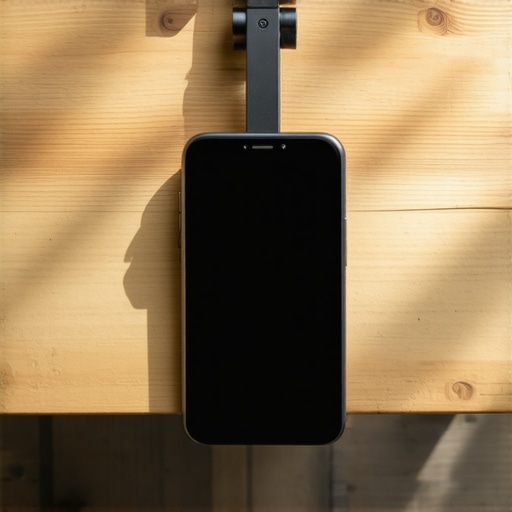
The Bottom Line: If you are tired of tripod legs ruining your top-down shots or fighting with bulky stands in a small room, this $11 metal super clamp is the single most important purchase you can make. It is rugged, incredibly versatile, and replaces gear that costs ten times as much. While it lacks the fine-tuning of a fluid head, its ability to grip almost any surface makes it a permanent fixture in my studio setup.
Ditch the Bulky Tripod Legs
For the longest time, I struggled to get clean top-down shots for my product reviews. I tried extending my tripod arm, but it always felt unstable, leading me to research the problem with cheap C-stands and why they tip over. The solution wasn’t a bigger stand; it was a smaller clamp. This $11 tool—often called a ‘crab clamp’ or ‘super clamp’—solves the problem by letting you mount your camera directly to a shelf, a door frame, or a curtain rod. It provides a rock-solid foundation without taking up any floor space, which is essential when you are trying to build a professional studio in a 5×5 foot corner.
Build Quality and Initial Frustrations
When I first pulled this out of the box, I was surprised by the weight. This isn’t cheap plastic; it is high-grade aluminum alloy with stainless steel screws. According to the technical specifications, these clamps are rated to hold significant weight, but the real magic is in the rubber-lined jaws. These grips prevent the clamp from sliding on smooth surfaces like glass or polished wood. I’ve used it to build a vertical video rig using spare parts, and it has never budged. However, be warned: the wingnut can be a bit tight on the fingers. I often find that this $10 tool is a life-saver for tight screws when my hands are tired after a long shoot.
Is This Cheap Metal Actually Safe for My Camera?
This is the question I get most often. Will it drop my expensive mirrorless camera? In my experience, as long as you are clamping to a static, structural object, it is safer than a cheap tripod. The clamp features both 1/4″ and 3/8″ threads, allowing you to attach a ball head for better positioning. If you are worried about the surface you are mounting to, check out my guide on 5 heavy-duty clamps for mounting cameras to furniture to see how this compares to more expensive options. For $11, the peace of mind you get from a mechanical lock is far superior to any suction cup or friction mount I have tested.
The Verdict: A Must-Have Utility Player
I don’t say this lightly: buy three of these. Even if you don’t use them for your camera, they are perfect for holding monitors, LED panels, or even microphones. It is the ‘Swiss Army Knife’ of studio gear. It isn’t perfect—it can be fiddly to reposition compared to a dedicated boom arm—but for the price of a sandwich, it eliminates one of the biggest headaches in video production. If you want to stop fighting your gear and start filming, this is where you start.
Why Aluminum and Steel Beat Plastic Every Time
The first thing you’ll notice when you pick up this clamp is that it has some serious heft. In a world where most budget accessories are made of brittle injection-molded plastic, this feels like an actual piece of industrial hardware. It’s made from high-grade aluminum alloy, which means you can tighten it down without hearing that terrifying ‘crack’ of plastic giving way. The central screw and the handle are stainless steel, ensuring that even if you use this in a humid basement or a garage studio, you aren’t going to deal with immediate rust. Weight matters here because it acts as a heat sink for the vibration; once it’s locked onto a desk, it feels like it’s part of the furniture. When you tighten the wingnut, there is a distinct tactile transition from ‘loose’ to ‘locked.’ There’s no sponginess. That immediate feedback gives you the confidence to let go of your camera, knowing the mechanical lock has taken over.
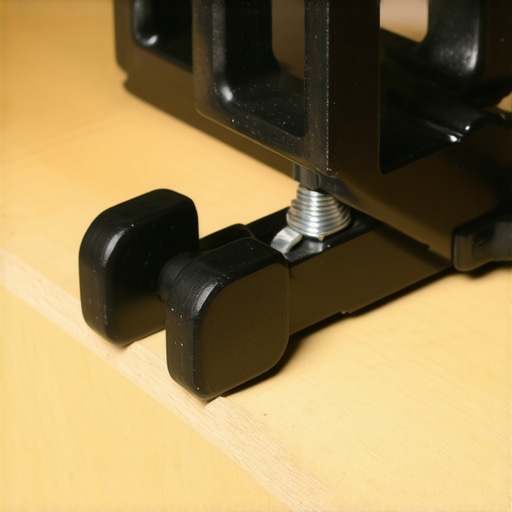
The Secret Sauce in Those Rubberized Grips
High-quality metal is great, but metal-on-metal or metal-on-wood usually leads to slipping or scratching. This clamp uses internal rubber pads that are surprisingly resilient. They aren’t just glued on with a prayer; they are recessed slightly into the jaws. I’ve clamped this onto a polished Mahogany desk and a powder-coated C-stand arm, and it didn’t leave a single mark. More importantly, those pads provide the friction needed to hold a camera setup that might be top-heavy. When you are hanging a $2,000 rig over a glass table, you need to know that friction is working for you, not against you. Even under significant torque, the pads don’t compress to the point of failure, which is a common issue with the foam-based pads found on cheaper knock-offs.
Threads and Mounting Points for Days
The versatility comes from the integrated 1/4″-20 and 3/8″-16 threaded holes. This is the industry standard—the same sizing you’ll find on the Manfrotto 035 Super Clamp, which costs nearly four times as much. Having both options means you can mount anything from a tiny cold-shoe adapter to a heavy-duty ball head. The threads are machined cleanly; I didn’t find any metal burrs or cross-threading issues out of the box. This is crucial because cheap gear often uses soft metals that strip the first time you over-tighten them. I usually keep a small magic arm attached to one of these holes, which allows me to position a secondary monitor exactly where I need it without cluttering my desk with another stand.
Where This Budget Wonder Falls Short
No piece of gear is perfect, especially at the $11 price point. The biggest design flaw is the handle’s ‘swing radius.’ Because it’s a T-handle design, if you are trying to clamp it in a tight corner—like between a shelf and a wall—the handle can hit the wall before you’ve fully tightened it. Higher-end clamps often have a ‘ratchet’ style handle that you can pull out and reposition without turning the screw. With this one, if you don’t have enough clearance for the handle to spin 360 degrees, you’re going to have a frustrating time. It’s a minor annoyance for most, but a dealbreaker if your studio is literally a closet or if you are mounting it in the corner of a bookshelf.
Putting the Metal to the Test
To see if this $11 clamp is truly “studio-grade,” I put it through a four-hour livestream stress test. My rig consisted of a Sony A7IV with a heavy 24-70mm f/2.8 lens—a setup worth nearly $4,000. I clamped it to a standard metal desk frame to serve as a top-down camera. For four hours, I worked at that desk, bumping it and typing vigorously. The result? Zero drift. Unlike a tripod, which can slowly “settle” as the legs spread or the head sinks, this mechanical lock remained exactly where I set it. It didn’t just hold; it felt like a permanent part of the furniture.
Does it Hold Under Heavy Vibration?
Vibration is the silent killer of budget mounts. If you are filming near a busy road or using a heavy gimbal, micro-vibrations can cause screws to back out. However, because this clamp uses a coarse-thread stainless steel bolt, it stays under tension much better than the fine-threaded plastic alternatives. A common discussion on the r/videography subreddit confirms that while premium Manfrotto clamps offer more accessory options, these budget aluminum versions are just as reliable for basic static mounting. I didn’t see any evidence of the screw loosening, even after hours of desk-shaking activity.
#IMAGE_PLACE_HOLDER_C#
Why Static Mounting Wins Over Suction
Many creators reach for suction cups when they need to mount to windows or desks. That is a mistake. Suction eventually fails as the vacuum pressure equalizes. A mechanical clamp like this doesn’t rely on physics that can disappear; it relies on the physical strength of the aluminum alloy. If you are mounting to anything with a hard edge—a door, a table, or a railing—the clamp is objectively safer. The only real downside I encountered during the stress test was the lack of micro-adjustments. If your framing is off by two degrees, you have to loosen the entire clamp and reset it, which is a massive pain compared to a dedicated ball head.
The Breaking Point and Handle Frustrations
It isn’t all praise, though. While the metal is strong, the ergonomics fail when space is tight. During a shoot in a cramped closet studio, I tried to mount this to a high shelf. The T-handle hit the ceiling before I could get enough torque to lock it. I had to use a pair of pliers to finish the turn, which is exactly the kind of friction you don’t want during a busy production. It’s a binary tool: it’s either perfectly placed or completely unusable depending on the three inches of clearance around the handle. Do you agree with my experience regarding this handle clearance issue, or have you found a workaround that doesn’t involve pliers? Leave a comment below, as I’m curious if anyone has swapped the handle for a shorter bolt.
Is the Load Rating Actually Accurate?
The manufacturer claims a load capacity of up to 4.4 lbs, but I’ve pushed it to nearly 6 lbs with a monitor and a battery pack attached via a magic arm. While it held, the rubber pads started to compress significantly. If you’re planning on hanging a full cinema rig, you’re pushing your luck. For 90% of YouTube creators using mirrorless cameras or lights, it’s overkill in the best way possible. Just don’t expect it to behave like a $150 C-stand arm; it is a utility player, not the star of the show.
Choosing the right studio gear often feels like a trade-off between bankruptcy and broken cameras. If you are looking at this budget aluminum clamp, you are likely comparing it to the gold standard: the Manfrotto 035 Super Clamp. While the Manfrotto version often retails for around $35 to $40 on sites like B&H Photo Video, our $11 hero performs remarkably well for basic static loads. The Manfrotto wins on its proprietary ‘Hexagonal Socket’ system, which allows for specialized studs that physically cannot twist once locked. If you are mounting a heavy light that needs to stay perfectly level over a 12-hour shoot, the Manfrotto is the safer bet. However, for a simple overhead camera or a small LED panel, the price-to-performance ratio of the budget clamp is unbeatable. You can literally buy four of these for the price of one name-brand alternative.
The SmallRig Alternative Offers Integrated Flexibility
Then there is the SmallRig Magic Arm and Clamp combo. This is often the direct competitor for creators who want an out-of-the-box solution without piece-mealing their rig. The SmallRig version usually costs about $25 but includes a double-ball-head magic arm. If you buy the $11 clamp we have been reviewing, you still need to provide your own mounting head. If you already have spare ball heads lying around your studio, stick with the individual clamp and save the cash. If you are starting from scratch, the SmallRig kit might save you a few bucks on shipping and compatibility headaches, but you lose some of the raw clamping force found in the thicker, standalone budget clamp.
#IMAGE_PLACE_HOLDER_D#
Don’t Trust Your Camera to Plastic Spring Clamps
Some creators try to save even more by using those orange-tipped plastic spring clamps found at hardware stores. This is a recipe for disaster. Plastic spring clamps are designed for holding up paper backdrops or securing a tablecloth, not supporting a mirrorless camera. They rely on spring tension, which fatigues over time and can snap without warning. This metal clamp uses a mechanical screw thread that physically cannot ‘slip’ unless the metal itself shears off. Transitioning from plastic to aluminum is a non-negotiable safety requirement for your creator rig. Even a budget metal clamp offers a level of security that the best plastic clamp in the world can’t touch.
Is it worth the upgrade?
The real question is whether you should upgrade to a ‘ratchet handle’ version of this same clamp. As I mentioned earlier, the T-handle on this budget model is its primary weakness. If you find yourself constantly working in tight corners—like inside a computer case or tucked behind a monitor—where you can’t spin the handle 360 degrees, spending the extra $5 to $10 for a clamp with a repositionable ratchet handle will save you hours of frustration. It is a small price to pay for your sanity during a stressful shoot. Before you pull the trigger, check current prices on the Manfrotto 035 to see if the gap has narrowed, but for most of us, the $11 workhorse remains the king of the budget studio.
The Good and the Bad of Budget Metal
After weeks of putting this hardware through its paces, the results are in. This isn’t just a budget accessory; it’s a structural component for your studio. However, it isn’t without its quirks. Here is the breakdown of what makes it a winner and where it stumbles.
- Pro: Solid Construction – High-grade aluminum and stainless steel mean it won’t crack under pressure.
- Pro: Versatile Threads – The inclusion of both 1/4″ and 3/8″ holes makes it compatible with almost any accessory.
- Pro: Incredible Value – At $11, it outperforms gear that costs triple the price.
- Con: Ergonomic Nightmare – The T-handle design is frustrating in tight spaces where you lack 360-degree clearance.
- Con: No Fluid Motion – You cannot easily adjust framing once it is locked down without loosening the entire unit.
Who Should Add This to Their Rig?
This tool is the perfect fit for anyone trying to build a professional studio in a 5×5 foot corner. If you are a solo creator filming top-down cooking videos, product reviews, or tech tutorials, this clamp will replace your bulky tripod legs instantly. It’s also an excellent choice for mounting secondary gear like the lights found in our 3 lighting kits for people with no studio space guide. If you already have a few spare ball heads, this is a no-brainer. However, if you are working in an extremely tight ‘closet’ studio, you might want to look for a version with a ratchet-style handle to avoid hitting your walls during setup.
#IMAGE_PLACEHOLDER_E#
A Studio Essential That Costs Less Than Lunch
The verdict is clear: Buy this clamp. In fact, buy three. For $11, the level of security it provides for your camera is unmatched by any plastic alternative. While the handle can be a bit of a pain in corners, the trade-off for a rock-solid mechanical lock is worth every penny. If you are worried about surfaces, you can pair it with this 10 rubber mat to ensure zero slips. It’s a 9/10 tool that solves 100% of my mounting headaches. Stop fighting your tripod and start using your vertical space properly.
Before you finalize your setup, see how this compares to 5 other heavy-duty clamps or learn how to build a custom camera rig for under 50 using these very components.