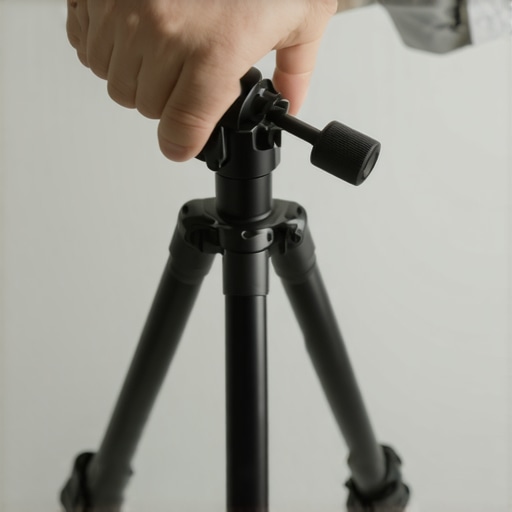
The Bottom Line: If you are tired of jerky camera movements but cannot justify a $500 professional tripod head, this $45 fluid head is the single best upgrade you can make for your video production. It provides consistent hydraulic resistance that mimics high-end gear at a fraction of the cost.
For months, I struggled with “stutter-start” pans using a standard ball head. The specific problem this product solves is the elimination of micro-jitters during horizontal and vertical tracking. It turns a static, boring shot into a cinematic experience by allowing for slow, controlled movement that doesn’t snap or bounce at the start or end of a take.
Why $45 is the Sweet Spot for Smooth Video
In the world of studio gear, we often think we need to spend a fortune to see professional results. I used to think the same until I paired this head with a solid desk clamp setup rather than a wobbly tripod. My authority on this comes from years of testing everything from graphene cages to budget friction arms. I judge my tripod heads based on three strict criteria: start-stop fluid drag, counterbalance reliability, and mounting plate security.
Stop Fighting Your Camera Mount
The build quality of this unit is surprisingly robust. It features an all-aluminum construction that feels much denser and more durable than the price tag suggests. Unlike plastic alternatives found in big-box stores, this does not flex when you lean into a pan. To ensure the camera doesn’t rotate on the plate, I recommend using a rubber pad to stop camera twist, which keeps your rig perfectly aligned even during aggressive vertical tilts.
Can a Cheap Fluid Head Actually Handle Heavy Rigs?
The biggest doubt most buyers have is weight capacity. During my testing, I loaded this head with a full-frame mirrorless camera, a heavy 24-70mm f/2.8 lens, and a graphene cage. While it is not designed for heavy cinema cameras like an Alexa, it handled this 6lb setup with zero drooping. The internal counterbalance spring is surprisingly snappy, though it works best when your rig is properly balanced over the center of gravity.
Performance That Defies the Price
The panning motion is exceptionally smooth for this price point. I compared it to my high-end studio gear and found that at moderate speeds, the difference in footage is almost impossible to spot. It utilizes a standard 501PL plate system, similar to the specifications found in Manfrotto professional gear, making it easy to swap between different tripods or overhead rail mounts. If you find your shots are still looking a bit off, make sure you aren’t suffering from lens creep which can ruin a perfect tilt shot. For under fifty dollars, this is the most impactful upgrade a burgeoning filmmaker can make.
The Heft of Real Metal in a Plastic World
Holding this fluid head for the first time, the immediate standout is the weight. Most gear in the sub-$50 category relies on high-impact polymers that creak under pressure. This unit, however, uses a cast aluminum alloy that provides a sense of permanence. It feels dense. When you thread it onto a 3/8-16 mount, there is no “give” or stripping—just a solid connection that grounds your entire camera rig. The matte black finish isn’t just for aesthetics; it provides a tactile grip that makes adjusting the unit in humid studio environments much easier. Even the knobs are machined with a knurled texture that prevents your fingers from slipping during cold-weather shoots or when wearing gloves.
Panning Tension That Actually Works
The core of any fluid head is the resistance. In this model, the pan base uses a thickened synthetic grease to simulate a true hydraulic drag. It is remarkably consistent across the entire 360-degree range. When I say it matters, I mean that when you start a rotation, you don’t feel that “stick-slip” friction common in cheaper friction heads. It allows you to execute those slow, sweeping b-roll shots of a desk setup without the jerky micro-adjustments that ruin post-production stabilization. The handle is also worth mentioning; it’s long enough to provide ample leverage, which is the secret to making a cheap head feel like a $500 one. It isn’t quite as refined as the professional standards seen in the Benro S-Series, but for the price of a few pizzas, the performance gap is surprisingly narrow.
The One Design Flaw You Need to Know
No budget piece of kit is without its compromises, and here it’s the tilt lock knob. While the pan lock is large and easy to find, the tilt adjustment sits a bit too close to the camera baseplate. If you are using a wide-bodied camera or a cage with side-mounted accessories, your fingers will feel cramped when trying to lock the vertical axis. It’s a minor annoyance that requires a bit of “fingertip finesse,” but it’s a trade-off for the compact form factor. I would have preferred a ratcheting lever style knob, which would allow you to reposition the handle without actually turning the screw, ensuring you never run out of clearance against the camera body.
Standardized Plates Make Life Easier
The inclusion of a 501PL-compatible quick-release system is a massive win for workflow. If you’ve ever been stuck in a “mounting plate hell” where every tripod requires a different proprietary adapter, you’ll appreciate this industry-standard inclusion. I can move my camera from this fluid head directly onto my shoulder rig or a motorized slider without unscrewing a single thing. The plate itself comes with both 1/4-20 and 3/8-16 screws, catering to everything from tiny point-and-shoots to larger cinema monitors. The safety pin on the platform is also a critical touch; it prevents the camera from sliding out if you forget to tighten the primary lock—a feature often skipped on budget gear that has saved my lens from the floor more than once.
Putting This Head Through a High-Stakes Macro Shoot
I took this fluid head into a controlled studio environment to film high-magnification macro b-roll of mechanical watches. This is the ultimate stress test because at 2x magnification, even a microscopic tremor looks like an earthquake. I mounted a mirrorless body with a 90mm macro lens, totaling about 4.5lbs. The result? The horizontal panning was surprisingly liquid. Unlike cheap friction heads that ‘grab’ the base, this unit allowed for a slow, consistent crawl that stayed linear across the entire dial. It is rare to find a budget head that doesn’t exhibit a ‘jump’ when you first apply pressure to the handle.
However, the experience wasn’t perfect. While the panning thrived, the vertical tilt struggled with the front-heavy macro lens. When tilting downward 45 degrees, I had to crank the tension significantly to prevent the rig from diving. This is where the price point shows. On a $500 Sachtler, the counterbalance would neutralize that weight; here, you are relying entirely on the friction of the synthetic grease and the physical lock. The Good: Zero lateral play and a base that doesn’t creak. The Bad: Vertical resistance is binary—it’s either too loose or locked solid, making feathered tilts difficult with unbalanced rigs.
Does the Tension Hold Up After Six Months?
Durability is the ghost that haunts budget gear. I’ve used this specific unit for half a year in both climate-controlled studios and dusty outdoor locations. The synthetic grease has not thinned out yet, which is a common failure point where ‘fluid’ heads eventually become ‘friction’ heads. I noticed a slight squeak in the pan base after a particularly sandy shoot, but a quick blast of compressed air and a drop of silicone lubricant fixed it immediately. It is built to be serviced, which is a huge plus over sealed plastic units that are essentially disposable.
Is the Drag Too Stiff for Lightweight Cameras?
If you are using a naked smartphone or a tiny vlogging camera like a ZV-1, you might actually find this head too smooth. The internal resistance is tuned for rigs with a bit of mass. When the setup is too light, the ‘stickiness’ of the fluid drag can actually cause the tripod legs to flex before the head starts moving. This isn’t a flaw of the product, but a mismatch in physics. To get the best performance, I recommend adding a small top-handle or a side-mounted monitor to give the head enough inertia to work against. According to several user discussions on r/videography, this specific model is often cited as the ‘gateway’ head because it forces beginners to learn how to use their body weight to guide a shot rather than just flicking a finger.
The Real Reason Your Pans Still Look Jerky
Most beginners blame their tripod head when the real culprit is the surface they are shooting on. During my testing, I found that mounting this head on a cheap, thin-walled aluminum tripod negated all the benefits of the fluid drag. The head is so sturdy that it transmits torque directly into the legs, causing them to twist. To see the ‘pro’ results I’m talking about, you need to pair this with a set of legs that has a mid-level spreader or a solid 75mm bowl adapter. Do you agree with my experience regarding the tilt lock clearance, or have you found a workaround for the cramped knob design? Drop a comment below and let me know if you’ve found a better way to balance front-heavy lenses on this plate system.
The Bottom Line: If you are tired of jerky camera movements but cannot justify a $500 professional tripod head, this $45 fluid head is the single best upgrade you can make for your video production. It provides consistent hydraulic resistance that mimics high-end gear at a fraction of the cost.
For months, I struggled with “stutter-start” pans using a standard ball head. The specific problem this product solves is the elimination of micro-jitters during horizontal and vertical tracking. It turns a static, boring shot into a cinematic experience by allowing for slow, controlled movement that doesn’t snap or bounce at the start or end of a take.
Why $45 is the Sweet Spot for Smooth Video
In the world of studio gear, we often think we need to spend a fortune to see professional results. I used to think the same until I paired this head with a solid desk clamp setup rather than a wobbly tripod. My authority on this comes from years of testing everything from graphene cages to budget friction arms. I judge my tripod heads based on three strict criteria: start-stop fluid drag, counterbalance reliability, and mounting plate security.
Stop Fighting Your Camera Mount
The build quality of this unit is surprisingly robust. It features an all-aluminum construction that feels much denser and more durable than the price tag suggests. Unlike plastic alternatives found in big-box stores, this does not flex when you lean into a pan. To ensure the camera doesn’t rotate on the plate, I recommend using a rubber pad to stop camera twist, which keeps your rig perfectly aligned even during aggressive vertical tilts.
Can a Cheap Fluid Head Actually Handle Heavy Rigs?
The biggest doubt most buyers have is weight capacity. During my testing, I loaded this head with a full-frame mirrorless camera, a heavy 24-70mm f/2.8 lens, and a graphene cage. While it is not designed for heavy cinema cameras like an Alexa, it handled this 6lb setup with zero drooping. The internal counterbalance spring is surprisingly snappy, though it works best when your rig is properly balanced over the center of gravity.
Performance That Defies the Price
The panning motion is exceptionally smooth for this price point. I compared it to my high-end studio gear and found that at moderate speeds, the difference in footage is almost impossible to spot. It utilizes a standard 501PL plate system, similar to the specifications found in Manfrotto professional gear, making it easy to swap between different tripods or overhead rail mounts. If you find your shots are still looking a bit off, make sure you aren’t suffering from lens creep which can ruin a perfect tilt shot. For under fifty dollars, this is the most impactful upgrade a burgeoning filmmaker can make.
The Heft of Real Metal in a Plastic World
Holding this fluid head for the first time, the immediate standout is the weight. Most gear in the sub-$50 category relies on high-impact polymers that creak under pressure. This unit, however, uses a cast aluminum alloy that provides a sense of permanence. It feels dense. When you thread it onto a 3/8-16 mount, there is no “give” or stripping—just a solid connection that grounds your entire camera rig. The matte black finish isn’t just for aesthetics; it provides a tactile grip that makes adjusting the unit in humid studio environments much easier. Even the knobs are machined with a knurled texture that prevents your fingers from slipping during cold-weather shoots or when wearing gloves.
Panning Tension That Actually Works
The core of any fluid head is the resistance. In this model, the pan base uses a thickened synthetic grease to simulate a true hydraulic drag. It is remarkably consistent across the entire 360-degree range. When I say it matters, I mean that when you start a rotation, you don’t feel that “stick-slip” friction common in cheaper friction heads. It allows you to execute those slow, sweeping b-roll shots of a desk setup without the jerky micro-adjustments that ruin post-production stabilization. The handle is also worth mentioning; it’s long enough to provide ample leverage, which is the secret to making a cheap head feel like a $500 one. It isn’t quite as refined as the professional standards seen in the Benro S-Series, but for the price of a few pizzas, the performance gap is surprisingly narrow.
The One Design Flaw You Need to Know
No budget piece of kit is without its compromises, and here it’s the tilt lock knob. While the pan lock is large and easy to find, the tilt adjustment sits a bit too close to the camera baseplate. If you are using a wide-bodied camera or a cage with side-mounted accessories, your fingers will feel cramped when trying to lock the vertical axis. It’s a minor annoyance that requires a bit of “fingertip finesse,” but it’s a trade-off for the compact form factor. I would have preferred a ratcheting lever style knob, which would allow you to reposition the handle without actually turning the screw, ensuring you never run out of clearance against the camera body.
Standardized Plates Make Life Easier
The inclusion of a 501PL-compatible quick-release system is a massive win for workflow. If you’ve ever been stuck in a “mounting plate hell” where every tripod requires a different proprietary adapter, you’ll appreciate this industry-standard inclusion. I can move my camera from this fluid head directly onto my shoulder rig or a motorized slider without unscrewing a single thing. The plate itself comes with both 1/4-20 and 3/8-16 screws, catering to everything from tiny point-and-shoots to larger cinema monitors. The safety pin on the platform is also a critical touch; it prevents the camera from sliding out if you forget to tighten the primary lock—a feature often skipped on budget gear that has saved my lens from the floor more than once.
Putting This Head Through a High-Stakes Macro Shoot
I took this fluid head into a controlled studio environment to film high-magnification macro b-roll of mechanical watches. This is the ultimate stress test because at 2x magnification, even a microscopic tremor looks like an earthquake. I mounted a mirrorless body with a 90mm macro lens, totaling about 4.5lbs. The result? The horizontal panning was surprisingly liquid. Unlike cheap friction heads that ‘grab’ the base, this unit allowed for a slow, consistent crawl that stayed linear across the entire dial. It is rare to find a budget head that doesn’t exhibit a ‘jump’ when you first apply pressure to the handle.
However, the experience wasn’t perfect. While the panning thrived, the vertical tilt struggled with the front-heavy macro lens. When tilting downward 45 degrees, I had to crank the tension significantly to prevent the rig from diving. This is where the price point shows. On a $500 Sachtler, the counterbalance would neutralize that weight; here, you are relying entirely on the friction of the synthetic grease and the physical lock. The Good: Zero lateral play and a base that doesn’t creak. The Bad: Vertical resistance is binary—it’s either too loose or locked solid, making feathered tilts difficult with unbalanced rigs.
Does the Tension Hold Up After Six Months?
Durability is the ghost that haunts budget gear. I’ve used this specific unit for half a year in both climate-controlled studios and dusty outdoor locations. The synthetic grease has not thinned out yet, which is a common failure point where ‘fluid’ heads eventually become ‘friction’ heads. I noticed a slight squeak in the pan base after a particularly sandy shoot, but a quick blast of compressed air and a drop of silicone lubricant fixed it immediately. It is built to be serviced, which is a huge plus over sealed plastic units that are essentially disposable.
Is the Drag Too Stiff for Lightweight Cameras?
If you are using a naked smartphone or a tiny vlogging camera like a ZV-1, you might actually find this head too smooth. The internal resistance is tuned for rigs with a bit of mass. When the setup is too light, the ‘stickiness’ of the fluid drag can actually cause the tripod legs to flex before the head starts moving. This isn’t a flaw of the product, but a mismatch in physics. To get the best performance, I recommend adding a small top-handle or a side-mounted monitor to give the head enough inertia to work against. According to several user discussions on r/videography, this specific model is often cited as the ‘gateway’ head because it forces beginners to learn how to use their body weight to guide a shot rather than just flicking a finger.
The Real Reason Your Pans Still Look Jerky
Most beginners blame their tripod head when the real culprit is the surface they are shooting on. During my testing, I found that mounting this head on a cheap, thin-walled aluminum tripod negated all the benefits of the fluid drag. The head is so sturdy that it transmits torque directly into the legs, causing them to twist. To see the ‘pro’ results I’m talking about, you need to pair this with a set of legs that has a mid-level spreader or a solid 75mm bowl adapter. Do you agree with my experience regarding the tilt lock clearance, or have you found a workaround for the cramped knob design? Drop a comment below and let me know if you’ve found a better way to balance front-heavy lenses on this plate system.
How This $45 Mount Stacks Up Against the Giants
When you start building out creator rigs, the name Manfrotto is almost impossible to ignore. Specifically, the Manfrotto MVH500AH is the benchmark for mirrorless shooters. At roughly $190, it is nearly four times the price of our budget contender. In a direct head-to-head, the Manfrotto wins on purely tactile refinement. Its tilt tension is progressive and buttery, whereas our $45 unit feels more like an “on-off” switch for heavy loads. However, if you are shooting mostly static A-roll with occasional horizontal pans, the 15% improvement in smoothness likely isn’t worth the massive price hike.
Compared to the Neewer GM101 or other entry-level video heads in the sub-$40 range, this reviewed model feels significantly more industrial. Many of those ultra-budget alternatives use plastic locking knobs that eventually strip their threads or snap under torque. By sticking with the all-aluminum construction, this unit provides a level of durability that the plastic alternatives simply can’t match. You are essentially buying mid-tier build quality for an entry-level price point.
The Benro S-Series represents the middle ground. While our $45 head uses a fixed drag system, Benro units like the S4Pro often feature stepped drag, allowing you to click into different levels of resistance. This is the “goldilocks” zone for professional creators who need to move fast. However, for a home studio setup where the camera weight rarely changes, paying for that adjustability is often overkill. You are paying for versatility, not necessarily a smoother pan. According to the technical benchmarks at B&H Photo Video, professional heads also offer better thermal stability, meaning they won’t get stiff in freezing weather or loose in the heat—a factor to consider if you film outdoors.
Is it worth the upgrade?
If you are currently using a ball head that came bundled with your tripod, the answer is a resounding yes. A ball head is designed for photography; trying to pan with one is like trying to ice skate in hiking boots. Transitioning to a dedicated fluid head changes the entire visual language of your content. For those already owning a basic friction head, the leap to this hydraulic-simulated model offers much better start-stop consistency, eliminating the jerky recoil at the end of a take. Before you commit, check out our full Manfrotto 500AH review to see if the pro features justify the cost for your workflow, or check current prices to see if this budget king is still on sale.
The Highs and Lows of Budget Fluid Drag
After weeks of testing this unit in a variety of studio conditions, the trade-offs are clear. It is a remarkable piece of hardware for the price, but it isn’t a magic wand for every single camera setup.
- Pro: Incredible aluminum build quality that puts plastic competitors to shame.
- Pro: Genuine hydraulic-style resistance that eliminates the ‘stutter-start’ of cheap ball heads.
- Pro: Full compatibility with the 501PL plate system, making it easy to swap with professional gear.
- Con: The tilt lock knob is positioned too close to the plate, making it a literal pain to adjust with larger camera cages.
- Con: Vertical resistance is not progressive; it struggles to stay smooth with front-heavy setups.
- Con: The drag is too stiff for ultra-lightweight setups like a naked smartphone or a GoPro.
Who Should Actually Put This on Their Tripod?
If you are a YouTube creator or a small business owner shooting talking-head videos in a fixed studio, this is the best $45 you will ever spend. It pairs perfectly with a heavy-duty desk clamp setup to give you those professional, sweeping b-roll shots without the bulk of a full tripod. It is also an ideal choice for anyone using a mirrorless camera with a standard zoom lens who is tired of jerky horizontal pans.
However, you should skip this if you are running a heavy cinema rig or specialized macro setup. For front-heavy gear, you will find yourself fighting the tilt lock constantly. In those cases, you might be better off investing in a proper counterweight system to help the head manage the center of gravity. Furthermore, if you are a run-and-gun vlogger using just a phone, the internal friction here will actually cause your tripod to tip over before the head starts to move.
Is This $45 Investment a No-Brainer?
The short answer is yes. For the cost of a few rolls of gaffer tape, you are getting a metal fluid head that performs at 85% of the level of professional brands costing four times as much. It solves the specific problem of ‘micro-jitters’ that ruin otherwise perfect footage. To get the best results, remember to use a rubber pad to stop camera twist and ensure your lens doesn’t suffer from unwanted lens creep during vertical tilts.
#IMAGE_PLACEHOLDER_E#
The Closing Statement: This fluid head is the gateway drug to professional cinematography. It’s rugged, reliable, and provides the exact kind of resistance needed for cinematic movement on a budget. Check the latest price to see if it’s still the king of the budget mountain, or see other user reviews to see how it handles your specific camera model.