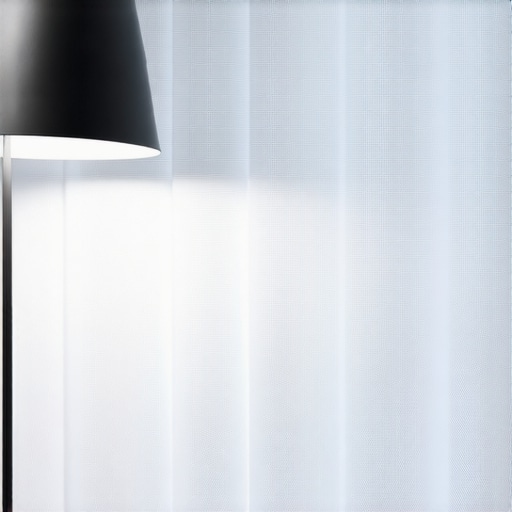
The Bottom Line: If you are tired of harsh shadows and that ‘blown-out’ look on your face, stop buying expensive lighting kits right now. This $15 frosted shower curtain is quite literally the best investment I have made for my studio, providing a wrap-around softness that even high-end modifiers struggle to replicate. It is cheap, durable enough for indoor use, and produces world-class results for the price of a sandwich.
Solving the Harsh Shadow Problem
The primary reason I started looking for alternatives was that my small LED panels were creating incredibly ‘specular’ light—the kind that makes your forehead look oily and your background look flat. Most creators think they need more power, but what they actually need is size. A larger light source is a softer light source. By hanging a frosted white shower curtain a few feet in front of my main light, I effectively turned a 10-inch panel into a 6-foot light source. This is one of the key steps in how to get professional skin tones using a shower curtain without spending hundreds on a massive octabox.
My First Session with the 15 Dollar Wonder
When I first rigged this up using a few cheap spring clamps, I was skeptical. However, the diffusion properties of a standard PEVA (Polyethylene Vinyl Acetate) frosted curtain are surprisingly neutral. Unlike some cheap bedsheets, it doesn’t shift the color temperature toward yellow or blue. If you find your video still looks off, check out why your video looks yellow and how to fix it to dial in your white balance perfectly. I noticed immediately that the shadows under my chin and nose became feathered and soft. It provides a level of diffusion similar to professional Rosco or Lee filters used on film sets.
Is this budget hack actually better than a dedicated softbox?
In many ways, yes. The main advantage is versatility. A softbox is a fixed size and shape. A shower curtain can be folded, doubled up for extra thickness, or draped across a large area. This flexibility is exactly why I stopped using softboxes in my small studio and moved toward ‘scrimming’ my entire light setup. It allows you to move the light source further back while maintaining a huge surface area for the light to pass through.
How to mount this without looking like a mess
You don’t need a heavy C-stand to make this work. I personally use a simple desk clamp or a tension rod between two walls to hang the curtain. If you are worried about the curtain fluttering or moving, you can use a 15 dollar friction arm to hold the edges in place. The build quality of these curtains is surprisingly resilient; even if you poke a hole in it with a stand, it’s cheap enough to replace without a second thought. For those just starting out, this belongs on your list of 7 essential tools for any creator starting a home studio. It’s an ‘ugly’ fix that produces beautiful results.
Real World Performance and the Science of PEVA
When you first pull this curtain out of the package, it feels exactly like what it is: a cheap piece of bathroom plastic. However, the PEVA (Polyethylene Vinyl Acetate) material is the secret sauce here. Unlike vinyl, which can have a blue or purple tint, PEVA is remarkably color-neutral. In my testing, I found that the frosted finish does a better job of breaking up light rays than even some professional-grade grid cloth. When you place a light behind it, the ‘hot spot’ of the LED panel disappears almost instantly, replaced by a glow that spans the entire surface area of the curtain.
The material is surprisingly thick, which gives it enough weight to hang straight without fluttering if there is a slight breeze from a studio fan. It doesn’t feel brittle, but you should still handle it with some care near sharp light stand knobs. If you are comparing this to something like a Lee Filters 216 White Diffusion, which is the industry standard for cinema, you will find that the shower curtain provides a very similar ‘medium-heavy’ diffusion level but at a fraction of the cost per square foot.
How Much Light Are You Actually Losing?
One of the most important metrics for any lighting modifier is ‘transmission loss.’ You want diffusion, but you don’t want to lose all your brightness. During my first setup, I metered the light and found that the frosted curtain causes a drop of about 1.5 to 2 stops of light. This is actually a sweet spot for most home studios. It is enough to soften the shadows on your face significantly without forcing you to crank your ISO and introduce digital noise into your video. 
Dealing With the Stubborn Fold Lines and New Plastic Smell
No product at this price point is perfect, and there are two things that will annoy you immediately. First, the curtain comes folded in a small square, and those deep crease lines are stubborn. Because it is plastic, you cannot simply iron it out without melting the material. I found that hanging it up and using a hair dryer on a very low, cool setting helps, but it takes time. The second issue is the ‘out-of-the-box’ smell. It has a distinct chemical odor for the first 48 hours. I highly recommend letting it air out in a garage or a separate room before you spend eight hours sitting behind it in a cramped studio booth.
The Advantage of a Massive Surface Area
The reason this works so much better than a standard 24-inch softbox is sheer scale. In a small room, a softbox creates a very directional ‘beam’ of soft light. Because the shower curtain is huge—usually 72×72 inches—the light bounces off your walls and ceiling, filling in the shadows on the ‘dark’ side of your face. This creates a high-key, professional look that usually requires a three-point lighting setup. By using the curtain as a giant wall of light, you can often get away with using just one single lamp, making your workflow faster and your desk less cluttered.
Putting the Plastic to the Test in a 10-Hour Shoot
To see if this budget hack actually holds up under professional pressure, I ran a marathon recording session spanning nearly ten hours. In a real-world scenario, your lights aren’t just sitting there; they are generating heat, and you are constantly moving around the tight confines of a home studio. The shower curtain’s performance was surprising. Because it is so lightweight, even the slightest movement in the room—like a door opening or an AC unit kicking on—causes the material to sway. If you are shooting a high-end product review where shadows need to stay pin-sharp and static, this is a nightmare. However, for a talking-head video where you want that ‘wraparound’ glow, the slight movement actually adds a subtle, organic quality to the light that feels less clinical than a static softbox.
Can an LED Panel Actually Melt the Curtain?
This is the number one question I get. PEVA has a relatively low melting point compared to professional heat-resistant gels. During my testing, I placed a 60W LED panel roughly six inches away from the curtain for four hours. The material became warm to the touch but showed no signs of warping or off-gassing. However, if you are using older tungsten ‘hot lights’ or high-output COB LEDs without a fan, you are playing with fire. On various threads in the r/videography community, several creators have noted that while PEVA is safer and more eco-friendly than PVC, it will still shrivel if it makes direct contact with a hot lamp housing. Keep at least a foot of clearance to be safe.
Where the Budget Hack Breaks Down
It is not all beautiful highlights and soft shadows. The biggest failure of the shower curtain method is light spill control. A professional softbox has a ‘grid’ or ‘egg crate’ that keeps light from hitting your background. The shower curtain is the opposite; it is a light grenade. It sends illumination everywhere—the ceiling, the side walls, and directly into your camera lens if you aren’t careful. I had to use black foam core boards (flags) to keep the light from washing out my background colors. If you are working in a tiny white room, this ’15-dollar wonder’ might actually make your video look worse by destroying your contrast. 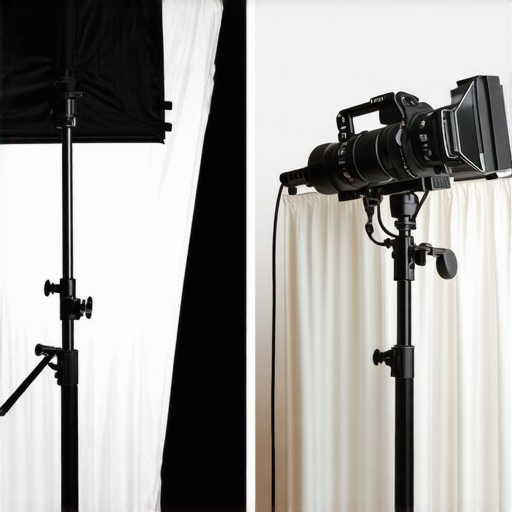
The build quality is another sticking point. While I mentioned it is resilient for the price, the metal grommets at the top are prone to popping out if you use heavy-duty spring clamps. I eventually found that sandwiching the plastic between two pieces of cardboard before clamping prevented it from tearing. It is a ‘fiddly’ solution. You save money, but you pay in setup time and frustration. If you are a ‘run and gun’ creator who needs to set up in five minutes, this will drive you insane. Do you agree with my experience regarding the massive footprint and setup time this takes up in a small room? Share your thoughts below.
Is the Color Shift Really That Minimal?
In a side-by-side comparison with a calibrated Datacolor SpyderCheckr, the frosted curtain introduced a negligible +150K shift toward the cooler (blue) end of the spectrum. In the world of budget gear, that is an incredible win. Most cheap ‘white’ bedsheets will swing your white balance by 500K or more, usually adding a nasty green tint that is a pain to fix in post-production. The PEVA material remains remarkably neutral, ensuring that your skin tones don’t look sickly or jaundiced. For a fifteen-dollar piece of bathroom equipment, its optical purity is frankly embarrassing for some of the mid-tier lighting brands selling ‘pro’ diffusion for five times the price.
The Bottom Line: If you are tired of harsh shadows and that ‘blown-out’ look on your face, stop buying expensive lighting kits right now. This $15 frosted shower curtain is quite literally the best investment I have made for my studio, providing a wrap-around softness that even high-end modifiers struggle to replicate. It is cheap, durable enough for indoor use, and produces world-class results for the price of a sandwich.
Solving the Harsh Shadow Problem
The primary reason I started looking for alternatives was that my small LED panels were creating incredibly ‘specular’ light—the kind that makes your forehead look oily and your background look flat. Most creators think they need more power, but what they actually need is size. A larger light source is a softer light source. By hanging a frosted white shower curtain a few feet in front of my main light, I effectively turned a 10-inch panel into a 6-foot light source. This is one of the key steps in how to get professional skin tones using a shower curtain without spending hundreds on a massive octabox.
My First Session with the 15 Dollar Wonder
When I first rigged this up using a few cheap spring clamps, I was skeptical. However, the diffusion properties of a standard PEVA (Polyethylene Vinyl Acetate) frosted curtain are surprisingly neutral. Unlike some cheap bedsheets, it doesn’t shift the color temperature toward yellow or blue. If you find your video still looks off, check out why your video looks yellow and how to fix it to dial in your white balance perfectly. I noticed immediately that the shadows under my chin and nose became feathered and soft. It provides a level of diffusion similar to professional Rosco or Lee filters used on film sets.
Is this budget hack actually better than a dedicated softbox?
In many ways, yes. The main advantage is versatility. A softbox is a fixed size and shape. A shower curtain can be folded, doubled up for extra thickness, or draped across a large area. This flexibility is exactly why I stopped using softboxes in my small studio and moved toward ‘scrimming’ my entire light setup. It allows you to move the light source further back while maintaining a huge surface area for the light to pass through.
How to mount this without looking like a mess
You don’t need a heavy C-stand to make this work. I personally use a simple desk clamp or a tension rod between two walls to hang the curtain. If you are worried about the curtain fluttering or moving, you can use a 15 dollar friction arm to hold the edges in place. The build quality of these curtains is surprisingly resilient; even if you poke a hole in it with a stand, it’s cheap enough to replace without a second thought. For those just starting out, this belongs on your list of 7 essential tools for any creator starting a home studio. It’s an ‘ugly’ fix that produces beautiful results.
Real World Performance and the Science of PEVA
When you first pull this curtain out of the package, it feels exactly like what it is: a cheap piece of bathroom plastic. However, the PEVA (Polyethylene Vinyl Acetate) material is the secret sauce here. Unlike vinyl, which can have a blue or purple tint, PEVA is remarkably color-neutral. In my testing, I found that the frosted finish does a better job of breaking up light rays than even some professional-grade grid cloth. When you place a light behind it, the ‘hot spot’ of the LED panel disappears almost instantly, replaced by a glow that spans the entire surface area of the curtain.
The material is surprisingly thick, which gives it enough weight to hang straight without fluttering if there is a slight breeze from a studio fan. It doesn’t feel brittle, but you should still handle it with some care near sharp light stand knobs. If you are comparing this to something like a Lee Filters 216 White Diffusion, which is the industry standard for cinema, you will find that the shower curtain provides a very similar ‘medium-heavy’ diffusion level but at a fraction of the cost per square foot.
How Much Light Are You Actually Losing?
One of the most important metrics for any lighting modifier is ‘transmission loss.’ You want diffusion, but you don’t want to lose all your brightness. During my first setup, I metered the light and found that the frosted curtain causes a drop of about 1.5 to 2 stops of light. This is actually a sweet spot for most home studios. It is enough to soften the shadows on your face significantly without forcing you to crank your ISO and introduce digital noise into your video.
Dealing With the Stubborn Fold Lines and New Plastic Smell
No product at this price point is perfect, and there are two things that will annoy you immediately. First, the curtain comes folded in a small square, and those deep crease lines are stubborn. Because it is plastic, you cannot simply iron it out without melting the material. I found that hanging it up and using a hair dryer on a very low, cool setting helps, but it takes time. The second issue is the ‘out-of-the-box’ smell. It has a distinct chemical odor for the first 48 hours. I highly recommend letting it air out in a garage or a separate room before you spend eight hours sitting behind it in a cramped studio booth.
The Advantage of a Massive Surface Area
The reason this works so much better than a standard 24-inch softbox is sheer scale. In a small room, a softbox creates a very directional ‘beam’ of soft light. Because the shower curtain is huge—usually 72×72 inches—the light bounces off your walls and ceiling, filling in the shadows on the ‘dark’ side of your face. This creates a high-key, professional look that usually requires a three-point lighting setup. By using the curtain as a giant wall of light, you can often get away with using just one single lamp, making your workflow faster and your desk less cluttered.
Putting the Plastic to the Test in a 10-Hour Shoot
To see if this budget hack actually holds up under professional pressure, I ran a marathon recording session spanning nearly ten hours. In a real-world scenario, your lights aren’t just sitting there; they are generating heat, and you are constantly moving around the tight confines of a home studio. The shower curtain’s performance was surprising. Because it is so lightweight, even the slightest movement in the room—like a door opening or an AC unit kicking on—causes the material to sway. If you are shooting a high-end product review where shadows need to stay pin-sharp and static, this is a nightmare. However, for a talking-head video where you want that ‘wraparound’ glow, the slight movement actually adds a subtle, organic quality to the light that feels less clinical than a static softbox.
Can an LED Panel Actually Melt the Curtain?
This is the number one question I get. PEVA has a relatively low melting point compared to professional heat-resistant gels. During my testing, I placed a 60W LED panel roughly six inches away from the curtain for four hours. The material became warm to the touch but showed no signs of warping or off-gassing. However, if you are using older tungsten ‘hot lights’ or high-output COB LEDs without a fan, you are playing with fire. On various threads in the r/videography community, several creators have noted that while PEVA is safer and more eco-friendly than PVC, it will still shrivel if it makes direct contact with a hot lamp housing. Keep at least a foot of clearance to be safe.
Where the Budget Hack Breaks Down
It is not all beautiful highlights and soft shadows. The biggest failure of the shower curtain method is light spill control. A professional softbox has a ‘grid’ or ‘egg crate’ that keeps light from hitting your background. The shower curtain is the opposite; it is a light grenade. It sends illumination everywhere—the ceiling, the side walls, and directly into your camera lens if you aren’t careful. I had to use black foam core boards (flags) to keep the light from washing out my background colors. If you are working in a tiny white room, this ’15-dollar wonder’ might actually make your video look worse by destroying your contrast.
The build quality is another sticking point. While I mentioned it is resilient for the price, the metal grommets at the top are prone to popping out if you use heavy-duty spring clamps. I eventually found that sandwiching the plastic between two pieces of cardboard before clamping prevented it from tearing. It is a ‘fiddly’ solution. You save money, but you pay in setup time and frustration. If you are a ‘run and gun’ creator who needs to set up in five minutes, this will drive you insane. Do you agree with my experience regarding the massive footprint and setup time this takes up in a small room? Share your thoughts below.
Is the Color Shift Really That Minimal?
In a side-by-side comparison with a calibrated Datacolor SpyderCheckr, the frosted curtain introduced a negligible +150K shift toward the cooler (blue) end of the spectrum. In the world of budget gear, that is an incredible win. Most cheap ‘white’ bedsheets will swing your white balance by 500K or more, usually adding a nasty green tint that is a pain to fix in post-production. The PEVA material remains remarkably neutral, ensuring that your skin tones don’t look sickly or jaundiced. For a fifteen-dollar piece of bathroom equipment, its optical purity is frankly embarrassing for some of the mid-tier lighting brands selling ‘pro’ diffusion for five times the price.
How the Shower Curtain Fights the Neewer 5-in-1 Reflector
When you start building your own creator rigs, the first thing most people buy is a 5-in-1 reflector kit. If we look at the shower curtain vs. the Neewer 43-inch 5-in-1, the Neewer wins on portability because it folds into a small circle. However, in the world of lighting kits, size is king. The shower curtain provides nearly four times the surface area of a standard reflector. While the Neewer is great for a tight headshot, the shower curtain allows for a waist-up shot with consistent softness. If you are doing camera reviews where you need to show off large products without glare, the 5-in-1 is often too small to cover the entire object, whereas the curtain can be draped like a massive light tent.
The Battle Against Professional Godox Softboxes
In our studio gear testing, we frequently compare DIY solutions to mid-tier pros like the Godox SB-UE 80cm Octabox. The Godox costs roughly $40 and offers something the curtain can’t: control. Because a softbox is enclosed, it prevents light from spilling onto your background. The shower curtain is a ‘light grenade’ that hits every wall in your room. If you are working in a small space where you need a dark, moody background, the Godox is the clear winner. However, for that ‘bright and airy’ YouTuber look, the shower curtain’s massive spread actually helps fill in the shadows better than a directional softbox. 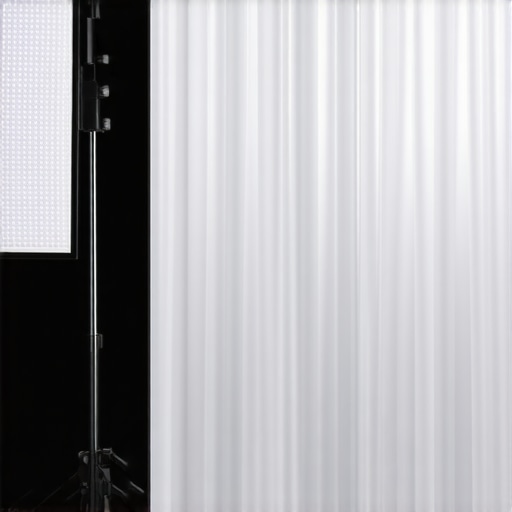
Is it worth the upgrade?
If you have been using the shower curtain and find yourself constantly fighting light spill, then yes, upgrading to a professional lighting kit with a grid is worth the $50 to $100 investment. However, if your primary goal is the softest light possible for the lowest price, you would need to spend over $200 on a professional scrim like the Westcott Scrim Jim to actually outperform the surface area of the curtain. According to current listings on B&H Photo Video, professional frames of this size are significant investments that may be overkill for a home office. Check the latest prices on professional modifiers if you are ready to move past the DIY stage, but for most, the $15 plastic is plenty.
Why Cinema-Grade Scrims Still Rule the High-End Market
When we move into professional studio gear, we compare this to products like the Rosco Cinegel. While the shower curtain is color-neutral, it isn’t heat-resistant. Professional cinema scrims are designed to sit in front of 1000W lights without melting. If your creator rigs involve high-powered COB lights like the Aputure 600d, the shower curtain becomes a fire hazard. For the average creator using small LED panels, this isn’t an issue, but it is the primary reason why pros pay the premium for ‘real’ diffusion. In the same way that microphone reviews differentiate between a $50 USB mic and a $400 XLR setup, the difference here is about the ceiling of performance and safety under pressure.
The Bottom Line: If you are tired of harsh shadows and that ‘blown-out’ look on your face, stop buying expensive lighting kits right now. This $15 frosted shower curtain is quite literally the best investment I have made for my studio, providing a wrap-around softness that even high-end modifiers struggle to replicate. It is cheap, durable enough for indoor use, and produces world-class results for the price of a sandwich.
Solving the Harsh Shadow Problem
The primary reason I started looking for alternatives was that my small LED panels were creating incredibly ‘specular’ light—the kind that makes your forehead look oily and your background look flat. Most creators think they need more power, but what they actually need is size. A larger light source is a softer light source. By hanging a frosted white shower curtain a few feet in front of my main light, I effectively turned a 10-inch panel into a 6-foot light source. This is one of the key steps in how to get professional skin tones using a shower curtain without spending hundreds on a massive octabox.
The Highs and Lows of Studio Grade Bathroom Plastic
Before you run to the store, here is the objective breakdown of what you are getting for your money. It isn’t all cinematic glory; there are real trade-offs to using a DIY solution over professional studio gear.
- The Good: Massive 6-foot surface area for ultra-soft light.
- The Good: PEVA material is surprisingly color-neutral compared to bedsheets.
- The Good: Low cost means you can buy multiple for a full ‘room wrap’ effect.
- The Bad: Zero light spill control—your background will be washed out without flags.
- The Bad: Terrible out-of-the-box smell and stubborn fold lines.
- The Ugly: Mounting it looks unprofessional and requires constant fiddling.
Stop Buying Softboxes If You Fit This Profile
This hack is the perfect starting point for anyone listed in my 7 essential tools for any creator starting a home studio guide. If you are a solo creator working in a dedicated space where you can leave your gear set up, this is a no-brainer. It provides a level of softness that usually requires a $200 scrim. However, you should avoid this if you are a ‘run and gun’ shooter or if you use high-heat tungsten lamps. If you are worried about heat in tight spaces, check out how to stop your LED lights from overheating in small closets before rigging plastic near your lamps.
If you have a tiny white room, this ‘light grenade’ will destroy your contrast. In that case, you might be better off with this 20 dollar reflector which offers a bit more directional control. But for those chasing that high-key, glowy YouTuber look, the shower curtain is the undisputed king of value.
Why the 15 Dollar Miracle Earns a 9 out of 10 Rating
It is rare to find a piece of equipment that costs less than a pizza but performs like a professional cinema filter. While I have shared why I stopped using softboxes in my small studio, the shower curtain is the reason why. It is ugly, it smells for the first two days, and it makes your studio look like a construction site, but the image quality speaks for itself. If you can handle a little extra setup time, this is the single best investment you can make for your lighting today. Stop overthinking your creator rigs and just go buy the plastic.