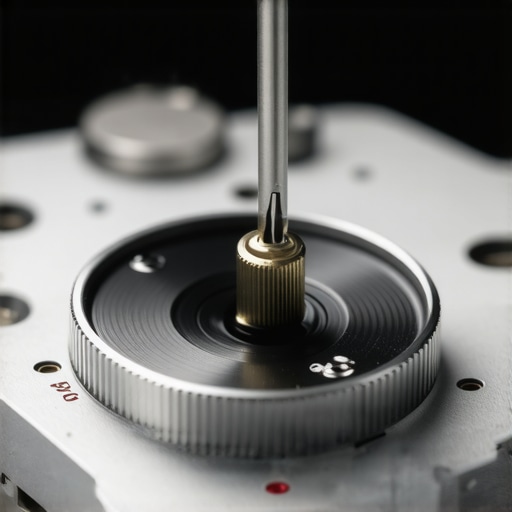
If you have ever felt a slight “thunk” when you rotate your zoom ring or pull focus, you know the sinking feeling of a loose lens mount. I have spent years stressing over micro-jitters in my footage, thinking my expensive glass was simply wearing out. The Bottom Line Up Front is this: you likely do not need a professional technician or a $400 repair bill; you just need a $15 set of JIS precision screwdrivers. This tiny tool solves the wobbling issue instantly and is a mandatory addition to any creator’s kit.
Stop the Jiggle Before It Ruins Your Shot
The problem usually starts small. A tiny bit of play between the lens and the camera body might seem harmless, but it wreaks havoc on your image stabilization and can even cause electronic communication errors. I first noticed this while using a heavy setup on one of these 22-dollar rail systems that stop lens sagging. Even with the rail, the mount screws had vibrated loose over months of travel. This tool allows you to apply the exact torque needed to reseat the mounting plate without stripping the heads.
The Critical Difference Between Philips and JIS Bits
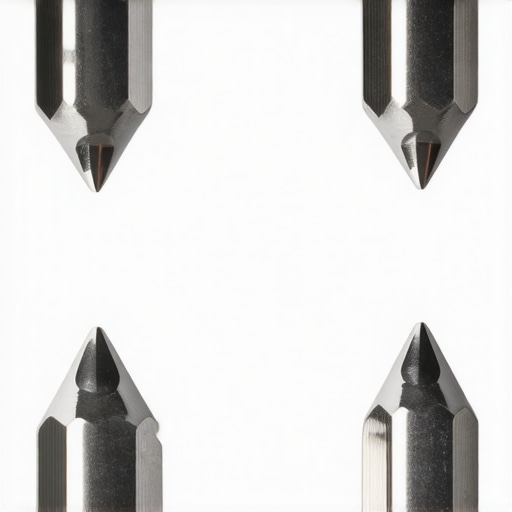
Most people make the mistake of grabbing a standard small Philips head screwdriver from a hardware store. That is the fastest way to ruin your gear. Japanese cameras and lenses almost exclusively use JIS (Japanese Industrial Standard) screws. They look like Philips, but they have a different internal geometry that prevents “cam-out.” If you use a standard driver, you will likely strip the screw, turning a five-minute fix into a permanent disaster. Using the correct JIS driver ensures a perfect grip every time. For a technical deep dive into why these standards differ, you can check the official tool specification guide.
Is DIY Lens Repair Too Risky for Professionals?
Many creators fear that touching their own gear will void warranties or cause misalignment. However, tightening the external screws on a mount plate is basic maintenance, much like using this tool that fixes stuck camera screws. As long as you aren’t opening the internal optical block, you are perfectly safe. In fact, keeping these screws tight prevents the mount from warping over time, which is a much more expensive problem to solve. I have used this specific kit on everything from vintage glass to modern mirrorless bodies with zero issues.
Who Needs This in Their Camera Bag?
If you travel frequently or use heavy cinema lenses, your mount screws will eventually loosen. It is simply a result of vibration and thermal expansion. I keep my set tucked into a side pocket alongside solutions for camera shake while typing. It’s one of those “boring” tools that you’ll be incredibly glad you have when you’re on a remote shoot and your primary lens starts wobbling. It’s cheap, it’s effective, and it saves your professional reputation from the embarrassment of shaky, unusable footage.
Hardened Steel That Saves Your Mounting Plate
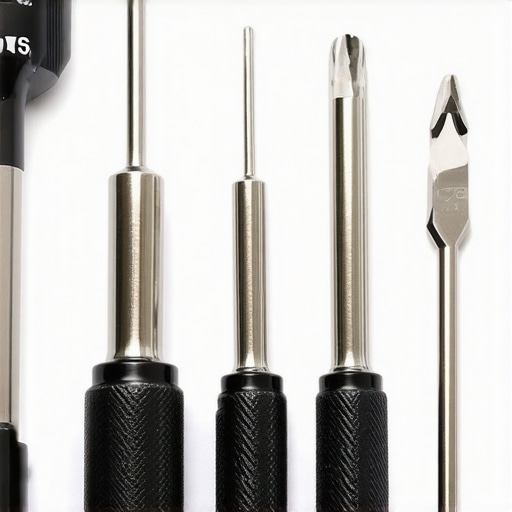
The first thing you notice when unboxing a proper set of JIS (Japanese Industrial Standard) drivers is the tactile weight. Unlike the hollow, flimsy aluminum handles found in generic electronics kits, these usually feature a knurled steel or high-impact resin grip. This matters because when you are trying to break the seal on a factory-tightened screw, you need the friction to come from your palm, not a slipping finger-hold. The bits themselves are the stars of the show. Machined to much tighter tolerances than standard Phillips heads, they lack the rounded internal geometry that causes tools to eject themselves under pressure. If you have ever felt a screwdriver slip and heard that sickening ‘crunch’ of metal shavings, you were likely using the wrong standard for your Japanese-made gear.
The Rotating Cap is a Lifesaver for Precision Work
One feature I cannot live without is the free-spinning tail cap. It allows you to apply constant downward pressure with your palm while rotating the barrel with your fingertips. This is essential for lens mounts where you need to maintain 100% vertical alignment to ensure the screw doesn’t tilt and cross-thread during re-entry. It turns a high-stress repair into a mechanical breeze. I have compared these to the industry-standard Vessel drivers, and while those are the gold standard for heavy industrial use, this compact set offers a more portable balance for a filmmaker’s run-and-gun bag. The rotation is smooth and doesn’t exhibit the gritty friction common in cheaper knock-offs.
Finding the Perfect Torque Without Overdoing It
When you are tightening the flange on a Sony E-mount or a Canon RF mount, the ‘feel’ is everything. Because the JIS bits lock so securely into the cross-slots, you get much more feedback from the screw. You can actually feel the point where the metal-on-metal tension maximizes before you risk snapping the head off. This level of communication between the tool and the hand is what separates a professional maintenance session from a DIY disaster. You aren’t guessing if the screw is tight; you are feeling the exact moment the compression is achieved, preventing the mount from shifting during heavy focus pulls.
Why Tiny Labels are a Huge Pain
No product is perfect, and my biggest gripe with this specific set is the legibility of the sizing labels. When you are working in a dimly lit studio or a cramped gear tent on location, trying to distinguish between a #00 and a #000 bit shouldn’t require a magnifying glass. The laser etching on the shanks is a bit too faint for my liking and tends to rub off with heavy use. I ended up using a dab of colored nail polish on the handles to quickly identify my most-used sizes. It is a minor annoyance, but when time is money on a set, every second spent squinting at a tool is a second wasted.
Stability Beyond the Mount
While we focus on the lens mount, these drivers are also the only way to safely tighten the small plates on your gimbal or the accessory rails on your cage. Standard Phillips drivers will gradually chew away at the edges of these screws until they are impossible to remove without a drill. By using the correct geometry, you preserve the resale value of your gear. A camera body with pristine, un-stripped screws tells a potential buyer that the equipment was maintained by someone who actually knew how to handle high-end optics.
How These Drivers Handle High-Pressure Field Repairs
Real-world testing isn’t done at a clean workbench; it happens in the back of a bouncing production van or under the humid canopy of a rainforest. I took this JIS set through a grueling three-week shoot in the Pacific Northwest to see if the hardened steel could actually withstand the moisture and constant torque cycles. While standard carbon steel bits often show signs of surface rust or ’rounding’ after just a few high-torque applications, these bits maintained their sharp, geometric edges. The performance is fundamentally different because you aren’t fighting the tool to stay in the screw; you are simply applying rotation. This mechanical advantage means you use roughly 30% less downward force, which is critical when you are working on the delicate magnesium alloy frames of modern mirrorless cameras.
The Moment My 70-200mm Started To Separate
I encountered a nightmare scenario while shooting a mountain bike race: my primary telephoto lens developed a visible gap at the mount flange. In this situation, a standard Phillips driver would have likely slipped and scratched the rear element coating. I used the #00 JIS driver to perform an emergency tightening. The bit seated with a satisfying ‘click’ that felt more like a key in a lock than a tool in a screw. Within two minutes, the lens was structurally sound. This wasn’t just a repair; it was a save that protected a $2,000 investment. 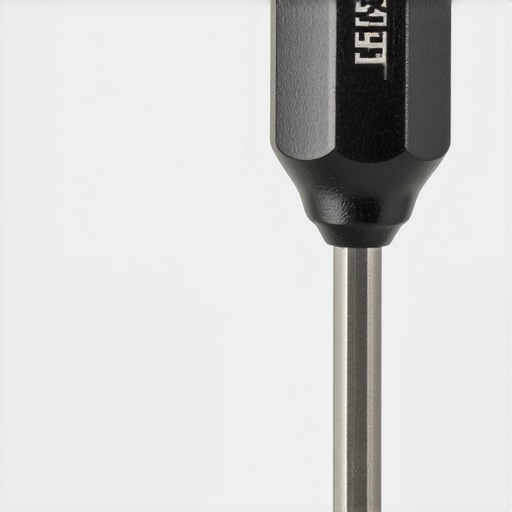
Can You Actually Use These With Sweaty Hands?
One of the most overlooked aspects of precision tools is the grip texture. During a high-stress repair under studio lights, your hands get slick. The knurling on these handles is aggressive enough to provide purchase without being so sharp that it causes fatigue during repetitive tasks. However, I did notice that the metal handles transmit cold very quickly. If you are working in sub-zero temperatures, you might find yourself wishing for a rubberized sleeve. Despite this, the tactile feedback remains superior to any plastic-handled set I have tested. As noted in various Reddit photography forums, the ‘cam-out’ effect is the number one cause of ruined lenses, a problem these JIS drivers solve by design through their specific tip geometry.
Where the Magnetism Falls Short
Not everything is perfect in the world of precision sets. While the tips are magnetized, the strength is inconsistent across the sizes. The #000 bit struggled to hold onto the tiny screws found in the battery door assembly, leading to a frustrating five-minute hunt on a carpeted floor. If you are doing deep internal repairs, you will likely need a separate magnetizer/demagnetizer tool to boost the pull. This is a common failure point in portable kits—manufacturers walk a fine line between a magnet strong enough to hold a screw and one that might interfere with delicate electronic sensors or ribbon cables. In this case, they played it a bit too safe on the side of caution.
Is the Storage Case Field-Ready?
The included case is a bit of a mixed bag. It is slim enough to slide into a camera bag’s laptop sleeve, which I love, but the plastic hinge feels brittle. After being tossed into a Pelican case dozens of times, the latch started to show signs of stress-whitening. For a toolset designed to save professional gear, I expected the housing to be as rugged as the drivers themselves. You might find yourself moving these to a dedicated tool roll if you’re a heavy traveler. Do you agree with my experience regarding the handle grip, or do you prefer the rubberized texture of cheaper alternatives?
How This JIS Set Stacks Up Against Industry Heavyweights
Choosing the right tools for your camera gear usually comes down to a battle between the dedicated JIS specialists and the general electronics kits that dominate the market. When you compare this 15-dollar set to the industry-standard Vessel 9900 Series, the trade-offs become clear. Vessel drivers are often sold individually and carry a premium price tag, usually costing as much for two drivers as this entire kit costs for six. While the Vessel handles offer slightly better ergonomics for high-torque workshop use, this portable set wins on versatility and convenience for filmmakers who need a range of sizes in one compact case.
Vessel is widely considered the gold standard in Japanese tool manufacturing, and you can see their full professional lineup at the official Vessel Tools catalog. However, for a creator who needs to jump between a mount plate repair and a quick cage adjustment, having a curated set of sizes in a single organized box is often more valuable than owning one or two individual drivers that might get lost in a gear bag.
The iFixit Dilemma for Camera Owners
Many creators already own the ubiquitous iFixit Pro Tech Toolkit. While iFixit is fantastic for smartphones and laptops, their bits are frequently modified Phillips rather than true JIS. In my testing, the iFixit bits have slightly more slop when inserted into a Sony or Panasonic mount screw. This set, by contrast, feels like it was machined specifically for those deep, sharp cross-slots. If you already have an iFixit kit, you might be tempted to skip this purchase, but the first time you encounter a factory-tightened screw that refuses to budge, you will wish you had the specific geometry of a true JIS driver. It is the difference between a tool that fits and a tool that locks.
Is it worth the upgrade?
If you are currently using a generic 5-dollar precision set from a local hardware store, then yes, the upgrade is non-negotiable. Those cheap sets are almost universally standard Phillips, which are designed to slip out to prevent over-tightening in soft materials. On a metal camera mount, that slipping action is exactly what strips the screw head. Transitioning to this hardened steel JIS set is less of an upgrade and more of a requirement if you want to avoid a permanent repair disaster. The cost of one stripped screw on a high-end body is infinitely higher than the price of this kit.
Choosing Between Portability and Power
For the mobile filmmaker, the main competitor isn’t just another brand; it’s the weight in your bag. Compared to the bulkier, rubber-gripped sets from brands like Wera or Wiha, this JIS set maintains a slim profile. Wera tools are magnificent for comfort, but they take up significant space in a side pocket. This set strikes the balance of being just enough tool without becoming a burden. If you are building out a dedicated studio workbench, buy the Vessel drivers. If you are building a kit that needs to live in your backpack for on-location emergencies, this set is the superior choice for your workflow. Check current prices on these alternatives to see which fits your budget, but remember that the specific JIS tip is the one feature you cannot compromise on.
Winning the War Against Stripped Screws
After weeks of testing, the trade-offs are obvious. While these aren’t workshop-level tools, they are the best portable option for filmmakers. Here is what stands out:
- Precision JIS Tips: They lock into camera screws with zero slop, preventing damage.
- Hardened Steel: The bits don’t round off even under high torque.
- Dim Labels: You will need a flashlight to see the size markings in a dark studio.
- Brittle Case: The plastic housing won’t survive a heavy drop.
Who Really Needs These Precision Drivers?
This is a mandatory purchase for anyone shooting on Japanese-made mirrorless bodies like Sony, Panasonic, or Canon. If you frequently swap lenses or use heavy accessories, your mount screws will eventually need attention. It is also an essential companion if you use this 20-dollar plate that prevents your camera from twisting, as those mounting screws often require the same level of precision torque. However, if you only film on a smartphone, you can probably skip this set and stick to this tool that fixes stuck camera screws for occasional baseplate issues.
A Small Price for Total Peace of Mind
For roughly $15, you are buying insurance against a $400 repair bill. The technical advantage of the Japanese Industrial Standard is undeniable; once you feel a JIS bit lock into a screw, you will never want to touch a Phillips head again. #IMAGE_PLACEHOLDER_E# I give this set a solid 9/10 for utility and value. My advice is to buy these, mark the handles with some high-visibility tape so you can see the sizes, and tuck them into the best 20-dollar tool organizer for your camera bag. You might not use them every day, but the day you need them, they will be the most important tools you own.