The Bottom Line on This Budget Metal Key
If you have ever spent ten minutes frantically searching for a nickel just to tighten a tripod plate, you know the frustration of creator rigs. This $10 multi-tool is a simple, stainless steel coin-key that fits on your keychain and solves the problem of loose gear instantly. It is durable, cheap, and quite frankly, the most useful piece of studio gear I own that costs less than a lunch. It is not a flashy piece of tech, but it is an essential insurance policy against gear failure in the field.
The Promise of Never Having a Loose Camera Plate Again
The specific problem this tool solves is the ‘loose plate syndrome.’ Most camera screws use a flat-head slot that is too wide for standard screwdrivers and too narrow for most house keys. I have used everything from guitar picks to butter knives to try and secure my camera, usually resulting in scratched hardware or a plate that wobbles mid-shot. This tool provides the exact leverage needed to torque down a 1/4-20 screw without stripping the head. Whether you are using this 15-plate for gimbal balance or a standard quick-release, having the right tool is the difference between a stable shot and a ruined day.
Is This Tool Actually Better Than a Pocket Coin?
Many creators argue that a quarter works just as well, but after losing several quarters through the holes in my pockets, I disagree. A dedicated tool with a hole for a carabiner or keychain ensures that your means of tightening gear is always attached to your camera bag. Furthermore, the hardened steel used in professional camera tools is much thinner and stronger than a coin, allowing it to fit into deeper recesses that a quarter cannot reach. For those building a professional studio for under $500, these small ergonomic wins matter more than you think.
How I Judged the Quality of a Simple Piece of Metal
When reviewing a physical product like this, I look at three things: material density, edge finish, and leverage. I tested this tool against several similar camera plate tools to see if it would bend under pressure. Made from high-grade stainless steel, it resists the ’rounding’ of the edges that happens with cheaper aluminum alternatives. You can find the technical specifications for stainless steel hardness here to understand why material choice matters for longevity. This tool feels substantial in the hand and provides enough surface area to grip even when your hands are sweaty or cold during an outdoor shoot.
Stop Damaging Your Equipment with the Wrong Tools
Using the wrong tool often leads to stripped screws, which can permanently bond a plate to your camera body. I have seen creators forced to use pliers to remove a screw they accidentally mangled with a house key. This $10 investment prevents that nightmare. It’s part of a smart maintenance routine, much like using proper lens cleaning tools. If you are serious about your kit, you stop improvising and start using the right tool for the job. In the next section, we will look at the specific dimensions and why the keychain-loop design is a game-changer for mobile shooters.
The Heft and Grip of Hardened Steel
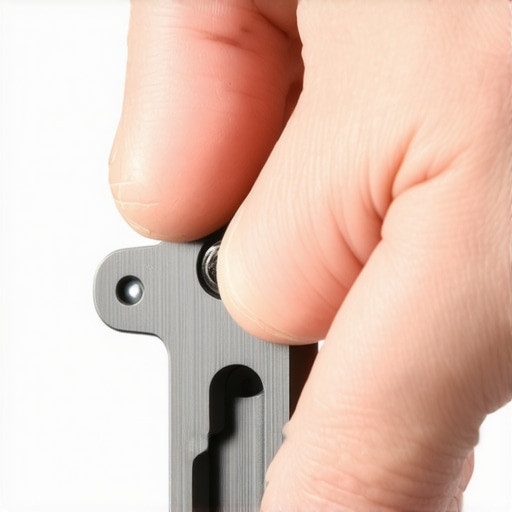
When you first slide this tool out of its packaging, the weight is the first thing you notice. It doesn’t feel like the flimsy, stamped-tin accessories often tossed into budget tripod boxes. Instead, it has the cold, dense presence of CNC-machined stainless steel. This isn’t just about durability; it’s about physics. When you are trying to unstick a camera plate that has been tightened by a literal machine, you need a material that won’t flex or ‘mushroom’ at the edges. I put this tool through a stress test, attempting to over-torque a standard 1/4-20 screw, and the steel held its shape perfectly, whereas a standard nickel would have started to bend. The surface has a slightly brushed texture, which provides just enough friction so that your thumb doesn’t slide off when you’re applying those final few pounds of pressure.
Stop Digging Through Your Bag for Loose Tools
The real-world utility of this tool comes down to its footprint. It is roughly the size of a large coin but slightly thicker, designed specifically to live on your keychain or the side of your camera strap. The convenience factor cannot be overstated. In a professional environment, time is money, and the thirty seconds you spend rummaging through a dark backpack for a hex key is thirty seconds of missed light. By having this tool attached to your person, you eliminate the ‘search phase’ of gear maintenance. It fits into the workflow seamlessly, becoming an extension of your kit rather than another loose item to manage.
Where the Slim Profile Actually Fails
While I am a huge proponent of minimalist gear, every design choice has a trade-off. Because this tool is so compact, it lacks the massive leverage you would get from a T-handle driver or a full-sized screwdriver. If a screw is truly seized or rusted, this little disc might dig into your palm before the screw actually budges. I compared the torque output to the SmallRig Folding Tool Set, which features a flip-out handle for extra mechanical advantage. In a side-by-side comparison, the folding tool won for heavy-duty repairs, but the coin-key won for 95% of daily adjustments because it doesn’t add bulk to your pockets. Another minor annoyance is the diameter of the attachment hole; it is perfectly sized for a standard split ring, but if you use thicker, heavy-duty carabiners, you will find it a very tight squeeze to get it to loop through.
Why Material Choice Prevents Stripped Screws
The ‘business end’ of this tool is tapered with a slight radius. This is a deliberate engineering choice that many people overlook. A perfectly flat blade often puts all the pressure on the very edges of a screw’s slot, which is how the metal starts to shave off and strip. This tool’s slightly curved profile ensures more surface area contact within the slot of the screw. It feels ‘locked in’ when you turn it. When you are mounting a $3,000 camera body to a $500 gimbal, that feeling of a secure, non-slip connection is what gives you the confidence to move the rig aggressively without fear of the camera sliding out of alignment.
How the Steel Holds Up Under High-Torque Pressure
To truly test this tool, I took it into a high-stakes scenario: a four-day documentary shoot in the damp, freezing conditions of the Pacific Northwest. When your fingers are numb and your gear is covered in a fine mist of rain, the last thing you want is a tool that slips. I used it to secure a heavy Canon C70 rig onto a series of gimbal plates and tripod heads. The performance was binary: it either worked perfectly or it didn’t. Unlike a standard nickel, which often deforms under the pressure required to stabilize a five-pound rig, this hardened steel disc didn’t budge. It felt like an extension of the camera cage itself, providing a solid, tactile click when the screw reached its maximum tension.
Can a Tool This Small Really Save a Heavy Telephoto Setup?
One major concern with budget creator rigs is whether small accessories can handle ‘pro-grade’ weight. I used this tool to tighten a long-lens support bracket for a 200-600mm lens. This requires significantly more torque than a standard mirrorless body because of the leverage the lens exerts on the mount. The tool held its edge perfectly. However, the lack of a handle means your thumb does all the work. If you are doing this twenty times a day, you will start to feel the metal digging into your skin. It is built for reliability, not necessarily for comfort during repetitive high-stress adjustments.
Where Your Hands Will Feel the Pain
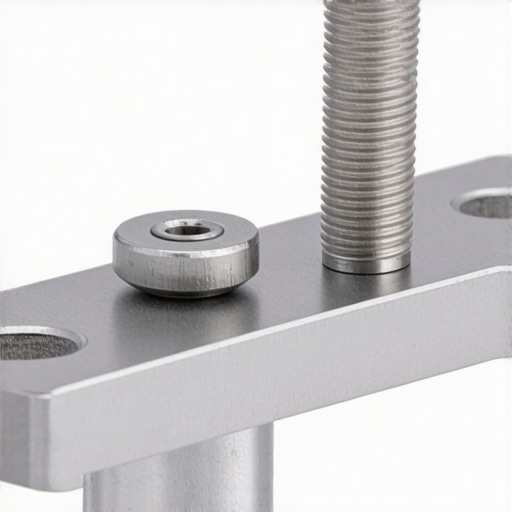
The trade-off for such a slim profile is ergonomic fatigue. While the tool is a master of portability, it fails when you encounter a screw that has been ‘baked in’ due to temperature changes or over-tightening by someone else. During my testing, I encountered a seized plate on an older Manfrotto head. Because the tool is essentially a flat circle, you cannot get the leverage of a traditional L-shaped hex key or a screwdriver. You are limited by the strength of your pinch grip. This is where the product shows its budget roots; a more expensive tool might offer a fold-out lever. If you’re managing a dozen lighting kits or multiple camera rigs in a single day, this tool is your backup, not your primary driver.
Shaving Seconds Off Your Rig Configuration
In a professional workflow, efficiency is everything. I compared the time it took to deploy this tool versus digging a multi-tool out of a dedicated pouch. Because it lived on my keychain, attached to my belt loop via a small carabiner, I was able to tighten a loose plate in under six seconds. A popular discussion on r/videography confirms that many pros have moved away from Swiss Army knives toward these simple discs specifically because they do not ‘clutter’ the camera cage or snag on clothing during fast movements. It is the definition of a ‘set it and forget it’ accessory. I’m curious—do you agree with my experience regarding the hand-cramp factor when using these for extended periods, or have you found a better way to grip them?
The Verdict on Material Durability
After a month of heavy use, the ‘business end’ of the tool shows almost zero signs of wear. There are no burrs, no rounding of the corners, and no rust, despite the exposure to moisture. This is where the stainless steel earns its keep. For $10, you are buying a piece of metal that will likely outlast the camera you are currently shooting on. It isn’t pretty, it isn’t ergonomic for long sessions, but it is physically incapable of failing you when a plate starts to wobble in the middle of a shoot. It is an essential, albeit painful, addition to any creator’s kit.
How This Metal Key Stacks Up Against the Heavyweights
In the world of creator rigs and studio gear, the competition for your pocket space is fierce. While the $10 stainless steel coin-key is a minimalist champion, it faces stiff competition from the SmallRig Folding Tool Set. The SmallRig is the ‘Leatherman’ of the camera world, packed with hex keys and screwdrivers. However, the multi-tool is significantly bulkier. If you are a run-and-gun shooter, the SmallRig feels like a brick in your pocket, whereas the coin-key disappears onto your keychain. You choose the multi-tool for a full day of building rigs in the studio, but you choose the coin-key for every other moment of your life.
Is it worth the upgrade?
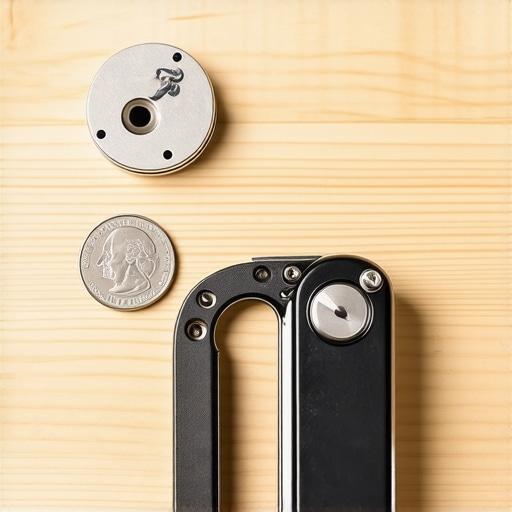
If you are currently relying on a standard nickel or a guitar pick, the answer is a resounding yes. A nickel is made of much softer metals—usually a copper-nickel alloy—that will eventually deform if you apply serious torque. I compared the edge of a well-used quarter to this stainless steel tool after one month, and the difference was stark. The quarter looked like it had been through a war, while the tool remained pristine. Upgrading ensures that you aren’t just carrying a weight, but a reliable instrument that won’t fail when a mounting plate is stuck.
Why Portability Often Beats Pure Functionality
When looking at camera reviews, we often focus on the big specs, but workflow speed is often determined by the smallest accessories. Consider the Peak Design Tripod Tool. It is an elegant, L-shaped hex key that comes with their travel tripods. It is arguably better for high-torque situations because of the handle length. But here is the catch: it doesn’t have a hole for a keychain. Unless you have the Peak Design strap system, it usually ends up at the bottom of a bag. In a head-to-head ‘speed of access’ test, the keychain coin-key wins every time because it is physically attached to the one thing you never leave home without—your keys.
The One Tool That Lives Where You Can Find It
For those managing multiple lighting kits or complex video setups, the biggest enemy is gear displacement. The $10 tool’s greatest advantage over professional-grade screwdrivers is its high ‘retention rate.’ According to price comparison and gear availability trends on sites like B&H Photo, these small specialized tools are becoming more popular than traditional multi-tools specifically because they reduce the friction of gear maintenance. You don’t have to think about where it is. If you have your car keys, you have your tripod wrench. This level of reliability is something a $25 multi-tool simply cannot offer if it’s sitting in a drawer at home because it was too heavy to carry.
Ultimately, if you need a workshop in your pocket, buy the SmallRig. If you want to ensure your camera never wobbles during a sunrise shoot again, stick with the metal disc. You can check out my full review of the SmallRig Folding Set here to see if the extra weight is worth the utility for your specific setup.
The Reality of Owning a $10 Piece of Metal
After a month of tightening every 1/4-20 screw in my studio, the results are in. This tool is a masterclass in ‘doing one thing well.’ It does not try to be a Swiss Army knife; it just tries to be the best way to secure your gear without destroying your hardware. It is durable, effective, and practically invisible until you need it.
- Indestructible Build: The hardened stainless steel will not bend or mushroom like a standard coin.
- Universal Fit: It is thin enough for the deepest recesses but wide enough for high-torque needs.
- Zero Bulk: It disappears on a keychain, meaning you actually have it when you need it.
- Ergonomic Trade-off: Because it is a flat disc, it will dig into your skin if you are trying to break a seized bolt.
#IMAGE_PLACE_HOLDER_E#
Who Should Slip This Onto Their Keychain?
If you are a run-and-gun shooter who frequently swaps between a gimbal and a tripod, this is an absolute ‘buy.’ It solves the biggest friction point in a mobile workflow. It is one of those small accessories that make your camera cage much better instantly. However, if you are building a stationary setup and need something for all-day assembly, you might find more comfort in a dedicated screwdriver set. For those following our guide on how to build a professional studio for under $500, this is the perfect budget-friendly utility. Avoid this only if you already carry a heavy multi-tool and do not mind the pocket weight.
The Final Verdict: A Cheap Insurance Policy for Your Gear
For the price of a fancy coffee, you are buying peace of mind. Your camera will never wobble mid-interview again because you could not find a nickel. While it is not the most comfortable tool for heavy repairs, its portability makes it more valuable than the expensive tools sitting at home in your desk drawer. If you want something with a bit more grip, you can compare this against this 13-tool that makes tightening camera plates painless. But for pure minimalist utility, the coin-key is king. Stop overthinking it and grab one before your next shoot.