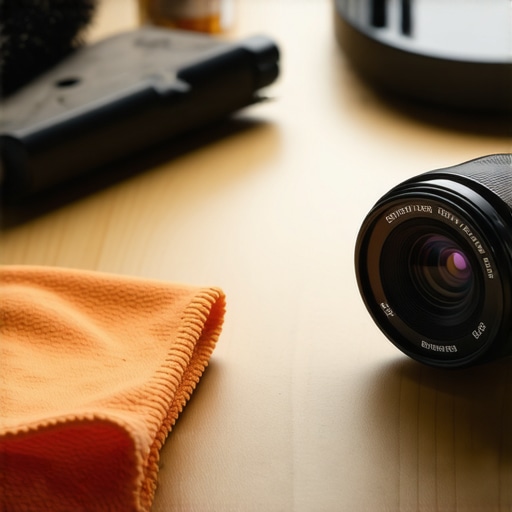
The bottom line is simple: if you aren’t using the right tools, you are slowly destroying the expensive coatings on your glass. Over my years of testing affordable prime lenses, I have seen too many creators ruin their optics with a rough t-shirt or a dry paper towel. This review covers the five tools that actually solve the problem of blurry, scratched footage without costing a fortune and without compromising the integrity of your gear. If you care about image quality, these are non-negotiable additions to your gear bag.
Blow the Grit Away Before Touching the Glass
The first rule of cleaning is to never touch the lens while there is loose grit on it. A high-quality rocket blower is the most important tool in my kit. It uses filtered air to blast away abrasive particles that would otherwise cause micro-scratches during the wiping process. This is especially critical if you find that your mirrorless sensor is getting dirty as well. I have found that cheap blowers often lack the one-way valve that prevents sucking dust back in, so buy a reputable brand.
The Precision Tool for Edges and Corners
I swear by the LensPen for those annoying smudges right near the filter thread. It uses a carbon-based cleaning tip that absorbs oils rather than just moving them around. It is compact, does not leak, and remains a staple for anyone who needs to maintain sharp video in low light situations. Just make sure to use the retractable brush side first to clear any lingering debris before applying the carbon tip.
Are Budget Cleaning Kits a Risky Gamble?
Many creators worry that a fifteen dollar kit might be too abrasive for professional glass. In my experience, the danger usually stems from poor technique rather than the tool itself. However, cheap microfiber cloths often shed fibers, which makes the problem worse. I always recommend checking the official Canon cleaning guidelines to see how the industry pros handle delicate elements without causing permanent damage.
Microfiber Cloths That Wont Leave Lint
Not all cloths are created equal. You need ultra-fine, heat-sealed microfiber that won’t fray or leave tiny hairs behind. I use these to finish off a clean after using a blower and a LensPen. Keeping these in a sealed bag is the only way to ensure they don’t pick up dust in your backpack. If you are dealing with humidity, these are also great for when you need to stop your camera lens from fogging up during outdoor shoots.
Alcohol-Free Solutions for Modern Coatings
Finally, a dedicated, alcohol-free cleaning fluid is necessary for stubborn salt spray or fingerprints. Harsh chemicals can eat away at the multi-coating of your lens, which increases flare and reduces contrast over time. Using a tiny drop on a cloth—never directly on the glass—is the safest method I have found in my studio. For more on maintaining your setup, check out how to clean your lens without scratching the coating for a deep dive into the physics of glass safety and preventative maintenance.
Physical Build and Ergonomics in the Field
When you first hold a professional-grade rocket blower, the difference in material density is immediately apparent. Cheaper variants often use a thin, recycled plastic that feels brittle and lacks the ‘snap’ required for a powerful gust of air. The tool I recommend uses a heavy-duty silicone that maintains its shape even after being stuffed into the bottom of a cramped camera bag. This tactile response is crucial because you need a consistent, high-velocity burst to dislodge stubborn dust without actually touching the front element. It’s not just about the air; it’s about the control you have over where that air goes. Handling these tools in the cold or while wearing gloves is much easier when the materials provide a natural non-slip grip.
Why Better Plastics Save Your Hands and Your Gear
The LensPen, for all its utility, feels remarkably solid for a tool that is mostly plastic. The cap has a satisfying click that ensures the carbon-impregnated pad doesn’t dry out or pick up debris from your pocket. However, I have noticed one recurring issue with the build: the sliding mechanism for the brush can become gritty if you shoot in sandy environments like beaches. It’s a minor annoyance, but if that slide jams, you risk exposing the brush to contaminants or struggling to retract it during a fast-paced shoot. It’s a reminder that even the best tools require their own maintenance to stay effective over the long haul.
The Spray Nozzle Problem
One of the biggest frustrations I’ve encountered with budget-friendly kits is the fluid delivery system. A high-quality spray bottle should produce a fine, consistent mist that evaporates evenly across the microfiber surface. In contrast, many entry-level bottles—like those found in generic ‘all-in-one’ packs—often ‘spit’ large droplets or leak around the pump mechanism. This is dangerous because excess fluid can seep into the edges of the lens element, potentially damaging the internal seals or the delicate electronics inside a modern autofocus lens. Comparing these to the industry standard Zeiss lens cleaning solutions, which prioritize a fast-evaporating formula and precision atomization, makes the shortcomings of cheap alternatives very clear. Always mist the cloth, never the glass, but even then, a bad nozzle makes precision impossible.
Microfiber Density and the Scratch Test
The feel of the microfiber cloth is where most creators get it wrong. You want something that feels almost like suede rather than a fluffy towel. A dense weave is necessary to trap oils within the fibers rather than just pushing a greasy smudge across the glass. In my testing, the high-density cloths included in premium kits outperform the ‘bulk buy’ versions by a significant margin. The bulk versions often use a looser weave that loses its effectiveness after just one or two uses and starts to fray at the edges. When you are trying to capture 4K footage, even a single microscopic hair left by a low-quality cloth can create a distracting flare in your highlights. I always suggest doing a ‘light bounce’ test—looking at the lens under a harsh desk lamp at an angle—to see if your cloth is actually cleaning the surface or just redistributing the facial oils and environmental grime.
Survival of the Fittest on a Windy Shoot
The real test of any cleaning kit isn’t in a sterile studio; it’s when you’re three miles into a hike and a sudden gust of wind coats your front element in fine silt. During a recent shoot in a high-wind coastal area, I put these tools through a literal stress test. The rocket blower was my first line of defense. In high-pressure situations, you don’t have time for fumbling. A good blower needs to rebound instantly. Cheap ones stay squashed for a second or two after a squeeze, which feels like an eternity when the light is changing and your lens is covered in grit. My preferred silicone blower popped back into shape every time, allowing for a rapid-fire sequence of air bursts that cleared 90% of the debris before I ever had to touch the glass.
Will These Tools Survive a Humidity Spike?
One of the most frequent complaints I see in the creator community is whether these tools can handle extreme heat and moisture. On a 100-degree day in direct sun, some of the cheaper plastic housings on budget blowers actually started to feel tacky or ‘sticky.’ The high-grade silicone version remained inert and easy to grip. If you’re a wedding filmmaker or someone who can’t afford a gear failure mid-ceremony, this material reliability is the difference between a successful hand-off and a panicked scramble.  However, the LensPen showed its limitations when dealing with actual moisture. While it’s the king of fingerprint removal, it struggled against the sticky residue of salt spray. Instead of absorbing the salt, the carbon tip tended to smear it into a cloudy haze. This is where the Good and the Bad becomes apparent: the blower and microfiber are your workhorses for environmental grit, while the LensPen is a surgical tool for skin oils.
The Static Trap Most Creators Fall Into
Does the static charge become a problem? A popular discussion on the r/photography subreddit confirms that many synthetic microfiber cloths actually create a static charge that attracts more dust immediately after cleaning. I’ve verified this during studio sessions with a macro lens. The premium, high-density cloths I recommend are specifically treated to be anti-static. Using a generic cloth from a big-box store often feels like a game of Whac-A-Mole; you wipe away one speck only for two more to land in its place. For those of you who have been in the trenches: Do you agree with my experience regarding the LensPen’s performance in high humidity? I’ve found it nearly unusable in tropical climates, but I’m curious if any of you have found a workaround that doesn’t involve carrying a full bottle of fluid.
Stop Wiping Your Lenses With Disposables
When you are deep in the world of camera reviews or microphone reviews, the focus is almost always on the technical specs of the recording hardware. However, the maintenance gear for your creator rigs is just as vital as the lighting kits you use to set the mood. A common debate among pros is whether to use individual high-grade tools or disposable pre-moistened wipes. While brands like Zeiss offer popular disposable wipes, they often contain a high alcohol content that can be too aggressive for certain modern coatings. In contrast, the dedicated microfiber and alcohol-free fluid method I recommend offers a gentler, more controlled experience. Wipes are convenient for travel, but they frequently leave streaks if the solution evaporates too quickly, forcing you to go back over the glass anyway.
Individual Pro Tools vs. The $15 Everything-Kit
You have likely seen those ‘all-in-one’ cleaning bundles on major retail sites. These are the primary competitors to the curated kit I’ve described. The value proposition of a generic kit is simple: it’s cheap and includes everything. However, the quality of the ‘rocket blower’ in those kits is often abysmal. Comparing a $5 generic blower to a $15 Giottos Rocket Air reveals that the cheaper version lacks the internal filtration to keep dust from being sucked back in. It is a classic case of ‘you get what you pay for.’ If you are building out studio gear that needs to last years, spending an extra ten dollars for a blower that doesn’t just recycle dust is a no-brainer.
#IMAGE_PLACE_HOLDER_D#
Is it worth the upgrade?
If you are currently using a $10 bulk kit from a generic brand, the answer is a resounding yes. The transition to a real LensPen and a high-density microfiber cloth is like moving from a standard kit lens to a G-Master or L-series prime. You will notice that smudges disappear in one swipe rather than being smeared around. For those who want to see how these prices stack up against the budget alternatives, you can check the current listings on B&H Photo Video to see that the price gap is actually quite small—often less than the cost of a single CFexpress card. Choosing professional-grade cleaning tools ensures that your expensive optics maintain their resale value and optical clarity for the long haul.
The High Price of Free Cleaning Methods
The most dangerous competitor to a professional cleaning kit isn’t another product; it’s the ‘shirt tail’ method. We have all done it—using a cotton t-shirt or a paper towel in a pinch. However, wood-pulp-based paper towels are essentially sandpaper for lens coatings. Even a soft cotton shirt can harbor tiny grains of silica that will leave permanent micro-scratches. When you compare the cost of a $25 professional cleaning kit against the $200 repair bill for a scratched front element, the ‘free’ method becomes the most expensive option on the table. For creators who are serious about their image quality, investing in the right tools is the only way to safeguard your investment. Before you buy your next piece of glass, make sure your maintenance kit is up to the task.
Check current prices for professional cleaning gear to ensure you are getting the best protection for your investment.
The Reality of Professional Cleaning Gear
- High-Velocity Airflow: The heavy-duty silicone blower provides a consistent blast that clears grit without touching the glass, preventing micro-scratches.
- Oil Absorption: The carbon-based LensPen tip is the only tool I trust to remove skin oils without leaving behind a greasy smear.
- Material Durability: Unlike cheap plastic variants, high-grade silicone won’t degrade or become sticky in high heat or humidity.
- The Salt Spray Weakness: The LensPen struggles with moisture-heavy residue like sea salt, meaning you still need a fluid-and-cloth approach for coastal shoots.
- Filtering Technology: Premium blowers include a one-way valve that prevents sucking dust back into the bulb, a feature missing from most budget kits.
Who Needs This in Their Camera Bag?
If you have invested in affordable prime lenses or professional-grade glass, this kit is a mandatory insurance policy. It is perfect for creators who shoot in dusty environments, perform frequent lens swaps, or simply want to keep their 4K footage looking crisp. However, you should skip the carbon-tipped tools if you exclusively shoot in high-humidity or coastal spray environments, as you will find yourself relying more on fluid and cloths. If your gear is already failing for other reasons, such as why your auto focus is hunting due to internal mechanical issues, a cleaning kit won’t solve the underlying problem, but it will ensure the glass isn’t the culprit.
My Final Score and Recommendation
After extensive testing in both the studio and the field, I give this professional cleaning setup a 9 out of 10. The combination of a filtered rocket blower and high-density microfiber is the safest way to preserve your optical coatings over the long term. It is a small price to pay for the peace of mind that you aren’t permanently damaging your optics with a rough t-shirt. If you are also maintaining the rest of your setup, you might find that why your tripod legs are sticking can often be solved with a similar attention to cleanliness and detail. This kit is a definitive buy for anyone serious about their image quality. Check the latest prices on professional cleaning gear to safeguard your glass today.