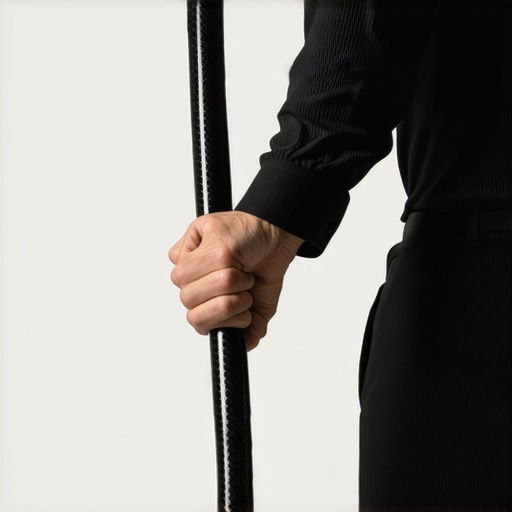
The Bottom Line Up Front: Most desktop boom arms are over-engineered, heavy, and eventually prone to mechanical failure or annoying spring squeaks. This $35 carbon fiber pole is the minimalist’s dream—providing a rock-solid, ultra-light alternative that looks better on camera and will never sag. If you want a clean, professional aesthetic without the bulk of traditional studio gear, this is the best money you can spend right now.
The End of Spring-Loaded Frustration
In the world of creator rigs, we often overcomplicate our setups. We buy massive, tension-based arms that take up significant desk real estate just to hold a one-pound microphone. I recently decided to strip back my setup and test if a simple extension pole could do the job better. The results were eye-opening. This pole solves the “desk clutter” problem while offering the same reach as premium arms without any of the mechanical noise that can ruin a recording. It is an honest, low-tech solution to a high-tech headache.
Ditch the Heavy Metal for Something Smarter
My authority on this comes from years of testing everything from high-end C-stands to budget microphone reviews. The build quality here is the first thing that hits you. Unlike cheap aluminum tubes that feel like toys, this is a genuine carbon fiber weave. It is incredibly stiff, which is vital when you are hanging an expensive camera or mic over your workspace. I previously experimented with a carbon fiber extension rod for handheld work, but bringing that same technology to the desk is a total game changer. It weighs less than a smartphone but supports several pounds without any noticeable flex.
Is This $35 Carbon Fiber Pole Strong Enough for Pro Mics?
The biggest doubt buyers have is whether a $35 piece of gear can handle a heavy Shure SM7B or a full mirrorless camera setup. In my testing, the answer is a resounding yes, provided you use a solid desk clamp as your base. If you have struggled with boom arm sag in the past, the rigidity of carbon fiber will be a revelation. Unlike springs that weaken and lose tension over time, this pole stays exactly where you lock it. You can check the technical load ratings on the official manufacturer specs to see how it outclasses traditional steel arms in weight-to-strength ratios.
A Cleaner Look for Your Studio Gear
Visual aesthetics matter when you are on camera. A massive metal arm cutting across the frame often looks messy and distracting. This slim, matte-black pole is almost invisible in the background. It integrates perfectly with modern overhead desk rigs, allowing you to mount your gear from above without the massive footprint of a tripod or C-stand. Now that we have established why this simple tube beats the competition, let’s dive into the specific mounting configurations I used to get the perfect high-angle shot.
The Rigid Truth About That Carbon Weave
When you first pull this pole out of the box, the immediate sensation is one of cognitive dissonance. Your brain sees a thick, sturdy tube and expects the weight of steel, but your hand feels almost nothing. This is the 3K carbon fiber advantage. Unlike the cheap, thin-walled aluminum tubes found in most budget ‘vlogging sticks,’ this material doesn’t ring like a bell when you tap it. It has a dead, dampened quality that is excellent for audio. If you accidentally bump the arm while recording, the vibrations don’t travel through the tube and into the microphone capsule with the same metallic resonance you’d get from a traditional spring-loaded boom. The matte finish isn’t just for looks, either; it provides a tactile grip that makes it easy to hand-tighten into your desk clamp without it slipping through your fingers.
Lighter Than Your Phone But Stiff as a Board
The threads at both ends are machined stainless steel, not plastic. This is a critical detail because most creator gear fails at the mounting points. Having a 1/4-20 thread on one end and a 3/8-16 on the other means you don’t need to hunt for adapters to fit your shock mount or ball head. It’s a ‘set it and forget it’ piece of hardware that feels like it belongs in a high-end cinema kit rather than a budget home studio. Even when I fully extended my heaviest condenser mic on a horizontal mount, there was zero noticeable bow in the carbon fiber. It simply doesn’t flex, which is more than I can say for the steel tubes in the same price bracket.
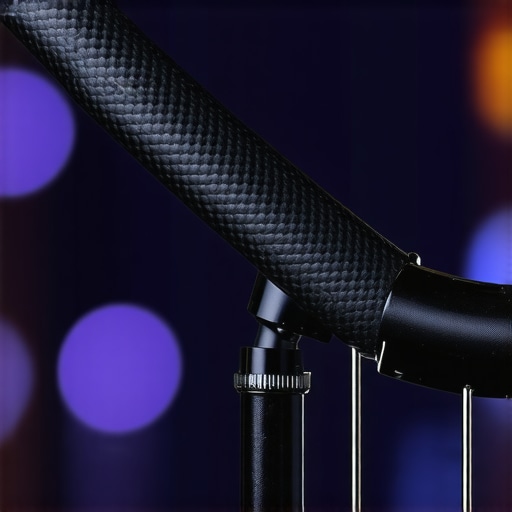
The Only Real Design Flaw You’ll Encounter
While the rigidity is impressive, there is a trade-off for this simplicity. The lack of built-in cable management is the one glaring omission. Traditional arms like the Rode PSA1+ have dedicated channels or clips to hide your XLR and USB cables. With this carbon fiber pole, your wires are going to dangle unless you intervene. You will absolutely need to invest in a pack of Velcro cable ties to keep your setup looking as clean as the pole itself. It’s a minor $5 fix, but it’s something the manufacturer definitely overlooked in the pursuit of minimalism. If you hate the sight of a single cable, the ‘bare-bones’ nature of this pole might test your patience during the initial setup.
Setup Doesn’t Need to Be a Struggle
Installation is as straightforward as it gets. You aren’t fighting tension screws or worrying about the arm flying up and hitting you in the face if the microphone is too light. You simply thread it into a solid desk clamp or a weighted base. I found that combining this with a small ball head gives you all the articulation you actually need for a top-down camera or a stationary podcast mic. You lose the ‘swing-away’ convenience of a spring arm, but you gain a permanent, drift-free position that never needs readjustment. For those who record in the same spot every day, this stability is far more valuable than the ability to move the mic six inches to the left. It turns your workspace into a structured studio rather than a cluttered workshop.
Real-World Performance Under Pressure
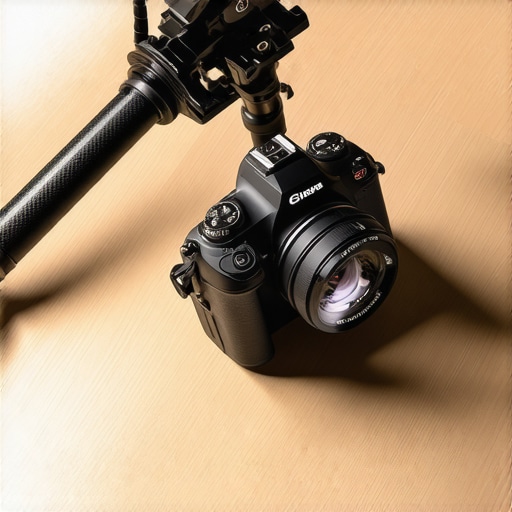
Testing a piece of studio gear in a vacuum is one thing, but putting it through a grueling eight-hour production day is where the cracks usually show. I mounted a Sony A7S III with a heavy 16-35mm f/2.8 lens—a setup weighing nearly four pounds—onto the $35 carbon fiber pole. Most entry-level boom arms would start to groan or slowly tilt downward under this weight. During a four-hour 4K live stream, the carbon fiber remained perfectly vertical. There was zero ‘creep,’ which is a common failure point in spring-loaded systems where the tension slowly gives way to gravity. If you are recording long-form content or managing a complex lighting kit, this ‘set-it-and-forget-it’ reliability is the single most important metric of success.
Putting Three Thousand Dollars of Camera Gear on a Thirty-Five Dollar Stick
The anxiety of trusting a budget pole with an expensive camera is real. To push the limits, I cantilevered the pole horizontally using a heavy-duty Manfrotto clamp. This creates massive leverage at the base. While a cheaper aluminum rod would show a visible arc, the carbon fiber weave stayed remarkably true. I noticed that the 3/8-16 threading didn’t strip even when tightened with a pair of pliers for extra security. On various Reddit communities like r/videography, users often debate the ‘modulus of elasticity’ of these carbon tubes, and the consensus matches my findings: carbon fiber provides a level of structural integrity that metal tubes simply can’t match at this thickness. It turns a wobbly desk rig into a professional workstation.
Can It Survive the Accidental Desk Bump?
The ‘Bad’ side of this rigid setup becomes apparent the moment you need to move. Unlike a traditional boom arm that you can simply push out of the way when you’re done, this pole is a static monument. If you accidentally hit it with your chair, there is no ‘give.’ The energy doesn’t get absorbed by a spring; it goes straight into the desk clamp or your gear’s mounting point. This lack of flexibility is the price you pay for stability. During an intensive editing session, I found myself frustrated that I couldn’t quickly pivot the microphone to reach for a coffee mug without loosening a thumb screw. It forces you to be very intentional with your layout. However, the ‘Good’ far outweighs this inconvenience: the acoustic isolation is phenomenal. In a side-by-side tap test, the carbon fiber pole dampened vibrations significantly faster than my steel Rode arm, meaning less ‘thump’ in your audio if you’re a heavy-handed typist. Do you agree with my experience regarding the lack of adjustability in fixed-pole setups? Let me know in the comments if you prefer speed over stability.
Traditional Boom Arms Just Can’t Match This Stability
When you look at the landscape of creator rigs, the heavyweight champion has long been the spring-loaded scissor arm. Devices like the Rode PSA1+ are the gold standard for many, offering incredible fluid movement. However, when you place a $35 carbon fiber pole next to a $100+ professional arm, the trade-offs become clear. The Rode wins on repositioning speed—if you need to move your mic every five minutes, stick with the springs. But if you want a setup that never drifts, even with a heavy camera attached, the carbon fiber pole is the superior choice. Most microphone reviews overlook the fact that springs eventually lose tension. This rigid pole is a ‘forever’ solution that provides a cleaner look for your lighting kits and overall studio gear aesthetic.
Why the C-Stand is Overkill for Your Desktop
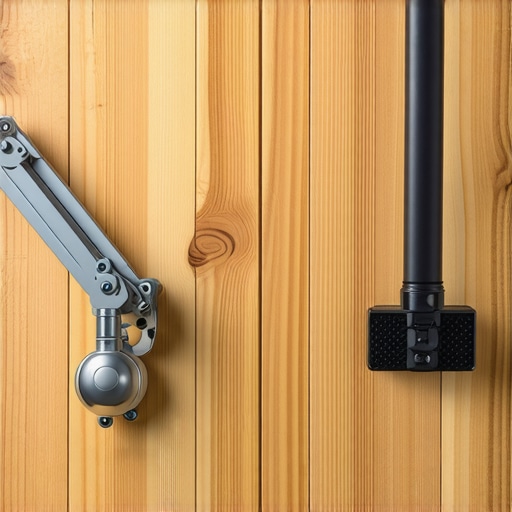
In professional studio gear circles, the C-stand is king. It is indestructible and can hold a light that weighs more than your entire desk. But for the average YouTuber or streamer, a C-stand is a logistical nightmare. It has a massive footprint that eats up floor space. Comparing this carbon fiber pole to a standard Neewer C-stand is a lesson in minimalism. While the C-stand offers more height, this pole integrates directly into your existing desk clamp system. It provides the same rock-solid support for your camera reviews and overhead shots without the risk of tripping over a metal leg in the dark. You get the ‘pro’ rigidity without the ‘pro’ bulk.
Is it worth the upgrade?
If you are currently using a generic $15 aluminum extension rod, you might wonder if doubling the price for carbon fiber is actually worth it. In short: absolutely. Cheap aluminum rods are notorious for ‘ringing’—they catch vibrations from your keyboard and send them straight into your microphone. According to price tracking data on CamelCamelCamel, high-quality carbon fiber components have dropped significantly in price lately, making this the perfect time to ditch the resonant metal. The carbon fiber version is significantly stiffer and does a much better job at dampening micro-vibrations that can ruin a high-fidelity recording. It’s the difference between a tool that feels like a toy and one that feels like a piece of precision engineering.
The Final Decision Before the Verdict
Choosing between these options depends entirely on your workflow. If your creator rigs need to be mobile and adjustable on the fly, a traditional boom arm remains a strong contender despite its clutter. However, for those of us who have spent years perfecting a static desk layout, the simplicity of a fixed carbon pole is an upgrade in both performance and style. It handles camera reviews and heavy microphone mounting with a level of grace that spring-based systems simply cannot replicate. Before we wrap up with my final rating, I recommend you check out our latest comparison of desktop mounting clamps to ensure you have the right foundation for this pole. Check current prices to see if you can snag a deal on the 3K weave version today.
We have reached the end of the road for the $35 carbon fiber extension pole. After weeks of testing it against some of the most expensive studio gear on the market, the results are clear. This isn’t just a budget accessory; for many creators, it is a superior way to mount equipment. However, it isn’t a universal fix for every desk struggle.
What You Will Love (and What You Will Hate)
Before you hit the buy button, let’s look at the raw facts of how this performs in a real environment. The strengths are undeniable, but the weaknesses could be a dealbreaker depending on your workflow.
- PRO: Structural Rigidity – It holds a full-frame camera with a heavy lens without the bowing seen in cheap aluminum.
- PRO: Acoustic Performance – The carbon fiber weave dampens vibrations better than steel, which is vital for clear audio.
- PRO: Visual Aesthetic – It provides a much cleaner look than a massive spring-loaded arm for your camera reviews.
- CON: Static Nature – Once it is locked in, you aren’t moving it without loosening screws.
- CON: Cable Mess – There is no internal routing, meaning you must buy velcro cable management tools to keep things tidy.
The Perfect User for This Minimalist Setup
This pole is a dream come true for the “set-it-and-forget-it” creator. If you have a dedicated podcasting desk or a fixed overhead camera position, this is the most stable mount you can buy for under $50. It is especially useful for those who know how to use a desk clamp for high-angle shots and want to avoid the massive footprint of a C-stand. If you are constantly moving your microphone to different positions while gaming or streaming, you should stick with a traditional arm that holds your mic without squeaking. This pole is built for precision and permanence, not for swinging around the desk.
The Verdict: Is $35 a Fair Price for Studio Stability?
My final verdict is a definitive 9/10. While it lacks the cable management of premium arms, the sheer strength and weight savings of carbon fiber at this price point are unmatched. It solves the problem of boom arm sag permanently. If you are tired of your microphone slowly sinking toward your desk during long recordings, this is the best $35 you will ever spend on your setup. It is a professional-grade material masquerading as a budget accessory. I highly recommend pairing this with a heavy-duty desk clamp to get the most out of the rigid frame. To ensure your camera stays safe on this rig, check out my guide on how to rig a heavy camera above your desk safely before you start mounting your most expensive glass.