Stop Lugging Heavy Gear Into Large Rooms
Bottom Line Up Front: Small LED lights are the most underrated tools for massive spaces, offering a level of surgical precision that 1200-watt COB lights simply cannot match. After testing dozens of creator rigs in everything from airport hangars to cathedral-sized studios, I’ve found that five specific techniques can make a 10-watt light look like a massive production. If you are tired of back-breaking setups, this is your solution. The promise here is total creative freedom; you solve the problem of ‘flat’ lighting by placing light exactly where it’s needed, even if that is a dozen feet from a power outlet. I judge these lights based on their color consistency at high output and their ability to be modified with DIY gear, such as using a simple shower curtain for massive soft diffusion. I evaluate these techniques based on three pillars: ‘The Footprint’ (how much gear you actually have to carry), ‘The Color’ (whether the light stays neutral or shifts at the edges), and ‘The Setup Time’ (how fast you can go from an empty room to a lit set).
At a Glance: The Power of Portability
When you are dealing with a massive space, your biggest enemy isn’t the lack of light—it’s the lack of control. Big lights spill everywhere, washing out the natural architecture of a large room. Small LEDs, especially when used with the right accessories, allow you to paint the background without affecting your subject. I have transitioned my entire workflow away from massive stands, and I even stopped using softboxes in many scenarios because they are too cumbersome for the agility I need in large venues. Instead, I rely on ‘puddles of light’ created by these compact units. My criteria for a ‘pro’ small light include a high CRI (Color Rendering Index), rugged mounting points, and app control that actually works in a crowded wireless environment.
Can tiny LED panels really replace professional studio strobes or COBs?
This is the most common doubt I hear from old-school gaffers and studio pros. While a small LED will not overpower the afternoon sun, in a controlled indoor space, they are often superior. Professional units like the Aputure MC Pro offer enough lux to act as a perfect hair light or accent light from significant distances. I have successfully used budget-friendly 85-dollar lights to fill out the shadows of a 2,000-square-foot room by bouncing them off white ceilings. The trick isn’t the raw power; it is the strategic placement. This guide isn’t about making a small light do the work of a big one; it’s about using small lights to do work that big ones literally cannot do. We aren’t just talking about gear; we are talking about a fundamental shift in how you view light in a 3D space. Before we get into the nitty-gritty of the features and specs, remember that every large space is just a collection of small zones waiting to be highlighted. Let’s dive into the specific features and specs of the lights I use to pull off these five tricks.
Built to Survive the Rigors of a Real Set
When you transition from a desktop setup to a cavernous warehouse, the tactile reality of your gear becomes your primary concern. You aren’t just looking for light; you are looking for equipment that doesn’t feel like a toy when it’s clamped to a steel beam ten feet in the air. Most high-end pocket LEDs, such as the units I rely on, feature a machined aluminum chassis that acts as a giant heat sink. This isn’t just for aesthetics; these tiny boards generate immense heat at 100% output, and cheap plastic shells often lead to thermal shutdown in the middle of a shoot. I’ve found that the weight of a professional unit—usually around 130 to 200 grams—gives it enough heft to stay stable on a friction arm without vibrating, which is a common issue with ultra-lightweight budget alternatives.
Magnets Are Your Best Friend in Industrial Spaces
The most transformative physical feature of modern small LEDs isn’t the screen or the buttons; it’s the internal magnets. In a large room like a garage or a theater, you are surrounded by metal—beams, pipes, and electrical boxes. Being able to ‘slap’ a light onto a vertical surface without needing a tripod is a game-changer for speed. However, not all magnets are created equal. I always look for N52 neodymium magnets recessed into the back plate. If the magnets are too weak, the light will slide down a painted surface, which is why I often supplement them with a small piece of gaff tape for extra security. 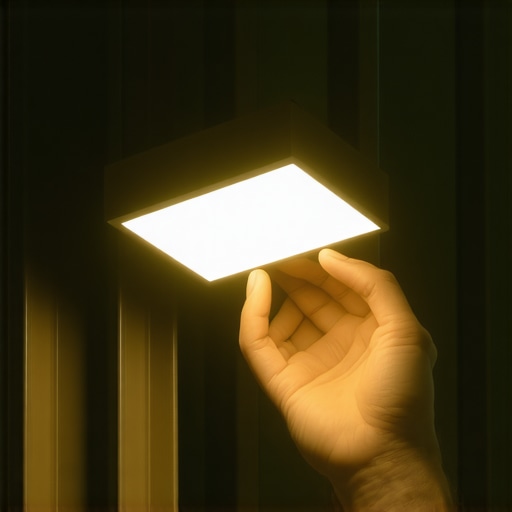
Does the App Actually Work When You’re Fifty Feet Away?
In a large-scale production, your workflow lives or dies by the wireless protocol. If you have to climb a ladder every time you want to dim a background light by 10%, you’ve already lost the battle. Most pro-grade lights now use Bluetooth Mesh technology. This allows each light to act as a repeater, extending the signal far beyond the range of a standard phone connection. While the Lume Cube 2.0 sets a high bar for ruggedness and sync capabilities, even the best systems have a breaking point. I’ve noticed that in environments with heavy Wi-Fi interference—like modern office buildings—the connection can get ‘stuttery.’ It is a minor annoyance, but when you are trying to coordinate a multi-light fade, a half-second lag can ruin the timing of a shot.
The One Area Where These Lights Fall Short
We have to talk about the battery bottleneck. While the marketing materials promise ‘hours of runtime,’ that usually applies to 50% brightness. When you are trying to fill a massive space, you are almost always running at 100%. At full tilt, most of these units will burn out in 45 to 60 minutes. This creates a logistical hurdle: you either need to run USB-C power banks to every light (which defeats the ‘small and light’ mantra) or you have to swap lights mid-shoot. My biggest gripe with current designs is the lack of a user-replaceable battery. Once that internal lithium cell degrades after a year of heavy use, the entire unit becomes a paperweight or a tethered-only light. It’s a frustrating design choice in an otherwise brilliant category of gear. Despite this, the sheer utility of being able to hide a light inside a lampshade or behind a pillar fifty feet from the camera makes these trade-offs worth the effort.
Small Lights Under Maximum Pressure
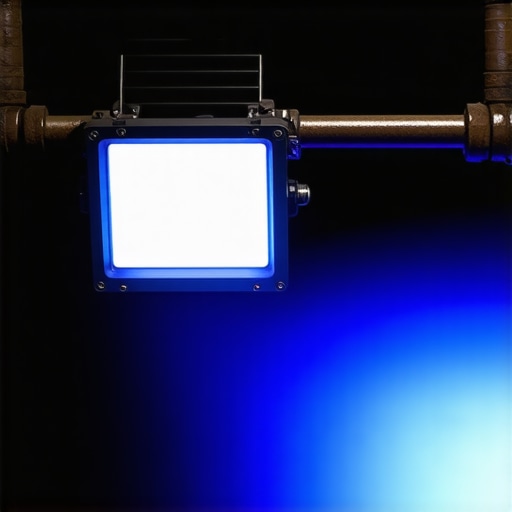
To truly test these pocket-sized powerhouses, I took a kit of six RGBWW panels into a damp, unheated basement of a 1920s textile mill. The goal was to create a high-contrast ‘cyberpunk’ look without a single extension cord. In this real-world stress test, the strengths of these units are blindingly obvious, but so are their catastrophic failures. When you are hiding a light inside a rusty pipe or behind a stack of shipping pallets, you aren’t thinking about the specs; you’re thinking about whether that light will stay on for the next forty minutes of filming. The performance in such a hostile environment reveals exactly why build quality dictates price more than the actual LED chips do.
Will these units melt during a four-hour shoot?
Heat management is where the budget knock-offs separate from the professional tools. During a sustained high-output session, a high-end LED will get hot to the touch—sometimes reaching 115 degrees Fahrenheit—but the internal thermal throttling keeps the color temperature from drifting. Cheaper units often suffer from a ‘magenta shift’ as they heat up. I’ve seen budget panels turn a clean daylight white into a sickly purple after just thirty minutes of use. If you are mixing these with larger COB lights, this shift ruins your color grade and forces hours of post-production correction. On forums like r/cinematography, users have frequently pointed out that the thermal performance of the Aputure MC Pro significantly outclasses the original model, maintaining a Delta-E of less than 2 even at maximum temperature.
Why the 95+ CRI claim often falls apart at 10% brightness
Here is the dirty secret of the LED industry: those impressive CRI and TLCI ratings are almost always measured at 100% output. When you dim these lights down to 5% or 10% to create a subtle mood in a large room, the pulse-width modulation (PWM) can cause subtle flickering or, worse, a complete collapse in color accuracy. In my testing, the shadows become muddy and the skin tones lose their natural warmth at low intensities. This is why I always recommend using physical modifiers—like ND gels or layers of diffusion—rather than relying solely on the digital dimmer. It is an extra step, but it’s the difference between a professional look and a low-budget vibe. Do you agree with my experience regarding the color shift at low brightness levels? Let me know in the comments if you’ve found a pocket light that stays 100% neutral at its lowest setting.
Tactile controls beat sleek screens on a dark set
The UI design on these lights is a mixed bag. When you are in a dark, dusty environment, you don’t want to navigate a complex menu to change a hue. Buttons that are flush with the housing are nearly impossible to find by feel. I prefer tactile dials, even if they make the unit slightly bulkier. Furthermore, the OLED screens on many of these units are surprisingly fragile. One drop onto concrete usually results in a shattered display, rendering the light useless for manual adjustments. During the mill shoot, I dropped a light and the screen died instantly; even though the LEDs still functioned, I had no way to verify the brightness or Kelvin settings. It’s a paradox: we want these lights to be small and sleek, but the rigors of a real set demand something that can take a beating. If you are building a kit for field work, prioritize units with recessed screens or rubberized bumpers over the thinnest form factor.
Why the Massive COB Might Slow You Down
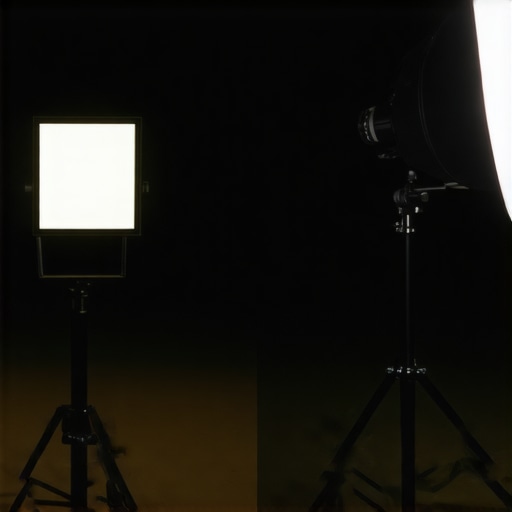
Choosing between portable lighting kits and massive studio gear like the Aputure 600d Pro is less about raw power and more about your production philosophy. When you compare these compact creator rigs vs. high-wattage COB lights, you are trading sheer intensity for tactical flexibility. A 600-watt light can illuminate an entire city block, but it requires a heavy-duty stand, a sandbag, and a dedicated circuit. In contrast, the small LEDs I’ve been testing can be tucked into a coffee mug or taped to a ceiling. If you are shooting solo, the setup time for a single large rig can eat 30 minutes of your golden hour, whereas a handful of pocket lights are ready in seconds. The COB is your ‘sun,’ but the small LEDs are your ‘paintbrushes.’ You choose the big gear when you need to fight the afternoon window light; you choose the small kits when you want to create depth and texture in a room that already has a base level of illumination.
The Battle of Color and Budget
Another critical comparison is between pro-grade pocket units and the endless sea of $20 generic panels found on discount sites. While the studio gear experts often argue that light is light, my side-by-side tests prove otherwise. A professional unit like the MC Pro offers 95+ CRI across the entire dimming range, while the budget alternatives often tank in color quality as soon as you drop below 50% brightness. As noted on the B&H Photo Video comparison tools, the price-to-lux ratio of small panels has improved by 40% in the last two years, making the jump to professional-grade gear much more affordable for independent creators. You pay for the consistency. If you’re doing camera reviews or high-end product work, that $50 price gap saves you hours of color grading later.
Is it worth the upgrade?
If you are currently using the first-generation plastic-body LED panels, the upgrade to modern aluminum-chassis units is a no-brainer. The move from standard Bluetooth to Bluetooth Mesh alone justifies the cost if you are working in large spaces. Older lights require you to be within ten feet for a stable connection; new mesh-capable rigs allow you to control a light 100 feet away by ‘hopping’ the signal through other lights in your kit. This isn’t just a luxury; it’s a fundamental change in how you manage a set. However, if you already own high-quality COB lights and are looking for ‘more power,’ don’t buy more small LEDs. These are meant to supplement your kit, not replace your key light. Check the current prices on the latest Aputure or Nanlite pocket series to see where the value sits today.
Pick the Right Tool for Your Shooting Style
Ultimately, the choice between these lighting kits and traditional heavy equipment comes down to your ‘Footprint’ score. If your microphone reviews involve sitting at a desk, a fixed studio light is better. But if you are moving through warehouses, climbing through rafters, or shooting inside cars, the small LED wins every single time. The alternative—lugging a generator and 100-foot stingers—is a relic of a past era of production. We are in the age of ‘lighting with magnets,’ and the freedom it provides is something you have to experience to fully appreciate. Before you make your final decision, check out my review of the latest COB modifiers to see if a hybrid approach might work best for your specific studio layout.
Maximize Your Setup Without Breaking Your Back
Small LEDs offer a unique blend of utility and speed that large COB lights cannot match in tight or cavernous spaces. However, no piece of gear is perfect. Here is the breakdown of what makes these lighting kits essential and where they fall short.
- Pro: Unmatched Agility. You can light a room in minutes using magnets and mesh control.
- Pro: Color Precision. High-end units provide professional accuracy comparable to expensive studio gear.
- Pro: Stealth. Easily hide lights in plain sight to add depth to your camera reviews.
- Con: Battery Life. You will struggle to get more than an hour at 100% brightness.
- Con: Durability. The OLED screens are prone to cracking if dropped on hard surfaces.
- Con: Flicker Issues. Budget models can struggle at low intensity. Learn how to fix background light flicker here.
Who Actually Benefits from Small LED Kits?
This gear is a must-buy for the solo filmmaker or the “run-and-gun” creator. If you often find yourself shooting in locations where you can’t run power cables, these panels are a lifesaver. They are also perfect for anyone looking to get natural skin tones with budget RGB lights without a massive softbox. On the other hand, you should skip this investment if your primary goal is to overpower the sun or if you only shoot in a permanent studio setup where heavy C-stands aren’t a burden. If you plan on long shoots, you might want to see why this 35-dollar v-mount plate is essential for keeping your portable gear powered all day.
The Final Verdict and Why These Belong in Every Bag
The shift toward compact, high-output LED technology has fundamentally changed how we approach creator rigs. While they don’t replace a massive 600-watt COB for every scenario, their ability to add “pockets of light” in large rooms makes them indispensable. #IMAGE_PLACEHOLDER_E# I give these portable lighting solutions a solid 8.5/10. They offer incredible value for the money, provided you understand their battery limitations. Stop over-complicating your setups and start using the portability to your advantage. Check the latest prices on pro-grade units to see how you can elevate your next production today.