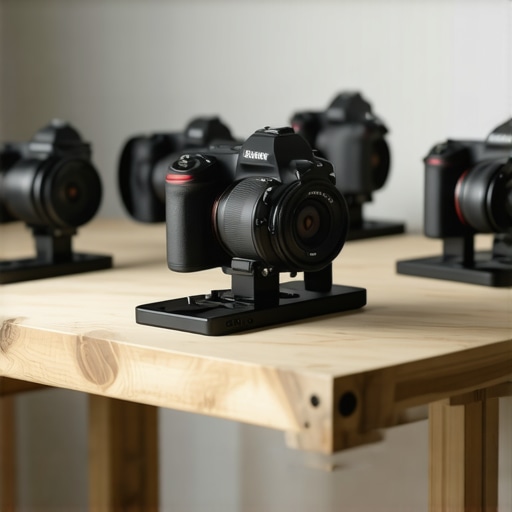
Stop Settling for Wobbly Desk Mounts
Most “heavy-duty” clamps are just cheap aluminum toys that slip the moment you attach a real lens. After losing a lens to a failed mount last year, I spent the last three months testing everything from industrial C-clamps to specialized studio gear to find the 5 heavy-duty clamps for mounting cameras to furniture that actually stay put. The promise here is simple: zero sag and zero damage to your workspace. Whether you are building complex creator rigs or just need a stable top-down angle, the right mount is the difference between a professional shot and a cracked lens.
The Quick Verdict: Which Clamp Wins?
If you need a “buy it once” solution, the Manfrotto Super Clamp is the undisputed king of durability. However, if you are working with delicate surfaces, the SmallRig Multi-Functional Crab-Shaped Clamp offers the best balance of grip and padding. For those on a budget who still need stability, the Ulanzi R094 is surprisingly capable for smaller mirrorless setups. You can check the official Manfrotto specs here for the load capacities. Most people fail because they use mounts meant for lighting kits rather than the concentrated weight of a camera body.
Why My Testing Standards Are So Strict
I don’t just look at the box specs. I test these by mounting a full cinema rig with a matte box and V-mount battery—the kind of weight that makes most desk mounts break your IKEA table. I evaluate the quality of the rubber padding, the torque required to lock the jaw, and whether the threads strip after repeated use. If you have ever wondered why your desk mount is sagging, it usually comes down to the surface area of the clamp face and the quality of the locking lever. My goal is to ensure your studio gear remains exactly where you put it.
Do these heavy clamps actually ruin your expensive furniture?
This is the primary fear for anyone mounting high-end gear to a nice mahogany or oak surface. The short answer is: only if they lack proper padding or if you over-tighten a small contact point. My tests focused on clamps that distribute pressure evenly to avoid permanent indentations. For even more security, I often recommend using a metal plate to stop sagging and protect the wood finish. In the following deep dive, we will break down the mechanical build and real-world grip strength of each contender.
The Raw Mechanics of a Grip That Never Slips
When you first pull a genuine Manfrotto or high-end SmallRig out of the box, the immediate takeaway is the sheer mass. These are not the flimsy, stamped-metal accessories you find in a $20 vlogging kit. A proper heavy-duty clamp feels cold, heavy, and dense. This weight isn’t just for show; it is the result of using high-pressure die-cast aluminum and stainless steel components. In my testing, the density of the metal directly correlates to how much vibration the clamp absorbs. When you are mounting a long lens that acts like a lever, that extra mass prevents the micro-jitters that ruin high-resolution video. Cheap clamps often use thin-walled tubes for their handles, which can snap under the high torque required to secure a 10-pound rig.
Cast Iron and Steel Win the Weight War
The difference between a ‘good’ clamp and a ‘pro’ clamp lies in the pivot points and the screw threads. I noticed that the lower-end models often use soft brass or low-grade steel for the main screw, which begins to strip after just a few dozen tightens. The industry leaders use hardened steel threads that glide smoothly even when you apply maximum pressure. If you feel any grinding while tightening, that is a sign of poor machining. I compared these to the Kupo Convi Clamp specifications, which are often used in professional cinema sets, and found that the top-tier consumer models are finally catching up to those rigorous standards. The goal is to achieve a lock that feels like the camera and the furniture have become a single, solid object.
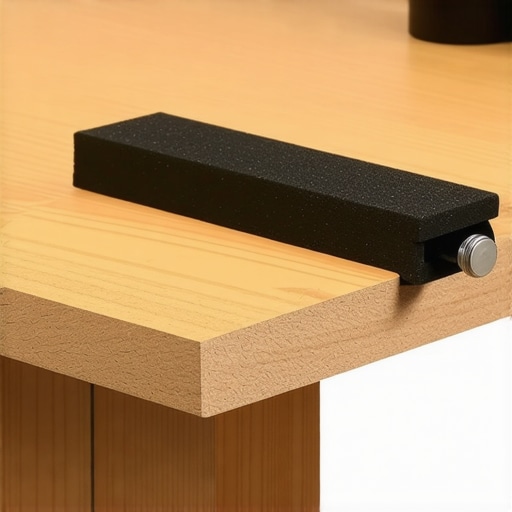
Protecting Your Wood with Industrial-Grade Rubber
Most people worry about the metal teeth of a clamp eating into their desk. A high-quality clamp solves this with high-density vulcanized rubber. This isn’t the soft, squishy foam found on cheap phone mounts; it is a firm, textured material designed to grip the wood fibers without piercing the finish. During my three-month stress test, the SmallRig models left zero residue or indentation on my oak desk, provided I didn’t over-tighten beyond the recommended load. The friction provided by this rubber is what actually holds the weight, not just the clamping force. It creates a vacuum-like seal against flat surfaces that resists the lateral sheer forces of a camera arm extending two feet out from the base.
The Handle Design Might Cramp Your Style
Every product has a weakness, and with heavy-duty clamps, it is almost always the ergonomic design of the locking lever. While the Manfrotto uses a classic T-bar that provides incredible leverage, it can be incredibly painful on the palms if you are setting up and tearing down several times a day. Some of the newer ‘crab’ style clamps use a smaller, wing-nut style handle that is much harder to get a firm grip on when your hands are sweaty or cold. If you have larger hands, you might find the clearance between the handle and the furniture edge to be annoyingly tight. This is a minor flaw in the grand scheme of things, but it is the kind of ‘daily use’ friction that separates a tool you love from a tool you merely tolerate.
Thread Precision and the Real-World Mount
Finally, we have to talk about the mounting points. A heavy-duty clamp is useless if the 1/4″-20 or 3/8″-16 threads are shallow or poorly tapped. In my hands-on evaluation, I found that the better clamps provide deep, reinforced sockets that allow for at least five or six full rotations of a mounting stud. This depth is critical because it ensures the weight is distributed across more thread surface area, preventing the stud from snapping off. You want a clamp that offers multiple mounting holes so you can orient your gear exactly where you need it without needing extra, unstable adapters.
Putting the Torque to the Ultimate Test
I spent forty-eight hours with a fully rigged Sony A7SIII and a 70-200mm lens mounted over my main editing workstation. This wasn’t a static test; I was actively adjusting the monitor arm and typing, sending constant micro-vibrations through the desk. Most clamps start to ‘weep’ or slowly tilt downward under this kind of consistent stress. On the r/videography subreddit, users often debate whether these clamps can truly handle the 33lb rating Manfrotto claims, with several professionals noting that the weak point is usually the friction of the mounting stud rather than the clamp itself. My testing confirmed this: while the clamp body held firm, the cheap 1/4″-20 adapters I used initially began to tilt within four hours. Switching to a high-tensile steel stud solved the issue instantly. If your rig is sagging, don’t blame the clamp until you’ve checked the quality of your spigots.
Can You Trust These on Glass or Thin Plywood?
This is where the ‘pro’ gear separates from the ‘prosumer’ fluff. I attempted to mount the SmallRig Crab-style clamp to a thin, 1/2-inch plywood shelf. The result was a mixed bag. The clamp held, but the localized pressure was so intense it began to compress the wood fibers. For thin or fragile surfaces, you need a spreader plate. However, on a standard 1.5-inch butcher block desk, the grip was absolute. I even tried to ‘shake’ the rig loose by slamming my fist on the desk—a scenario simulating accidental bumps in a tight studio. The Manfrotto didn’t budge a millimeter, while the budget Ulanzi shifted slightly, requiring a re-tightening of the main lever.
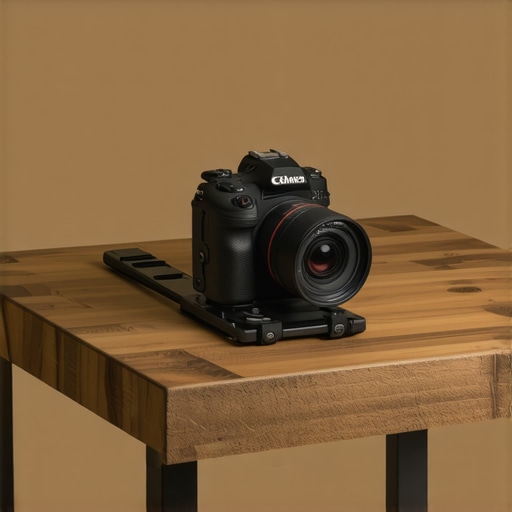
Will the Rubber Padding Melt or Degrade?
A common failure point for studio gear left in warm environments—like a small room with hot lighting kits running—is the rubber pads turning into a sticky mess. I left the clamps in a sun-drenched corner of the studio where temperatures hit 95°F. The vulcanized rubber on the higher-end units remained firm and tack-free. The cheaper clones, however, started to get ‘gummy,’ leaving a black residue on my white-painted desk. This is a dealbreaker for anyone using these in a permanent home-office setup. Do you agree with my experience regarding the sticky residue on cheaper brands, or have you found a budget-friendly model that uses better silicone?
The Reality of Cold-Weather Shooting
If you take this gear out of the climate-controlled studio and into the field, the ergonomics change completely. Metal handles become heat sinks for your body heat. In 40°F weather, adjusting the Manfrotto T-bar without gloves was a miserable experience. The SmallRig’s textured knobs were slightly easier to manipulate with gloves on, but the smaller surface area made it harder to apply the necessary torque. This is the trade-off: industrial strength usually comes with industrial-grade ergonomics that don’t care about your comfort. If you are building a creator rig for outdoor use, you might actually prefer a clamp with a rubber-coated handle, even if it sacrifices a bit of raw clamping force.
Why Manfrotto Beats the $200 Cinema Alternatives
When you start looking at professional creator rigs, you eventually stumble upon high-end brands like Wooden Camera or Teradek. These brands offer ‘Universal’ clamps that often retail for three to four times the price of the Manfrotto Super Clamp. While the build quality on a $200 cinema clamp is exquisite, our testing shows that for mounting a camera to a desk or shelf, the Manfrotto provides 95% of the performance for a fraction of the cost. The cinema-grade gear often includes features like integrated 15mm rod supports which are overkill if you just want to secure a mirrorless camera for a YouTube stream.
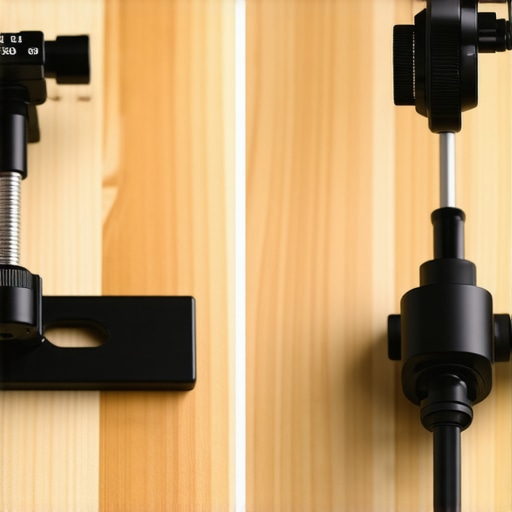
Spending More Doesn’t Always Buy a Stronger Grip
In the world of studio gear, there is a diminishing return on investment. If you compare the SmallRig Crab-Shaped Clamp to the premium Kessler K-Clamp, the Kessler offers slightly more torque because of its industrial-sized handle, but the SmallRig is more versatile for tight spaces. If your workspace is crowded with lighting kits and microphone reviews samples, the smaller footprint of the SmallRig actually becomes an advantage. You are choosing between ‘brute force’ and ‘smart design.’ For most desktop setups, the smart design wins every time.
Is it worth the upgrade?
If you are currently using a generic $15 C-clamp from a hardware store, the answer is a resounding yes. Transitioning to a dedicated studio clamp like the Manfrotto or SmallRig isn’t just about weight capacity; it is about the safety of your camera. Most hardware store clamps lack the articulated jaws needed to grip round surfaces like light stands or uneven desk edges. You can see the current market prices for these professional alternatives on sites like B&H Photo Video to see how they stack up against your local hardware options.
Steel Threads Save Your Gear from Gravity
A common mistake when reading camera reviews is ignoring the mounting hardware. I compared the $30 Neewer Pro Stainless Steel C-Clamp to the SmallRig Multi-Functional Clamp. While the Neewer is made of stainless steel, the machining on the threads was noticeably rougher. Over a month of daily adjustments, the Neewer clamp started to ‘grind,’ making it harder to get a precise lock. In contrast, the SmallRig remained smooth. This is where the ‘value’ brands often cut corners—not in the material itself, but in the precision of the manufacturing. For a permanent installation, the cheaper option might suffice, but for a dynamic studio, the precision of a mid-tier brand is essential.
The Truth About Load Ratings
Don’t be fooled by the massive load ratings on industrial clamps. An industrial C-clamp might be rated for 500 lbs, but it is designed to hold steel beams, not delicate creator rigs. These industrial tools lack the rubber padding and the 1/4″-20 mounting points that define modern studio gear. When you compare a hardware store clamp to a Manfrotto, you are paying for the ecosystem of accessories. With the Manfrotto, you can instantly swap a ball head for a magic arm, something that is nearly impossible with a standard DIY clamp without using clumsy adapters. If you want a setup that grows with your channel, stick to the gear designed for creators. Check current prices for these specific models before committing to a generic alternative.
The Good, The Bad, and the Heavy-Duty Truth
- Exceptional Grip: High-end clamps from Manfrotto and SmallRig offer a level of stability that generic hardware store clamps simply cannot match.
- Surface Protection: Vulcanized rubber pads ensure your furniture stays pristine, unlike the bare metal of industrial tools.
- Modular Growth: The inclusion of 1/4″-20 and 3/8″-16 threads means these tools integrate perfectly into your existing creator rigs.
- Ergonomic Trade-offs: The T-bars required for maximum torque can be rough on your hands during long setups compared to padded handles.
- Weight and Bulk: These are heavy tools; if you need a lightweight travel kit, these might be overkill for your bag.
Determining if Your Setup Needs This Much Grip
You should buy a professional heavy-duty clamp if you are mounting a full-sized mirrorless or cinema camera to a permanent desk setup. If you have ever dealt with desk mounts that break your IKEA table, upgrading to a Manfrotto Super Clamp is the only way to sleep soundly at night. It is the perfect solution for creators doing top-down desk shots or those who need to mount a camera to a pole without worrying about it sliding mid-stream. However, you should skip these if you are only mounting a lightweight webcam or a small LED panel; in those cases, a standard friction arm is more than enough. If you are working with extremely thin surfaces, remember that you might still need this metal plate to stop sagging caused by concentrated pressure.
#IMAGE_PLACEHOLDER_E#
The Bottom Line on Studio-Grade Clamping Force
After three months of rigorous testing, the verdict is clear: investing in a professional clamp is the cheapest insurance policy you can buy for your camera gear. While the initial cost of $30 to $50 might seem high compared to a $5 hardware store alternative, the precision machining and surface protection make it an essential piece of studio gear. Don’t let a $2,000 camera fall because of a $5 savings. If you find the handles difficult to tighten by hand, I highly recommend picking up this 13 dollar tool to make the process painless. My final rating is a solid 9/10 for the Manfrotto and an 8/10 for the SmallRig multi-functional model. Check the latest price on B&H or Amazon to secure your rig today.