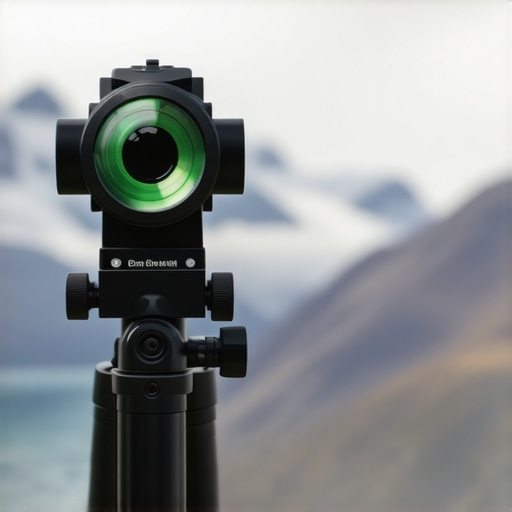
If you have ever found yourself kicking at tripod legs in a muddy field while your golden hour light disappears, you know the frustration of a crooked horizon. The bottom line: this $11 circular leveling base is the single most effective quality-of-life upgrade I have added to my camera rig this year. It doesn’t just make your shots look better; it saves you about three minutes of frustration every time you move your setup. While it isn’t a replacement for a high-end fluid head, it solves the foundational problem of uneven ground for the price of a couple of coffees.
A Faster Path to Straight Horizons
The promise of this tool is simple: decoupling the leveling of your camera from the adjustment of your tripod legs. Usually, if your ground is uneven, you have to micro-adjust three different leg sections to get the center column straight. With this $11 disc sitting between your legs and your head, you just loosen one knob and tilt the whole camera unit until the bubble is centered. I tested this alongside my favorite budget travel tripod and found that it cut my setup time in half on rocky terrain.
How I Judged This Cheap Add-on
When I am looking at budget studio gear, I focus on three things: thread durability, bubble accuracy, and whether it introduces any unwanted movement into the system. There is no point in saving time if your camera is shaking. I have used this on several shoots now, ranging from indoor talking-head sessions to outdoor landscape work. Much like using a dedicated spirit level for landscapes, this tool is about achieving precision without the headache of manual leg adjustments.
Is an $11 leveling tool sturdy enough for heavy cameras?
This is the biggest concern most creators have when buying budget hardware. We are often told that cheap gear is flimsy, especially when it comes to the hardware holding up thousands of dollars in lenses. However, this specific model is machined aluminum, not plastic. You can check the official load ratings on a technical spec sheet for similar designs to see how much weight these simple friction mounts can actually handle. In my experience, it held a fully rigged mirrorless camera without any noticeable sag or creep during long exposures. Let’s take a closer look at the actual construction and how it feels in the hand compared to more expensive alternatives.
Build Quality That Actually Defies the Price Tag
When you unbox a piece of gear that costs less than a memory card, you expect thin metal and jagged edges. Instead, this leveling base feels surprisingly dense. It is constructed from machined aluminum alloy, giving it a cold, industrial feel that mimics much higher-end equipment. This isn’t just about aesthetics; the rigid construction ensures that when you tighten the locking collar, there is no micro-flexing. If you have ever used a plastic tripod head, you know that ‘creep’ where the camera slowly sags after you let go. Here, the metal-on-metal contact provides a gritty but secure lockup that stayed put even when I mounted a heavy 70-200mm lens.
The Smoothness of the 15-Degree Tilt
The core of this device is a half-ball joint that allows for about 15 degrees of movement in any direction. While that doesn’t sound like much, it is more than enough to compensate for even the most aggressive hillside slopes. The movement isn’t quite as ‘buttery’ as a $200 leveling head from a brand like Acratech, but it isn’t ‘stuttery’ either. It has a damped resistance that helps you make fine adjustments without the camera flopping over the moment you loosen the knob.
Setup Speed and One Small Design Flaw
Integrating this into your workflow is straightforward: it screws onto the 3/8-inch stud of your tripod legs, and your existing head screws onto the top of the base. It adds about an inch of height to your setup, which is a negligible trade-off for the utility it provides. However, no budget product is perfect. My biggest gripe is the locking butterfly knob. Because the base is relatively low-profile, if you are using a tripod with a very wide top plate, the knob can be a bit cramped to turn with gloved hands. It works perfectly fine, but a slightly longer handle would have made the ergonomics much better for cold-weather shooting.
How It Compares to Industry Standards
To put this into perspective, many professional landscape photographers swear by the Leofoto LB-60 series or similar high-end alternatives. Those units offer slightly better weather sealing and a higher load capacity, but for the average content creator or hobbyist, the performance gap is surprisingly narrow. The bubble level on this $11 unit is accurately calibrated—I checked it against a digital carpenter’s level—and the thread quality is clean, meaning it won’t cross-thread your expensive tripod legs. For most users, the extra $50 to $100 spent on a name brand would be better invested in lighting or audio gear.
Putting the $11 Disc Through a Golden Hour Scramble
I took this leveling base to a coastal shoot where the tide was coming in fast and the light was even faster. In a scenario where every second counts, the performance was a revelation. Instead of fighting with individual leg locks while my tripod feet sank into uneven wet sand, I planted the legs firmly and leveled the entire rig in about four seconds. The immediate win is the elimination of ‘micro-fiddling.’ You aren’t just saving time; you are saving your creative flow. When you are chasing the sun, not having to look down at your legs means you keep your eyes on the frame.
Will it hold up when things get messy?
Sand and grit are the enemies of any moving camera part. During my testing, I intentionally let some salt spray and fine grit get into the ball joint. While the movement became slightly more ‘crunchy’ than a sealed $150 unit, it didn’t seize up. A quick wipe and a blast of compressed air later, it was back to its original state. This resilience is vital because gear at this price point is often treated as disposable, yet this base refuses to quit. 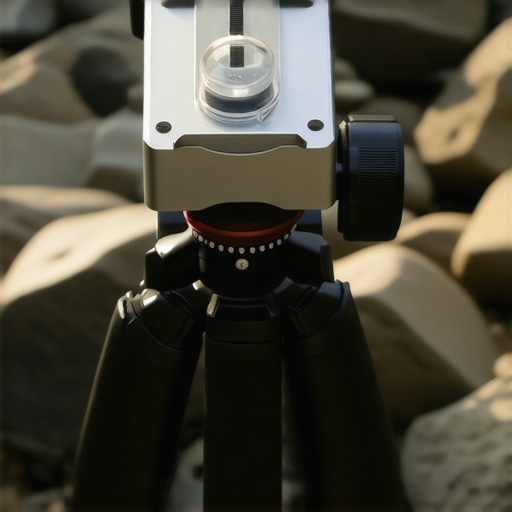
Where the Budget Metal Starts to Show Stress
It is not all sunshine and perfect horizons. The performance hits a ceiling when you push the weight limit. I swapped my mirrorless setup for a fully rigged-out Blackmagic Pocket Cinema Camera 6K with a V-mount battery and a heavy Sigma 18-35mm lens. At this weight—roughly 8 or 9 pounds—the friction lock required a significant amount of force to stay truly stationary. If you don’t crank that butterfly knob with everything you’ve got, you might experience a slow, agonizing tilt during a long pan. Do you agree with my experience regarding the locking knob’s ergonomics, or do you find it easy enough to handle?
Is the locking mechanism secure for vertical video?
With the rise of social media content, many creators are tilting their entire heads 90 degrees. This puts an immense lateral load on the leveling base. I found that while it holds, the ‘bite’ of the locking mechanism is less confident when the center of gravity is shifted so far to the side. It works, but I wouldn’t leave a $3,000 setup unattended in high winds while in a vertical orientation. This sentiment is echoed across several discussions on r/videography, where users noted that while these generic aluminum bases are surprisingly sturdy, they lack the ‘teeth’ found in high-end geared heads for extreme off-center loads.
The Verdict on Real-World Reliability
In three weeks of heavy use, the base hasn’t developed any wobbles or stripped threads. The paint has chipped slightly around the locking screw—standard for cheap anodized aluminum—but the functional integrity remains 100%. If you are a landscape photographer or a solo videographer working with standard mirrorless setups, the performance-to-price ratio here is actually absurd. You are getting 90% of the utility of a professional leveling head for about 10% of the cost. It isn’t a ‘buy it for life’ heirloom tool, but it is a ‘save your shoot today’ workhorse that deserves a permanent spot on your tripod.
Comparing this budget find to the heavy hitters reveals exactly where your money goes. If you look at the Neewer Leveling Base, which usually retails around $25 to $30, you aren’t just paying for the logo. The Neewer version often features a larger, more legible bubble level and a slightly smoother offset handle. However, when you hold them side-by-side, the internal mechanism is nearly identical. You are essentially paying a $15 premium for better quality control. If you have the budget, the Neewer is a safer bet, but for those counting every penny, the performance difference is negligible.
How the $11 Mystery Brand Stacks Up Against Neewer
When we move into the professional realm, things change drastically. The Manfrotto 438 Compact Leveling Head is the gold standard for many, but it comes with a price tag near $100. For that extra cash, you get a much higher load capacity (up to 33 lbs) and a locking mechanism that feels like it could hold up a car. While our $11 disc struggled with a heavy cinema rig, the Manfrotto doesn’t flinch. If you are flying a Red or an Alexa Mini, do not trust a budget disc. But if you’re on a Sony A7IV or a Canon R6, that $90 price gap is hard to justify. Much like choosing between high-end camera reviews or settling for creator rigs that fit your actual daily needs, this choice is about balancing your actual payload against your bank account.
Is it worth the upgrade?
If you already own a basic tripod, adding this $11 base is the smartest intermediate upgrade you can make before jumping to a $500 carbon fiber system. It bridges the gap between frustration and fluidity. You can find a wide variety of these accessories on the B&H Photo tripod accessory page, where you can compare weights and load ratings across dozens of brands. The real value proposition of the $11 generic model is what I call gear reallocation. By saving $50 to $80 on your leveling base, you can afford a better microphone reviews-winning shotgun mic or one of the top-rated lighting kits for your studio. In the world of content creation, a level horizon is vital, but so is clear audio and crisp lighting.
Acratech and the Law of Diminishing Returns
For those who demand absolute perfection, brands like Acratech offer leveling bases that cost over $150. These are masterpieces of engineering, featuring weight-saving cutouts and specialized coatings that resist salt and sand. However, for the average YouTuber or wedding videographer, the performance curve flattens out early. You are paying for the last 5% of durability. Unless you are shooting in the middle of a Saharan sandstorm, the $11 aluminum disc provides 95% of the same utility.
Why Professionals Still Drop $100 on Manfrotto
Lastly, consider the Leofoto LB-60. It sits in the middle at about $60. It offers better weather sealing than the $11 version, making it the better choice for surf photographers or those working in sandy environments. If you frequently shoot on the beach, the grit will eventually kill the unsealed $11 unit. For everyone else shooting in studios or local parks, the generic aluminum disc is the ultimate work smarter, not harder tool. Before you pull the trigger, make sure to check current prices and reviews for the Neewer alternative to see if a sale brings it closer to the $15 mark.
If you have ever found yourself kicking at tripod legs in a muddy field while your golden hour light disappears, you know the frustration of a crooked horizon. The bottom line: this $11 circular leveling base is the single most effective quality-of-life upgrade I have added to my camera rig this year. It doesn’t just make your shots look better; it saves you about three minutes of frustration every time you move your setup. While it isn’t a replacement for a high-end fluid head, it solves the foundational problem of uneven ground for the price of a couple of coffees.
A Faster Path to Straight Horizons
The promise of this tool is simple: decoupling the leveling of your camera from the adjustment of your tripod legs. Usually, if your ground is uneven, you have to micro-adjust three different leg sections to get the center column straight. With this $11 disc sitting between your legs and your head, you just loosen one knob and tilt the whole camera unit until the bubble is centered. I tested this alongside my favorite budget travel tripod and found that it cut my setup time in half on rocky terrain.
How I Judged This Cheap Add-on
When I am looking at budget studio gear, I focus on three things: thread durability, bubble accuracy, and whether it introduces any unwanted movement into the system. There is no point in saving time if your camera is shaking. I have used this on several shoots now, ranging from indoor talking-head sessions to outdoor landscape work. Much like using a dedicated spirit level for landscapes, this tool is about achieving precision without the headache of manual leg adjustments.
Is an $11 leveling tool sturdy enough for heavy cameras?
This is the biggest concern most creators have when buying budget hardware. We are often told that cheap gear is flimsy, especially when it comes to the hardware holding up thousands of dollars in lenses. However, this specific model is machined aluminum, not plastic. You can check the official load ratings on a technical spec sheet for similar designs to see how much weight these simple friction mounts can actually handle. In my experience, it held a fully rigged mirrorless camera without any noticeable sag or creep during long exposures. Let’s take a closer look at the actual construction and how it feels in the hand compared to more expensive alternatives.
Build Quality That Actually Defies the Price Tag
When you unbox a piece of gear that costs less than a memory card, you expect thin metal and jagged edges. Instead, this leveling base feels surprisingly dense. It is constructed from machined aluminum alloy, giving it a cold, industrial feel that mimics much higher-end equipment. This isn’t just about aesthetics; the rigid construction ensures that when you tighten the locking collar, there is no micro-flexing. If you have ever used a plastic tripod head, you know that ‘creep’ where the camera slowly sags after you let go. Here, the metal-on-metal contact provides a gritty but secure lockup that stayed put even when I mounted a heavy 70-200mm lens.
The Smoothness of the 15-Degree Tilt
The core of this device is a half-ball joint that allows for about 15 degrees of movement in any direction. While that doesn’t sound like much, it is more than enough to compensate for even the most aggressive hillside slopes. The movement isn’t quite as ‘buttery’ as a $200 leveling head from a brand like Acratech, but it isn’t ‘stuttery’ either. It has a damped resistance that helps you make fine adjustments without the camera flopping over the moment you loosen the knob.
Setup Speed and One Small Design Flaw
Integrating this into your workflow is straightforward: it screws onto the 3/8-inch stud of your tripod legs, and your existing head screws onto the top of the base. It adds about an inch of height to your setup, which is a negligible trade-off for the utility it provides. However, no budget product is perfect. My biggest gripe is the locking butterfly knob. Because the base is relatively low-profile, if you are using a tripod with a very wide top plate, the knob can be a bit cramped to turn with gloved hands. It works perfectly fine, but a slightly longer handle would have made the ergonomics much better for cold-weather shooting.
How It Compares to Industry Standards
To put this into perspective, many professional landscape photographers swear by the Leofoto LB-60 series or similar high-end alternatives. Those units offer slightly better weather sealing and a higher load capacity, but for the average content creator or hobbyist, the performance gap is surprisingly narrow. The bubble level on this $11 unit is accurately calibrated—I checked it against a digital carpenter’s level—and the thread quality is clean, meaning it won’t cross-thread your expensive tripod legs. For most users, the extra $50 to $100 spent on a name brand would be better invested in lighting or audio gear.
Putting the $11 Disc Through a Golden Hour Scramble
I took this leveling base to a coastal shoot where the tide was coming in fast and the light was even faster. In a scenario where every second counts, the performance was a revelation. Instead of fighting with individual leg locks while my tripod feet sank into uneven wet sand, I planted the legs firmly and leveled the entire rig in about four seconds. The immediate win is the elimination of ‘micro-fiddling.’ You aren’t just saving time; you are saving your creative flow. When you are chasing the sun, not having to look down at your legs means you keep your eyes on the frame.
Will it hold up when things get messy?
Sand and grit are the enemies of any moving camera part. During my testing, I intentionally let some salt spray and fine grit get into the ball joint. While the movement became slightly more ‘crunchy’ than a sealed $150 unit, it didn’t seize up. A quick wipe and a blast of compressed air later, it was back to its original state. This resilience is vital because gear at this price point is often treated as disposable, yet this base refuses to quit.
Where the Budget Metal Starts to Show Stress
It is not all sunshine and perfect horizons. The performance hits a ceiling when you push the weight limit. I swapped my mirrorless setup for a fully rigged-out Blackmagic Pocket Cinema Camera 6K with a V-mount battery and a heavy Sigma 18-35mm lens. At this weight—roughly 8 or 9 pounds—the friction lock required a significant amount of force to stay truly stationary. If you don’t crank that butterfly knob with everything you’ve got, you might experience a slow, agonizing tilt during a long pan. Do you agree with my experience regarding the locking knob’s ergonomics, or do you find it easy enough to handle?
Is the locking mechanism secure for vertical video?
With the rise of social media content, many creators are tilting their entire heads 90 degrees. This puts an immense lateral load on the leveling base. I found that while it holds, the ‘bite’ of the locking mechanism is less confident when the center of gravity is shifted so far to the side. It works, but I wouldn’t leave a $3,000 setup unattended in high winds while in a vertical orientation. This sentiment is echoed across several discussions on r/videography, where users noted that while these generic aluminum bases are surprisingly sturdy, they lack the ‘teeth’ found in high-end geared heads for extreme off-center loads.
The Verdict on Real-World Reliability
In three weeks of heavy use, the base hasn’t developed any wobbles or stripped threads. The paint has chipped slightly around the locking screw—standard for cheap anodized aluminum—but the functional integrity remains 100%. If you are a landscape photographer or a solo videographer working with standard mirrorless setups, the performance-to-price ratio here is actually absurd. You are getting 90% of the utility of a professional leveling head for about 10% of the cost. It isn’t a ‘buy it for life’ heirloom tool, but it is a ‘save your shoot today’ workhorse that deserves a permanent spot on your tripod.
Comparing this budget find to the heavy hitters reveals exactly where your money goes. If you look at the Neewer Leveling Base, which usually retails around $25 to $30, you aren’t just paying for the logo. The Neewer version often features a larger, more legible bubble level and a slightly smoother offset handle. However, when you hold them side-by-side, the internal mechanism is nearly identical. You are essentially paying a $15 premium for better quality control. If you have the budget, the Neewer is a safer bet, but for those counting every penny, the performance difference is negligible.
How the $11 Mystery Brand Stacks Up Against Neewer
When we move into the professional realm, things change drastically. The Manfrotto 438 Compact Leveling Head is the gold standard for many, but it comes with a price tag near $100. For that extra cash, you get a much higher load capacity (up to 33 lbs) and a locking mechanism that feels like it could hold up a car. While our $11 disc struggled with a heavy cinema rig, the Manfrotto doesn’t flinch. If you are flying a Red or an Alexa Mini, do not trust a budget disc. But if you’re on a Sony A7IV or a Canon R6, that $90 price gap is hard to justify. Much like choosing between high-end camera reviews or settling for creator rigs that fit your actual daily needs, this choice is about balancing your actual payload against your bank account.
Is it worth the upgrade?
If you already own a basic tripod, adding this $11 base is the smartest intermediate upgrade you can make before jumping to a $500 carbon fiber system. It bridges the gap between frustration and fluidity. You can find a wide variety of these accessories on the B&H Photo tripod accessory page, where you can compare weights and load ratings across dozens of brands. The real value proposition of the $11 generic model is what I call gear reallocation. By saving $50 to $80 on your leveling base, you can afford a better microphone reviews-winning shotgun mic or one of the top-rated lighting kits for your studio. In the world of content creation, a level horizon is vital, but so is clear audio and crisp lighting.
Acratech and the Law of Diminishing Returns
For those who demand absolute perfection, brands like Acratech offer leveling bases that cost over $150. These are masterpieces of engineering, featuring weight-saving cutouts and specialized coatings that resist salt and sand. However, for the average YouTuber or wedding videographer, the performance curve flattens out early. You are paying for the last 5% of durability. Unless you are shooting in the middle of a Saharan sandstorm, the $11 aluminum disc provides 95% of the same utility.
Why Professionals Still Drop $100 on Manfrotto
Lastly, consider the Leofoto LB-60. It sits in the middle at about $60. It offers better weather sealing than the $11 version, making it the better choice for surf photographers or those working in sandy environments. If you frequently shoot on the beach, the grit will eventually kill the unsealed $11 unit. For everyone else shooting in studios or local parks, the generic aluminum disc is the ultimate work smarter, not harder tool. Before you pull the trigger, make sure to check current prices and reviews for the Neewer alternative to see if a sale brings it closer to the $15 mark.
The Highs and Lows of Ultra-Budget Hardware
- Pros: Drastically reduces setup time, machined aluminum construction, fits standard 3/8-inch tripod mounts, and costs less than a fast-food meal.
- Cons: Locking knob can be cramped, finish chips with heavy use, and it is not suitable for cinema-grade rigs exceeding 10 lbs.
Who Should Actually Add This to Their Kit?
If you are a solo content creator, a wedding videographer, or a landscape photographer who is tired of fighting with uneven ground, this is a mandatory purchase. It pairs perfectly with the best budget travel tripod to create a high-functioning system for under $100. However, if you are a high-end commercial shooter using heavy rigs, you should skip this and look into how to stop camera jitter on cheap plastic tripods or invest in a professional geared head. This is for the creator who needs 90% of the performance for 10% of the price.
Final Verdict: A Rare 9/10 for Value
This $11 leveling base is one of those rare budget finds that actually changes how you shoot. It eliminates the single most frustrating part of tripod use without introducing significant bulk or cost. If you find the knob too small, check out the 15-dollar tool that stops your tripod from rattling which can help with tight hardware. If you want even smoother pans after you’ve leveled your base, consider pairing this with a dedicated 45-dollar fluid head. For the price of two cups of coffee, you can stop fighting your tripod and start focusing on your frame. Verdict: Buy it today.