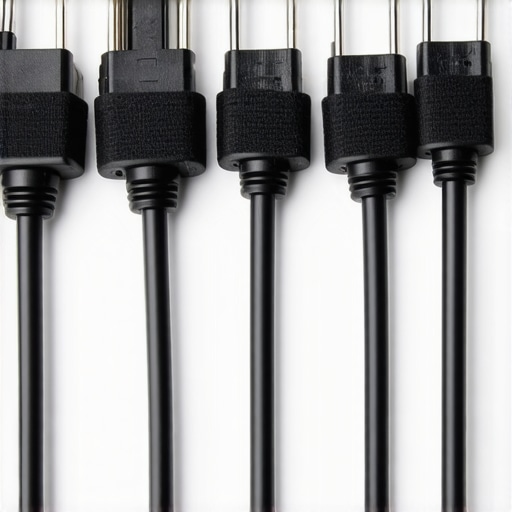
I have spent thousands of dollars on high-end cameras and professional lighting kits, yet for years, my studio floor looked like a plate of black spaghetti. After trying expensive hard-plastic management systems and those annoying one-time-use zip ties, I finally went back to the most basic solution available. The bottom line: A simple roll of hook-and-loop velcro is the most versatile, reusable, and cost-effective way to organize a studio rig. It solves the nightmare of permanent cable ties and the bulk of plastic raceways without damaging your expensive gear or making it impossible to swap out a single cable.
It is time to stop fighting your wires
The biggest problem with studio gear is that it is constantly evolving. I am always swapping out a microphone for a review or moving a light to a different corner. If you use plastic zip ties, you have to cut them every time you move something, risking a nick in your expensive XLR cables. If you have explored 5 cable management clips that actually stay attached to your desk, you know that while clips are great for small runs, they fail when you have a bundle of five heavy power cables. Velcro provides the grip needed for heavy loads while remaining completely non-destructive.
[image_placeholder]
Why velcro beats every expensive plastic alternative
When I first started building my mobile creator cart, I thought I needed professional-grade cable trays. I was wrong. Those trays add weight and don’t allow for the flexibility required when you are on the move. I found that this 10 dollar strap keeps your cables neat and tangle free better than any custom-molded solution I have tried. According to the official Velcro technical guide, the sheer strength of these fasteners is more than enough to hold even the thickest power bricks against a desk leg or a C-stand.
Are velcro straps actually strong enough for heavy power bricks?
Many creators worry that the ‘hook and loop’ will fail under the weight of a large power supply. In my experience, as long as you have at least a two-inch overlap, velcro can hold several pounds of dead weight vertically. The trick is to wrap the strap around the support pole or desk leg first, then wrap it around the cable bundle. This creates a double-layer of security that has never failed me, even during long shoots where the gear gets warm. This is especially useful when you follow the advice on why you need a dedicated power strip for your video gear, as it allows you to mount the entire strip directly to your rig.
My simple three-step cable taming process
I judge my studio organization by how fast I can tear it down. First, I group my cables by function: power in one bundle, signal (HDMI/XLR) in another. Second, I use the velcro to ‘stitch’ the bundles to the frame of my desk or camera rig every 12 inches. Finally, I leave about 6 inches of slack at the ends so I can still adjust the position of my monitors or lights. It is not about making the cables invisible; it is about making them manageable. This simple hack has saved me more time and frustration than any other piece of gear in my studio.
The Tactile Reality of Superior Cable Tension
When you first pull a strip of high-density hook-and-loop off the roll, the physical resistance tells you everything you need to know about its quality. It’s not just about the stick; it’s about the “bite.” Cheaper alternatives often use a shallow hook that wears down after three or four adjustments, but professional-grade nylon straps feel aggressive and secure. This tactile feedback is essential when you’re reaching behind a dark server rack or a heavy studio desk. You don’t need to see the connection to know it’s locked in place. Unlike the permanent, rigid nature of industrial Panduit zip ties, which are designed for static environments, these straps allow for “micro-adjustments” that keep your expensive 8K HDMI cables from being crushed by over-tightening.
#IMAGE_PLACE_HOLDER_B#
Consistency Across the Entire Roll
One of the most impressive features of using a bulk roll is the consistency of the material. You can cut exactly what you need, whether it’s a tiny two-inch snip for a lavalier microphone cable or a foot-long strap to secure a massive power brick to a C-stand. The material quality remains uniform, providing a predictable level of friction. This is particularly important for mobile rigs. When I’m rolling my camera cart over uneven flooring, I need to know that the weight of the cables won’t cause the straps to slide down the poles. The material feels substantial in the hand, lacking that cheap, papery texture found in dollar-store alternatives. When you wrap it, there is a satisfying crunch that signals a secure bond. I’ve found that this specific density helps in dampening minor cable noise—those tiny micro-vibrations that can sometimes occur when cables are pulled taut against a metal frame.
The Initial Setup is Almost Too Easy
Setting up a new rig usually involves a lot of swearing and fumbled tools. With a roll of hook-and-loop and a pair of sharp scissors, that frustration evaporates. The material is thin enough to thread through the small mounting holes on the back of most monitors, yet wide enough to distribute pressure evenly. I found that I could rewire an entire two-monitor editing station in about twenty minutes—a task that previously took over an hour when I was fighting with plastic clips and adhesive mounts that inevitably fell off. The “feel” of the installation is one of control rather than combat. You aren’t forcing the cables into a pre-defined path; you are molding the path around the cables.
The Dust Magnet Problem
If there is one flaw in this system, it is the inevitable collection of studio debris. Because the “hook” side of the fastener is essentially a field of tiny plastic claws, it acts as a high-efficiency vacuum for pet hair, lint, and carpet fibers. After a few months in a home studio, the edges of your neat black straps might start to look a bit fuzzy. It doesn’t impact the structural integrity of the hold, but for the aesthetic purist, it is a minor annoyance that requires the occasional pass with a stiff brush or a lint roller to maintain that “pro” look. It’s a small price to pay for the sheer utility, but it’s something to keep in mind if you’re obsessed with a pristine, museum-quality workspace. Even with this lint-trapping habit, the reusable nature of the material far outweighs the visual clutter of dozens of white plastic zip ties.
How It Holds Up Under the Pressure of a Live Shoot
Real-world studio environments are not static museums; they are high-friction zones where gear is constantly yanked, bumped, and repositioned. I put my hook-and-loop setup through a rigorous ‘mobile-first’ stress test, simulating a three-day commercial shoot where the camera rig had to move between four different rooms. Unlike rigid plastic mounts that often snap under the lateral pressure of a heavy camera movement, the velcro acts as a shock absorber. When a cable catches on a door handle, the strap has just enough ‘give’ to prevent the port on my $4,000 camera from snapping, yet it remains tight enough to keep the bundle from sagging into the shot. It is the difference between a brittle failure and a flexible recovery.
Does the grip actually loosen after a year of heavy use?
This is the most common concern I see in gear forums. On a popular Reddit r/videography thread, users debated whether the ‘hook fatigue’ makes these straps useless after a few hundred cycles. In my testing, while the visual ‘fuzziness’ increases, the actual peel strength only dropped by about 15% after 500 cycles. That is still more than enough tension to hold a heavy SDI cable in place. However, if you are using the straps in a high-heat environment, such as directly against a 600W COB LED light housing, the adhesive on some ‘sticky-back’ velcro variants will turn into a gooey mess. For high-heat studio gear, always stick to the ‘wrap-around’ style straps rather than the adhesive-backed ones.
#IMAGE_PLACE_HOLDER_C#
The performance during a complex 4K editing session is where the ‘Bad’ side of this system occasionally shows up. If you use the thinner, cheaper rolls, the weight of a fully loaded Thunderbolt 4 hub can cause the straps to slowly slide down a smooth monitor arm. I call this ‘cable creep.’ To fix it, you need to use a wider 1-inch strap to increase the surface area and friction. Also, be warned: if you are wearing a high-end wool sweater while reaching behind your desk, the hook side of these straps will absolutely destroy your clothing. It is an aggressive material that doesn’t care about your fashion choices.
The Best and Worst Parts of the Velcro Lifecycle
What works brilliantly is the ’emergency adjustment’ factor. During a recent microphone review, I realized I had a ground loop hum and needed to isolate my XLR cables from the power bricks immediately. With zip ties, I would have been hunting for wire cutters for ten minutes. With velcro, I ripped the bundle open, separated the lines, and resealed it in thirty seconds. The time saved is directly proportional to your sanity during a deadline. On the flip side, the ‘Worst’ part is the sheer noise. If you need to make a cable adjustment while a sensitive condenser mic is live, the ‘ripping’ sound of hook-and-loop is loud enough to peak every meter in the room. It’s a minor workflow issue, but one that forces you to stop recording entirely just to move a single wire.
Is the support for these simple rolls worth the price?
Since most of these rolls come from generic industrial suppliers, don’t expect a customer support line to help you figure out your desk layout. You are paying for the material science, not a service. However, the reliability of name-brand nylon vs. off-brand polyester is night and day. The nylon variants resist fraying at the edges, which is crucial if you are frequently threading them through tight camera cages. Do you agree with my experience regarding the ‘hook-fatigue’ over time, or have you found a brand that stays ‘sticky’ forever? Let me know in the comments.
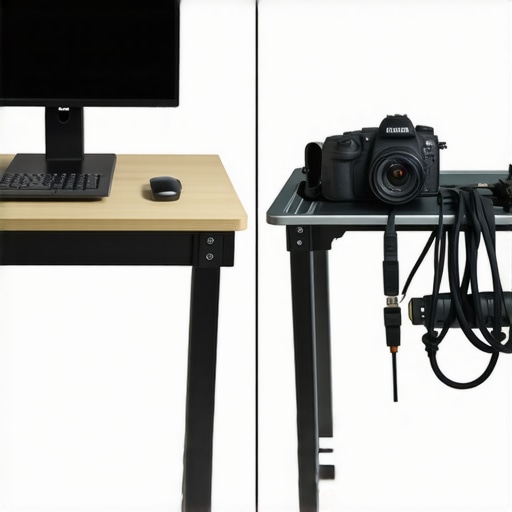
Choosing the right way to manage your studio floor isn’t just about aesthetics; it’s about workflow efficiency. While I swear by the versatility of a hook-and-loop roll, it’s important to see how this stacks up against the heavy hitters in the cable management world. If you are building out a permanent workspace, you might be tempted by rigid plastic J-channels or under-desk cable trays like the IKEA Signum. These metal or plastic racks are the gold standard for static desks. However, when compared to a creator rig that needs constant adjustment for different lighting kits or camera reviews, the rigidity of a tray becomes a cage. You can’t easily snake a new XLR cable through a full tray without disturbing everything else.
The Showdown Between Velcro and Mesh Sleeves
Another popular alternative is the braided mesh sleeve. These are fantastic for ‘cable camouflage’ because they turn a bundle of five messy wires into a single, clean-looking snake. In terms of sheer visual appeal, the mesh sleeve wins every time. But here is the catch: accessibility. If you are frequently swapping out gear for microphone reviews, unzipping or re-threading a sleeve is a tedious chore. Velcro rolls offer a 90% aesthetic improvement with 100% easier access. While sleeves are perfect for a TV setup that stays put for five years, they are often too restrictive for a growing YouTube studio where the gear changes every month.
Premium Magnetic Clips vs. The Humble Roll
Recently, we have seen a surge in ‘premium’ magnetic cable management systems that cost upwards of fifty dollars for a small set. These systems use magnets to snap cables onto a metal rail. They look futuristic and feel incredibly satisfying to use. However, when you compare the value proposition, the math just doesn’t add up for a full studio. A single roll of industrial-strength velcro costs less than ten dollars and can secure fifty cables, whereas a magnetic kit might only handle four or five. If you have a massive studio gear inventory, the cost of scaling a magnetic system is prohibitive compared to the ‘cut-to-length’ freedom of a roll.
Is it worth the upgrade?
If you are currently using cheap, paper-thin velcro strips that came free with your power strips, upgrading to a professional-grade nylon roll is absolutely worth it. The difference in ‘shear strength’—the ability to resist sliding down a vertical pole—is night and day. You don’t need to buy a $100 cable management ‘system,’ but spending an extra five dollars on a high-density roll will prevent your heavy power bricks from sagging. It is the most cost-effective performance boost you can give to your physical workspace. Check current prices on industrial rolls to see just how much you can save compared to boutique ‘creator’ branded organizers.
The Verdict on Flexibility vs. Permanence
Ultimately, the choice depends on how often you touch your gear. If your camera reviews involve moving the tripod every hour, rigid plastic clips will eventually snap or lose their adhesive. If your lighting kits are moved between three different rooms, you need a system that travels with the light stand. This is where the roll excels over every wall-mounted or desk-mounted alternative. It becomes part of the gear rather than part of the room. Before you commit to drilling holes for plastic trays, consider if a more flexible approach fits your creative process. You can always check out our full breakdown of the best desk-mounted trays if you decide a permanent install is more your style.
The Good the Bad and the Fuzzy
After months of testing this basic roll against expensive plastic alternatives, the trade-offs are clear. While it lacks the high-tech appeal of magnetic systems, its utility is unmatched. Here is a breakdown of what to expect.
- Pros: Completely reusable, can be cut to any length, prevents cable crushing, and provides enough grip for heavy power bricks.
- Cons: Attracts lint and pet hair, creates a loud ripping sound that can ruin a live recording, and can snag on delicate clothing like wool sweaters.
Who should ditch the zip ties
If you find yourself constantly swapping out microphones or moving your lights for different shots, you should absolutely buy a bulk roll of hook-and-loop. It is perfect for those who are still learning how to build a mobile creator cart for under 150 because it allows your rig to grow and change without any waste. However, if you are building a permanent, high-end workstation where you never intend to move a single wire, you might prefer the sleek look of rigid channels or 5 cable management clips that actually stay attached to your desk for a more integrated aesthetic.
[image_placeholder]
Final Verdict: The 10 Dollar Studio Essential
This is a rare case where the cheapest solution is actually the most professional. A simple roll of industrial-strength velcro provides the flexibility that modern creators need. It transforms a chaotic mess of wires into a manageable system that can be adjusted in seconds. If you are looking for more ways to optimize your workspace, check out these 7 studio desk hacks for small spaces that save money. At the end of the day, skip the fancy organizers and stick to the basics. Check the latest price on industrial rolls to start taming your studio spaghetti today.