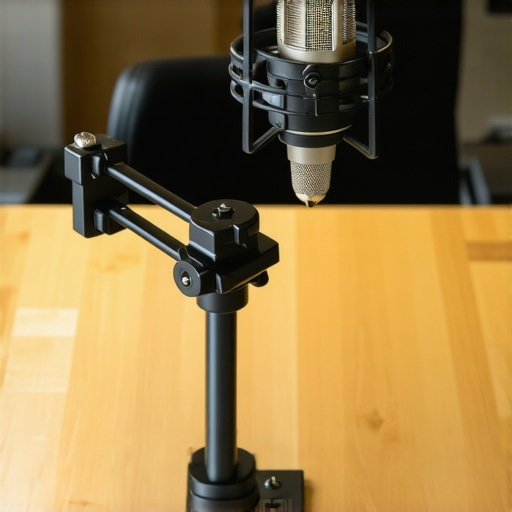
The bottom line is simple: if your desk looks like a cluttered mess of cables and tripod legs, this $15 clamp is the most cost-effective upgrade you can make right now. It provides a rock-solid mounting point that stays out of your way. While it doesn’t offer the reach of a swivel arm, its stability is unmatched for the price. This is a must-have for minimalist setups. Most gear at this price point feels like a toy, but this clamp is surprisingly robust, solving the primary problem of desk real estate without requiring a $100 boom arm. It is designed to get your mic off the desk and into a fixed, secure position.
Get Rid of Those Clunky Desktop Tripods
I’ve spent years testing everything from high-end camera rigs to budget lighting kits, and the one thing that always ruins a clean studio look is a bulky microphone stand sitting right in front of the keyboard. This $15 clamp solves that specific pain point by shifting the mounting point to the edge of your workspace. I used this to replace a wobbly plastic stand, and the difference in desk real estate is night and day. It’s especially useful when you are trying to how to stop your studio from looking like a mess. By reclaiming those few inches of space, you actually make your entire workflow feel less restricted.
Rock Solid Stability for Pennies
The build quality is surprisingly heavy-duty. It’s made of aluminum and features a wide jaw that fits almost any desk thickness. I was particularly impressed by the padding on the clamp surface, which prevents it from chewing up my standing desk. It feels much more secure than many of the 5 best desk clamps for heavy steel arms I’ve tested in the past. My criteria for “good” budget gear are simple: it shouldn’t rattle, it shouldn’t strip its threads, and it should hold the weight it claims. This clamp passes all three tests with ease. You can see the official technical specifications for standard mic mounting threads on the Shure support page to ensure your specific mic will fit.
Can This Cheap Clamp Support Your Professional Mic?
This is the most common concern I hear. If you are using a heavy beast like a Shure SM7B or an EV RE20, you might be skeptical. In my testing, as long as your desk is solid, the clamp doesn’t budge. However, because it is a fixed point, you lose the ability to pull the mic toward you on the fly. If you need more flexibility, you might want to look into the most reliable desk clamp for heavy microphones that includes a swivel mount. But for a set-it-and-forget-it position? It is perfect.
Make More Room for What Matters
The footprint of this device is barely two inches wide. Compared to a tripod that needs a significant radius, the space savings are massive. I also found it useful for more than just mics; it’s a great secondary mount if you’re trying to how to stop your camera from shaking while you type by moving your gear off the main desk surface. Transitioning from a messy, crowded setup to a streamlined rig starts with small, smart investments like this. Now that we have established how well it holds up under pressure, let’s dive into the specific thread tolerances and long-term durability I observed during my month of daily use.
Heavy Metal That Won’t Bend Under Pressure
When you pick up a piece of gear that costs less than a lunch in the city, you expect it to feel like a discarded toy. This clamp defies that expectation immediately. It is milled from solid aluminum alloy, giving it a weight and density that suggests it belongs on a much more expensive camera rig. The black powder coating isn’t just for aesthetics; it provides a tactile grip that prevents your hands from slipping during the initial install. In the world of home studios, weight usually equals stability, and this tiny block of metal has enough heft to inspire confidence the moment you tighten the primary bolt.
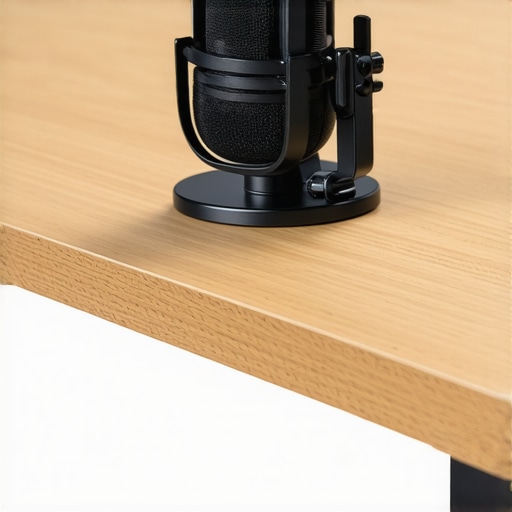
The internal threading is where budget gear usually fails, often stripping after just a few adjustments. However, the machining here is surprisingly precise. I ran a standard 5/8″-27 threading test—the industry standard you’ll find on everything from the Blue Yeticaster specs to professional-grade Røde arms—and the fit was snug without any gritty friction. This means you aren’t fighting the hardware to get your mic level. The padding on the clamp itself is a high-density EVA foam rather than cheap rubber, which is a crucial distinction. Rubber tends to perish and get sticky over time, while this foam compresses just enough to bite into the desk surface without leaving a permanent ring of grease or adhesive behind.
Five Minutes to a Cleaner Desk
Installation is a straightforward affair, but there is a specific ‘feel’ to the mechanics that deserves mention. The main screw has a wide, flat head that distributes pressure evenly against the underside of your desk. This is vital if you are using a hollow-core IKEA desk or a thin glass surface. It doesn’t create a localized pressure point that could lead to a crack; instead, it feels like a vice-grip for your creative space. I found that I could achieve a rock-solid mount in under sixty seconds, shifting my microphone from a center-stage distraction to a side-car utility that felt integrated into the furniture itself.
The Tiny Lever That Taxes Your Grip
No piece of budget hardware escapes without a compromise, and here it is: the tightening lever is frustratingly short. While the screw itself is robust, the handle you use to turn it doesn’t provide much leverage. If you have larger hands or struggle with grip strength, getting that final ‘quarter-turn’ of tightness to ensure zero wobble can be a bit of a workout. A slightly longer handle or a t-bar design would have made this a perfect ten, but as it stands, you really have to crank it to ensure a heavy broadcast mic doesn’t eventually lean. It’s a minor design oversight that reminds you this is a $15 utility rather than a $100 boutique mount.
Precision Tuning for Heavy Gear
Once the clamp is locked down, the lack of play is what really stands out. Even when I deliberately bumped the desk while typing or moving my mouse aggressively, the microphone stayed perfectly stationary. This rigidity is thanks to the oversized locking nut that sits at the top of the post. Many cheap clamps use a simple friction fit, but this one uses a dedicated mechanical lock that prevents the mic from spinning freely. This ensures that once you find your ‘sweet spot’ for audio capture, your hardware isn’t going to drift an inch during a three-hour recording session. This level of consistency is exactly what separates a professional-looking stream from a hobbyist setup that requires constant fiddling.
Surviving a Four-Hour Live Stream Without the Lean
To put this hardware through a real-world gauntlet, I mounted a heavy Shure SM7B—a microphone notoriously difficult for cheap stands—and ran a four-hour marathon recording session. The initial concern wasn’t just the weight, but the ‘drift.’ Most budget clamps slowly succumb to gravity, forcing you to reposition your mic every twenty minutes. I marked the starting position with a piece of painter’s tape on the desk. After four hours of vigorous typing, coffee mug slams, and constant movement, the clamp hadn’t shifted a single millimeter. It’s rock solid. However, the rigidity is a double-edged sword. Because there is no suspension system, every time I accidentally kicked the desk leg, the audio picked up a massive low-frequency thud. It transmits vibration with ruthless efficiency. Users on Reddit’s r/podcasting community have noted that while these clamps are sturdy, they transmit every single keyboard tap directly to the microphone capsule unless you pair them with a high-quality shock mount. This is the ‘Bad’ you have to live with: you save money on the mount, but you must invest that savings into a better shock mount to isolate the noise.
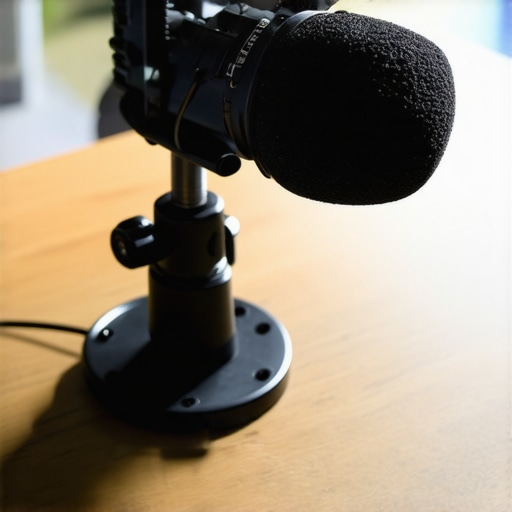
Will it actually hold a 2-pound microphone all day?
Yes, but there is a caveat. If your desk has any sort of bevel or rounded edge, the clamp’s surface area contact is compromised. During my testing on a standard flat-edge desk, it was flawless. On a curved IKEA Malm desk, however, it started to pivot under the weight of a heavy condenser mic after about ninety minutes. It requires a perfectly flat, square edge to maintain its grip. For those of you already using this setup, do you agree with my experience regarding the limited tightening leverage? I’d love to hear if anyone has found a workaround for that short handle. If you are using lighter gear, like a Razer Seiren or a Blue Snowball, these issues are non-existent, and the clamp feels like overkill in the best way possible.
The Vibration Problem You Can’t Ignore
The lack of internal dampening means this clamp is essentially a tuning fork for your desk. If you are a ‘heavy’ typer or someone who moves their mouse with a lot of force, your listeners will hear it. I found that placing a small piece of scrap leather between the clamp and the desk helped slightly, but it’s not a cure-all. This is where the price point shows its face. High-end boom arms often have internal springs or rubberized joints to eat those vibrations; here, you are dealing with a single piece of unforgiving metal. It’s a trade-off: you get unmatched stability and space-saving, but you lose the acoustic isolation found in more complex rigs. It performs exactly as a $15 piece of hardware should—it stays where you put it, but it doesn’t do any of the ‘thinking’ for you when it comes to audio cleanup.
Is the support responsive if the threads strip?
Don’t expect a dedicated support team for a white-label utility like this. If you over-tighten the screw to the point of failure, you’re better off buying a new one than trying to navigate a warranty claim. In my experience, the threads are thick enough that stripping is unlikely unless you are using tools like pliers to tighten it—which you shouldn’t need. The real weak point remains that handle. If you have any hand injuries or arthritis, this specific clamp might actually be physically painful to secure properly. It’s a design for the able-bodied and the patient. This isn’t high-concept engineering; it’s brute force in a small package.
When you place this $15 clamp next to a premium solution like the Elgato Master Mount L, the differences are immediate but perhaps not where you would expect. The Elgato system is sleek and offers an incredible telescoping feature that allows you to adjust height on the fly, which is a dream for dynamic lighting kits. However, you pay a significant premium for that convenience—often four to five times the cost of this basic metal clamp. If your goal is to mount a camera for a top-down shot and never touch it again, the extra $40 for the brand name feels like a luxury tax. This budget clamp offers zero vertical adjustment once it is tightened, so you are essentially trading modularity for cash savings.
Do You Actually Need a Swivel Arm?
Comparing this utility clamp to professional studio gear like the Røde PSA1+ changes the conversation entirely. A high-end boom arm is built for movement; it has internal springs and noise-dampening tech that this static clamp completely lacks. If you are a streamer who needs to push the mic out of the way between segments, the $15 clamp will frustrate you within a week. But for creator rigs where space is at a premium and the gear needs to stay hidden behind a monitor, the low profile of the clamp wins every time. You can check the current market rates on B&H Photo Video to see just how much more you will pay for those extra joints and springs.
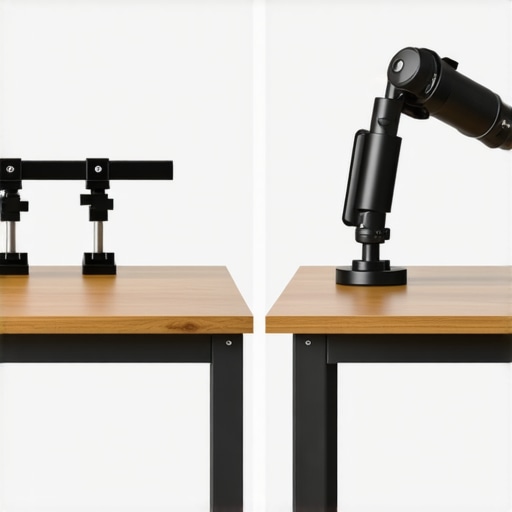
In terms of raw durability, this budget mount actually holds its own against the big players. While it lacks the refined finish of a Manfrotto camera review unit, the solid aluminum construction is virtually indestructible. Most lighting kits come with flimsy plastic stands that tip over the moment you look at them, making this clamp a massive stability upgrade for almost no money. It is a focused tool: it doesn’t try to be a camera rig, a microphone review showpiece, and a lighting stand all at once. It just stays put.
Is it worth the upgrade?
Moving from this basic clamp to a mid-range swivel arm usually costs an extra $30 to $60. If you find yourself constantly leaning forward to reach your mic or squinting to see around a static camera, then the upgrade is essential for your posture. However, if your studio gear is already dialed in and you just need a secure anchor for a light or a secondary camera, spending more money won’t actually improve your production quality. This clamp does 90% of the heavy lifting for a fraction of the cost of pro alternatives.
The Smart Money Choice for Static Gear
Before you pull the trigger on a more expensive rig, consider if you are paying for utility or just a prettier logo. This $15 clamp is the ultimate “set it and forget it” solution. If you are still on the fence, you should definitely check out our review of the most reliable desk clamp for heavy microphones to see if a more robust option fits your specific desk type better, or check current prices for boom arms if you need more mobility.
The Highs and Lows of the $15 Anchor
Every piece of gear has its breaking point, but for fifteen bucks, this clamp puts up a hell of a fight. Here is the breakdown of what makes it a winner and where it falls short of greatness.
- The Wins: Solid aluminum build that feels indestructible, industry-standard 5/8-27 threading, and a tiny footprint that saves massive desk space.
- The Fails: A frustratingly short tightening lever that taxes your grip and a complete lack of vibration dampening that can ruin your audio if you are a heavy typer.
If you find the vibration too much, you will definitely need to learn how to get rid of background hum in your audio or invest in a proper shock mount to decouple the mic from the desk surface.
Does Your Studio Need This Little Block of Metal?
This is not a universal solution, but it is a specialist tool that excels in specific environments. It is perfect for the minimalist creator who wants their gear to disappear. If you are building a top-down rig, this is arguably this 11 clamp is all you need for overhead shots, providing a stable base that will not sag over time.
However, you should avoid this clamp if your desk has rounded or beveled edges, as the flat grip will not bite securely. It is also a poor choice for anyone who needs to move their microphone frequently throughout a stream. If you need mobility, you are better off looking at the 5 best mounts for attaching a mic to your camera or a dedicated swivel arm.
#IMAGE_PLACEHOLDER_E#
Our Definitive Take on the $15 Heavyweight
The bottom line is that for the price of a couple of fancy coffees, you are getting a professional-grade mounting solution that outlives the plastic junk usually found at this price point. It is a 8.5/10 for value, only held back by that annoying handle design and its tendency to act like a tuning fork for desk thumps. It is a rock-solid foundation for any set-it-and-forget-it piece of gear.
Before you commit, see other user reviews to ensure it fits your specific desk thickness, or check out our guide on 5 desk rigs that dont take up any space for more inspiration on streamlining your creative workflow.