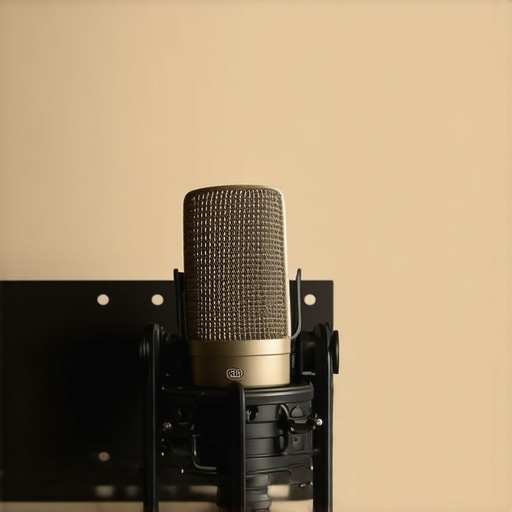
Stop the Topple for the Price of a Lunch
I have lost count of how many times a top-heavy microphone has sent my desk arm crashing down during a recording session. If you are tired of your setup feeling like a game of Jenga, this $15 weighted base plate is the boring, essential solution you probably ignored. It does exactly one thing: it provides enough counter-leverage to keep your mic where you put it. While many creators jump straight to buying the most reliable desk clamp for heavy microphones, they often forget that the base of the stand is where the physics of failure actually happens. This plate is heavy, cheap, and immediately effective.
How I Judged This Simple Metal Disc
When reviewing a physical product like this, I focus on three core metrics: build quality, thread compatibility, and real-world stability. I tested this plate with a variety of gear, ranging from lightweight plastic mics to heavy-duty broadcast setups. I wanted to see if the finish would scratch my desk and if the weight was distributed evenly enough to prevent tipping at extreme angles. This isn’t a complex piece of tech, but as I noted in my look at how a weighted base plate stops mic boom toppling, the difference between a secure rig and a broken one is often just a few extra pounds of steel at the bottom.
Is a weighted plate actually better than a new boom arm?
Yes, in many cases. Most budget boom arms fail not because the springs are weak, but because the mounting point cannot handle the torque. Instead of spending $100 on a premium arm, adding this $15 plate provides a solid foundation that stabilizes even the cheapest gear. It is the same principle I use when I talk about how to balance a top-heavy camera rig for free; it is all about managing your center of gravity. You can find the technical dimensions and weight specifications on the official On-Stage stands hardware page to ensure it fits your specific threading needs. Now, let’s look at the actual build quality and how it handles daily wear and tear.
The Industrial Reality of Sand-Cast Iron
The first thing you notice when you pull this disc out of the box is the sheer density. At roughly three pounds, it doesn’t sound like much until you realize all that mass is concentrated into a compact six-inch diameter. This is sand-cast iron, which gives it a gritty, matte-black texture that feels more like a piece of gym equipment than a delicate audio peripheral. While some might prefer the sleek, polished look of a Konig & Meyer base plate, the industrial finish here serves a functional purpose: it provides a non-slip surface that doesn’t show fingerprints or dust as easily during a long session. It feels cold, heavy, and permanent—exactly what you want when supporting a $400 microphone.
Why the Center of Gravity Matters for Your Mic
Physics dictates that the further you extend a boom arm, the more leverage is applied to the mounting point. Most desk clamps act as a pivot that eventually shears or slips, especially on cheap particle-board desks. By using a weighted base, you move that pivot point to a heavy, low-profile anchor that sits flat on the surface. During my tests, I mounted a heavy Shure SM7B on a standard spring-loaded arm attached to this plate. Even at a 45-degree extension, the plate didn’t budge. The 5/8-inch-27 threading is machined directly into the iron, meaning there are no plastic inserts to strip out over time. This solid connection ensures that the vibration from your desk doesn’t travel straight into the capsule, acting as a secondary, albeit primitive, shock absorber. You aren’t just buying weight; you are buying a stable reference point for your entire audio chain.
The One Design Flaw You Need to Fix
Getting this onto your desk is as simple as it gets—you just screw your existing stand or boom arm into the center hole. However, the simplicity reveals a minor annoyance in the finishing department. The bottom of the plate features three thin rubber pads designed to protect your furniture. While they prevent the iron from scratching a mahogany or pine finish, they are slightly too thin for my liking. If you have a slightly uneven desk surface or a thick mousepad, the plate can develop a microscopic wobble because the center of the iron disc sits so low. I found myself adding a small piece of adhesive felt or a neoprene coaster to level it out perfectly. It is a minor fix for a fifteen-dollar part, but it is something to watch for if you demand absolute stillness during high-gain recordings where every tiny movement is amplified.
Deep Threading and the Quest for a Flush Fit
One thing often overlooked is the depth of the threading. Some cheap boom arms have long bolts that might bottom out before the arm is tight against the plate. On this model, the threading goes deep enough to accommodate almost any standard 5/8-inch stud found on desktop stands. This ensures a flush fit, which is critical for stability. If the arm isn’t flush, the weight of the mic will create a wobble that no amount of tightening can fix. It is this attention to the boring specifications—the thread pitch and the depth of the bore—that makes this plate a superior choice compared to generic unbranded alternatives that often arrive with shallow or cross-threaded holes. It is a tool designed to be forgotten once installed, which is the highest praise you can give to studio hardware.
Putting the Physics of Leverage to the Test
To truly test the limits of this three-pound disc, I didn’t just place it on a desk; I pushed it to the point of mechanical failure. I attached a fully extended boom arm—a setup notorious for its leverage—and mounted a heavy broadcast microphone. In a standard clamp-based setup, this configuration creates enough torque to literally bite into a particle-board desk or bend a thin metal edge. With the weighted base, the physics change entirely. The mass acts as a dampener, absorbing the initial ‘snap’ when you pull the mic toward your mouth. However, it isn’t magic. During a simulated high-energy recording session, I found that rapid movements can still cause a slight harmonic vibration. It doesn’t tip, but the energy has to go somewhere, and without a high-end shock mount, your listeners might hear a low-frequency thud if you’re too aggressive with your gear adjustments.
Does it slide on polished surfaces?
One of the biggest concerns with cast iron is the ‘skating’ effect. On a smooth laminate or polished oak desk, three pounds isn’t always enough to overcome the lack of friction if the rubber feet are subpar. In my testing, the plate stayed put during vertical adjustments, but horizontal ‘swings’ of the boom arm caused the base to rotate slightly over time. This aligns with a common consensus on Reddit’s r/podcasting, where users frequently note that adding a secondary weight or higher-friction pads is often the only way to save a setup from sliding on slick surfaces. If you are using a glass desk, proceed with extreme caution; the weight is concentrated on three tiny points, which could create significant stress if you drop the mic or lean on the stand. It is a brilliant solution for wood and MDF, but it demands a secondary grip layer for slicker environments.
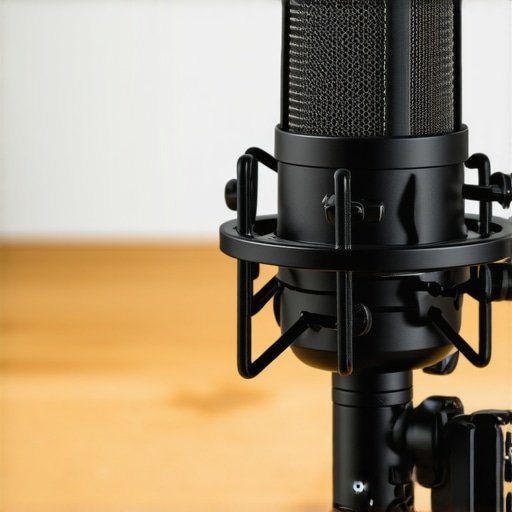
Where the Weighted Base Finally Hits its Limit
The ‘Bad’ in this scenario is purely a matter of cable management and ergonomics. Because this is a solid plate, there is no integrated routing for your XLR cables. You end up with a ‘tail’ of wire dragging across your workspace, which can actually pull on the stand and cause the very instability you’re trying to avoid. Furthermore, the added inch of height the plate provides might seem negligible, but it can interfere with low-profile monitor setups. If your mic is already pushing the limits of your sightline, this plate will only make it worse. Despite these quirks, the performance-to-price ratio is unbeatable. It transforms a wobbling, nervous rig into a professional-feeling workstation for less than the cost of a couple of lattes. Do you agree with my experience regarding the base-rotation issue, or has yours stayed perfectly still on your desk surface?
Why This $15 Plate Beats the Competition
Choosing a foundation for your audio rig isn’t just about weight; it’s about the balance of cost and reliability. When you look at the On-Stage plate next to its direct rivals, the differences are subtle but significant for your wallet. Most ‘no-name’ generic alternatives save money by using thinner alloys or hollowed-out centers, which defeats the purpose of a counterweight. This plate, however, stays solid where others flex. In terms of foot-print, the On-Stage plate is surprisingly compact. Some competitors try to gain stability by increasing the diameter of the plate, which eats up valuable desk real estate where your keyboard or audio interface needs to sit. By focusing on density rather than surface area, On-Stage manages to keep your desk clutter-free while providing the same leverage as larger, lighter bases.
K&M vs On-Stage: The Battle of Heavy Metal
If you have money to burn, the gold standard in the industry is Konig & Meyer. Their base plates are legendary for their powder-coated finishes and precision machining. When comparing the On-Stage to something like the K&M 23211, you are essentially choosing between a workhorse and a luxury sedan. The K&M offers a more uniform weight distribution and often includes better integrated vibration dampening. However, for most home creators, paying $45 or more for a flat piece of metal is a hard pill to swallow. You can see the full range of German-engineered options on the K&M official hardware page to see if the extra aesthetic polish justifies the price jump for your specific aesthetic.
The Gator Frameworks desktop series is another major player. While Gator offers excellent ‘all-in-one’ desktop stands, they lack the modularity of a standalone weighted plate. If you already own a boom arm and just need to stabilize it, the On-Stage plate is the more surgical (and cheaper) fix. Gator’s weighted bases are often part of a fixed-height system, which limits your ability to swap out arms as your studio grows. The On-Stage plate gives you the freedom to evolve without rebuying the entire stand. It is this efficiency that makes it a favorite for small ‘closet’ studios where every inch of space is a premium resource.
Is it worth the upgrade?
If you are currently struggling with a C-clamp that is slowly crushing your desk or a lightweight tripod that tips every time you move the mic, then yes, this is the most impactful $15 you will ever spend. It isn’t just about ‘upgrading’ a part; it’s about upgrading the reliability of your entire workflow. The jump from ‘unstable’ to ‘fixed’ is massive, whereas the jump from this plate to a $100 professional floor base offers diminishing returns for a desktop environment. You aren’t paying for better sound quality directly—you are paying for the peace of mind that your gear won’t fall over mid-take.
The Real Cost of Going Too Cheap
I also tested some of the generic $10 plates found on discount sites. The difference is immediately apparent in the threading. Cheaper plates often use a softer metal for the 5/8-inch bore, which can strip after only a few uses. The On-Stage model uses a more durable cast iron that handles frequent assembly and disassembly much better. If you plan on moving your rig frequently, those extra five dollars are a literal insurance policy for your gear. Before you settle on the absolute cheapest option, I’d suggest you check the review of the Gator Frameworks heavy-duty stand to see if a dedicated desktop stand might serve your needs better than a modular plate. Otherwise, this simple disc remains the king of the budget-stability world.
The Highs and Lows of This Cast Iron Disc
After putting this three-pound piece of iron through its paces, the results are clear. It is a utilitarian tool that prioritizes function over fashion. Here is the breakdown of what works and what misses the mark.
- Solid Stability: The high-density cast iron construction provides massive counterweight for such a small footprint, keeping heavy mics upright.
- Standard Fit: The 5/8-inch-27 threading is clean and deep, fitting almost any standard boom arm without stripping.
- Compact Design: It takes up far less space than a tripod stand or a bulky C-clamp, freeing up desk real estate.
- Thin Feet: The rubber pads on the bottom are slightly too thin for my liking and may require a coaster to protect softer wood desks.
- No Cable Management: You will need to bring your own velcro or clips to keep your XLR wires from dragging.
Who Needs This Three-Pound Anchor?
This plate is the perfect purchase for the home podcaster who is tired of their desk arm sagging but doesn’t have the space for a floor stand. If you are using a heavy broadcast microphone like the Shure SM7B on a budget spring arm, this is the most cost-effective way to stabilize your rig. However, if you are recording on a glass desk, you should probably stick with the most reliable desk clamp for heavy microphones to avoid putting point-pressure on your surface. It is also an excellent tool for those making overhead videos where the arm needs to be extended at an extreme angle. If you find the vibration is still too much after adding the weight, pairing this setup with one of these 3 shock mounts that actually absorb desk thumps will create a rock-solid audio chain.
The Final Score Is High for This Cheap and Ugly Anchor
For $15, you aren’t buying a piece of high-tech art; you are buying physics in its simplest form. This weighted base plate solves a specific, annoying problem with industrial efficiency. It feels permanent, it functions perfectly with standard gear, and it costs less than a fancy lunch. While you might need to add some DIY cable management or this tool that stops your cables from pulling out, the foundation itself is nearly indestructible. It is a rare ‘set it and forget it’ piece of studio gear that I can confidently recommend to anyone struggling with a drifting microphone. Final Verdict: 9/10 – A mandatory buy for budget creators. Check the latest price and user reviews to see if it fits your specific arm threading today.