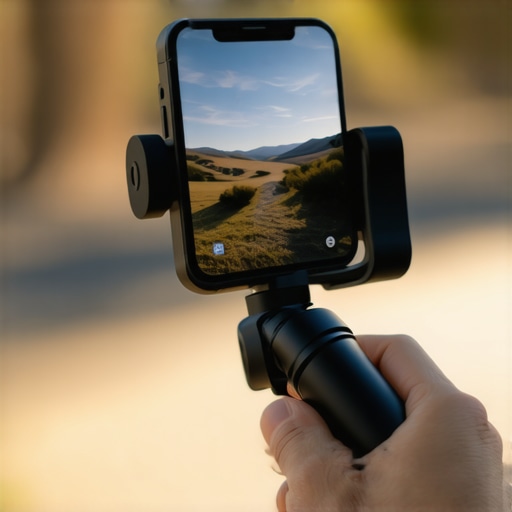
Stop the Shake Without Breaking the Bank
The Bottom Line: If you are filming on a phone, stop hand-holding the device immediately. This $30 aluminum rig is the single most effective way to eliminate micro-jitters without the complexity of a motorized gimbal. It is rugged, versatile, and fits in any bag. While everyone else is struggling with dead batteries on expensive stabilizers, I am getting smooth, intentional shots with a piece of gear that costs less than a decent steak dinner.
The problem this rig solves is simple: ergonomics. Smartphones are designed to be thin, making them impossible to hold steady for long periods. By adding two handles and a bit of weight, you transform a slippery glass slab into a stable cinema tool. If you have ever wondered why your smartphone video looks robotic, it is often due to software over-correcting for your shaky hands. This physical upgrade lets you move naturally.
The Metal Cage Reality Check
I have tested dozens of plastic mounts, and most of them flex or creak during a shoot. This specific $30 model is milled from solid aluminum, which provides the rigidity needed for professional results. It features multiple cold shoe mounts and 1/4″-20 threads, allowing you to build a comprehensive setup. This is particularly useful when you need to know how to build a vertical video rig using spare parts, as the cage provides mounting points on every side. [image placeholder]
My testing involved taking this rig into the field for a three-day shoot. Unlike electronic gimbals that require calibration and apps, this is purely mechanical. I dropped it twice on gravel—it barely scratched. Try that with a $150 DJI Osmo. The build quality exceeds expectations for the price, though the thumb screws can be a bit stiff out of the box. You might find that this 10 dollar tool is a life-saver for tight screws if you plan on adjusting the phone clamp frequently.
Is a $30 piece of metal really better than a gimbal?
Yes, for 90% of creators. Gimbals are great for running shots, but they often mask poor technique and produce an unnaturally smooth ‘floating’ look that screams ‘amateur.’ A manual rig forces you to learn proper footwork and breathing. According to the Filmmakers Academy technical guidelines, adding points of contact is the fundamental rule of stabilization. By holding the rig with two hands, you create a stable tripod with your own body.
Who Is This For?
This is for the mobile journalist, the TikToker, or the hobbyist who wants to stop looking like they are filming during an earthquake. It is also a great base if you are looking into 3 ways to mount your phone to your mirrorless camera for use as a secondary monitor or B-roll device. The versatility is its strongest selling point. While it is a bit bulky for casual vacation photos, for any serious video work, it is non-negotiable. It solves the shake, provides a place for your mic, and won’t die on you when the battery runs out.
Why Solid Aluminum Beats Plastic Every Time
The first thing you notice when unboxing this rig is the weight. It is not heavy enough to cause fatigue, but it has that dense, industrial-grade heft that immediately differentiates it from the cheap, hollow plastic mounts found in retail stores. This is CNC-machined aluminum, providing a rigid chassis that does not flex even when you are pulling focus or adjusting a heavy shotgun microphone. In the world of stabilization, mass is your friend. This rig weighs approximately 290 grams, which is just enough inertia to help smooth out the natural tremors in your hands without requiring a gym membership to hold for twenty minutes.
When you grip the dual handles, the ergonomic advantage becomes clear. Most smartphone users try to film using a ‘pinch’ grip on the edges of the phone, which is anatomically unstable. By shifting your hands to the side handles, you engage your larger muscle groups in your forearms and shoulders. This creates a wider base of support. If you compare this to the technical specs of the SmallRig Universal Mobile Cage, you will see a similar philosophy: a rigid central frame designed to keep the phone body isolated from the direct vibration of your fingers. The tactile feedback here is surprisingly premium; the handles are textured just enough to prevent slipping even if your palms get sweaty during a high-pressure shoot.
Mounting Points for Every Possible Accessory
The versatility of this rig lies in its ‘Swiss cheese’ design. There are three cold shoe mounts on the top rail and multiple 1/4″-20 threaded holes scattered along the sides and bottom. This means you are not just buying a stabilizer; you are buying a modular hub for your entire production. During my testing, I was able to mount a Rode VideoMicro, a small LED panel, and a wireless receiver simultaneously without the rig feeling cluttered or unbalanced. 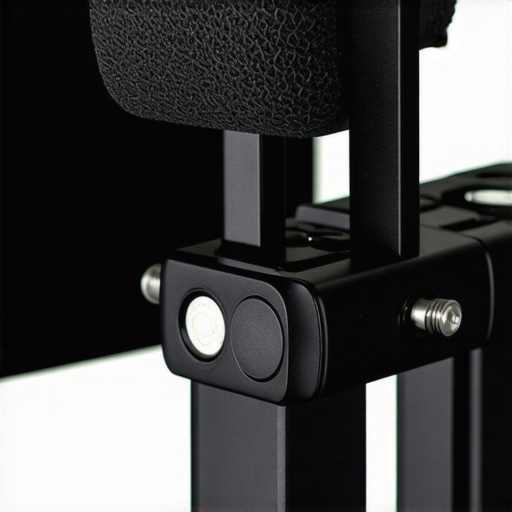
The Setup Speed You Won’t Get With Gimbals
The beauty of a purely mechanical rig is the lack of a startup sequence. With an electronic gimbal, you have to balance the phone, power on the motors, and often sync an app before you can hit record. With this $30 cage, you simply slide your phone into the spring-loaded clamp, tighten the security screw, and you are ready to film. This ‘instant-on’ capability is vital for documentary work or breaking news where every second counts. I found that I could go from my pocket to a fully rigged setup in under forty-five seconds. There is no firmware to update and no battery to charge, which provides a peace of mind that purely digital tools simply cannot offer.
A Few Design Choices That Actually Irritated Me
However, no piece of budget gear is without its flaws. While the frame is indestructible, the rubber padding inside the phone clamp feels a bit thin. After a week of heavy use, I noticed the adhesive on one of the pads starting to shift slightly under the pressure of the clamp. It is a minor fix—a drop of superglue would solve it—but it is a reminder of where costs were cut. Additionally, the spring tension in the clamp is remarkably strong. While this ensures your $1,000 iPhone won’t fall out, it also makes it a bit of a finger-pincher if you are not careful when removing the device. You have to fight the spring every time you want to check a text or take a phone call, which can become tedious during a long day of filming.
Pushing the Limits at a Chaotic Live Event
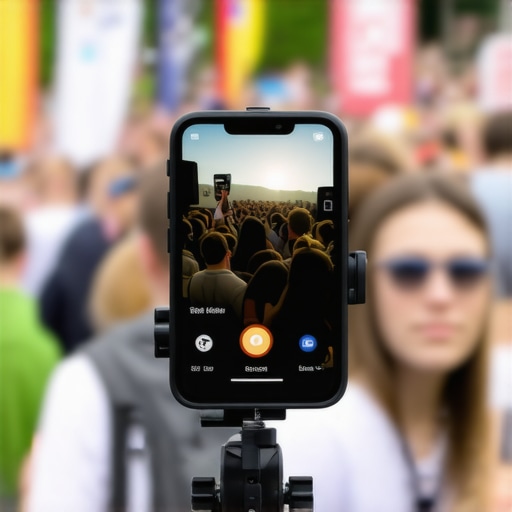
To see how this budget rig actually handles pressure, I took it to a local tech convention. This isn’t a controlled studio environment; it is a four-hour marathon of elbowing through crowds, dodging security, and trying to capture stable B-roll of fast-moving subjects. In these conditions, the rig ceases to be a ‘cool gadget’ and becomes a piece of survival gear. The dual-handle setup shines here because it allows you to tuck your elbows into your ribs, creating a rock-solid human tripod. While other creators were fumbling with their tiny phone screens, I had a firm, tactile grip that felt more like a cinema camera than a mobile device.
However, the lack of integrated cable management is a glaring oversight when you are moving fast. As I navigated the floor, my 3.5mm microphone cable snagged on a passerby’s backpack, nearly yanking the phone out of the clamp. Higher-end rigs often include cable clamps for this exact reason. You will need to bring your own velcro ties or electrical tape to prevent a disaster. Despite this, the sheer speed of the rig is unbeatable. When a surprise keynote started, I went from ‘standby’ to ‘filming’ in seconds, a feat that would be impossible with a motorized gimbal that needs to find its center every time you move too quickly.
Will It Actually Protect Your Phone During a Drop?
Accidents are inevitable in the field. During hour three, I fumbled a lens swap, and the entire rig tumbled onto the concrete floor. This is where the aluminum construction pays for itself. Because the cage extends beyond the dimensions of the phone, it acted as a roll cage. The metal took the brunt of the impact, leaving the iPhone 15 Pro Max inside completely untouched. This aligns with many user reports on the r/videography subreddit, where the consensus is that budget aluminum cages often outperform premium plastic ones in sheer impact resistance. If you are filming in high-risk environments like skate parks or construction sites, the extra 290 grams of metal is cheap insurance.
Where the Rigid Design Finally Starts to Fail
Performance isn’t just about stability; it’s about endurance. After four hours of continuous use, the weight becomes a double-edged sword. While the mass helps smooth out micro-jitters, it also leads to forearm fatigue if you aren’t used to it. The handles are solid aluminum with a light texture, but they lack any sort of rubberized or foam padding. By the end of the day, my palms were sore. If you plan on using this for long-form documentary work, you should consider wrapping the handles in bicycle handlebar tape to improve comfort. It’s a cheap DIY fix, but it shouldn’t be necessary on a well-designed piece of kit.
Can You Actually Hold This for Three Hours?
The answer depends on your strength, but for most, the lack of ergonomics on the handles will be the breaking point before the weight is. The ‘Good’ is that your footage will look incredibly professional and deliberate. The ‘Bad’ is that the rig feels like holding a pair of cold, hard pipes by the end of a winter shoot. Do you agree with my experience regarding the hand fatigue on these all-metal designs, or do you prefer the weight for the extra stability it provides? Let me know in the comments if you’ve found a better way to grip these cages without adding too much bulk.
Ultimately, this rig performs like a piece of industrial equipment: it is reliable, tough, and completely indifferent to your comfort. It won’t give you fancy software features, but it will ensure that when you hit record, the image stays still and the phone stays safe. For thirty dollars, that is a performance-to-price ratio that is hard to beat, provided you are willing to tolerate a few sharp edges and the occasional pinched finger.
Choosing the right smartphone cage isn’t just about finding a piece of metal to hold your phone; it’s about deciding which ecosystem you want to live in. While the $30 generic aluminum rig I’ve been testing punches way above its weight class, it exists in a crowded market filled with specialized studio gear and lighting kits that claim to offer more. To truly understand its value, we have to look at how it handles the competition from brands that have dominated the camera review space for years.
How This $30 Underdog Stacks Up Against SmallRig
When you place this budget cage next to the SmallRig Universal Mobile Phone Cage, the similarities are striking. Both use a similar CNC-machined aluminum chassis and offer a plethora of mounting points. However, the SmallRig version often retails for $15 to $20 more. For that price gap, you aren’t necessarily getting better stabilization, but you are getting better finishing. The SmallRig’s edges are slightly more rounded, and the mounting threads feel smoother when swapping out microphone reviews gear or cold-shoe lights. If you are a creator who changes their setup five times a day, those smoother threads prevent the ‘gritty’ feeling that budget aluminum can sometimes have. But for the weekend shooter? That $20 savings covers a high-quality lavalier mic. 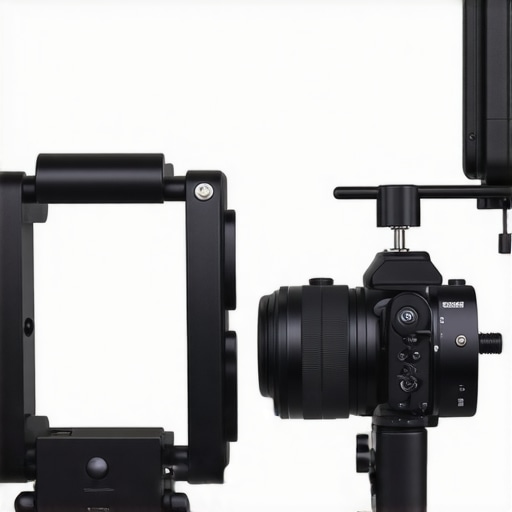
Does the Beastgrip Pro Justify the $140 Premium?
At the top of the food chain sits the Beastgrip Pro. Comparing a $30 rig to a $140 Beastgrip is like comparing a reliable pickup truck to a modular tank. The Beastgrip is massive, mostly made of high-grade glass-filled nylon and aluminum, and features a built-in lens mount system. If you plan on using anamorphic glass or heavy cinema lenses on your phone, the $30 rig simply cannot compete—it doesn’t have the alignment precision. However, if you are just mounting a Rode VideoMic and a small LED panel, the Beastgrip is overkill. It’s significantly bulkier and won’t fit in a standard backpack as easily as the slim generic cage. You are paying for a professional lens platform, not just a handle.
Should You Skip the Metal and Buy a Gimbal Instead?
This is the most common question I get: is it worth the upgrade to a motorized stabilizer like the DJI Osmo Mobile 6? A gimbal costs about $150 and offers automated tracking and perfectly level horizons. But here is the catch: gimbals are fragile and depend entirely on battery life. If you are doing a studio gear setup where you need to mount a heavy shotgun mic and a receiver, a gimbal will often fail because it cannot handle the unbalanced weight. This $30 cage is ‘dumb’ gear, which in the world of production is often a compliment. It never needs a firmware update, it never loses its balance, and it can carry 5 pounds of accessories without breaking a sweat. For most documentary-style creators, the mechanical rig is actually the more reliable tool.
Before you pull the trigger on any of these, it’s worth checking the current prices on a comparison site like RTINGS or a dedicated camera gear aggregator. Prices fluctuate wildly, and sometimes the name-brand versions go on sale for nearly the same price as the generics. If you can find a SmallRig for within $5 of the budget version, take the name brand for the better resale value. Otherwise, the performance gap is much smaller than the price gap suggests. If you’re curious about how these rigs handle specific audio setups, you might want to check out my recent microphone reviews to see which mics fit these cages best.
The Trade-offs of Going Metal and Cheap
After pushing this rig through crowds and dropping it on concrete, the results are clear. This isn’t just a piece of metal; it’s a foundational shift for your mobile production. However, it isn’t perfect. Here is the breakdown of what works and what will annoy you.
- Pros: Indestructible CNC aluminum build that survives drops, three cold-shoe mounts for microphones and lights, and an ‘instant-on’ setup that beats any gimbal.
- Cons: The handles are cold and hard during long shoots, the cable management is nonexistent, and the phone clamp spring is strong enough to pinch a finger if you aren’t careful.
If you find the setup process a bit frustrating, remember that this 10 dollar tool is a life-saver for tight screws and can make your life much easier in the field.
Match Your Workflow to This Metal Frame
This rig is the perfect entry point for mobile journalists, TikTokers, and YouTubers who need to move fast without worrying about battery life. It is the core component for anyone learning how to build a custom camera rig for under 50 dollars. You get the stability of a much more expensive setup without the software headaches.
You should avoid this if you are a professional filmmaker who needs to mount heavy anamorphic glass—for that, you really need a dedicated lens platform. Also, if you have very small hands or sensitive skin, the lack of padding on the handles will become an issue within the first hour. To fix the cable mess I mentioned earlier, I highly recommend checking out these 5 cable management tools that actually work to prevent your mic cords from snagging on everything.
The Final Score: Why This Rig is a Professional Tool for a Hobbyist Price
For $30, you are getting 90% of the performance of a high-end SmallRig for a fraction of the cost. It effectively solves the ‘shaky hand’ syndrome that plagues mobile content. While this 25 dollar cage makes your tiny camera feel pro, it also requires you to be a bit more disciplined with your movements and cable organization. It is a tool that rewards good technique rather than replacing it with AI stabilization.
Final Verdict: Buy it. It is a rugged, reliable, and dirt-cheap investment that will outlast your next three phones. Check the latest price today and stop letting shaky footage ruin your high-quality content.