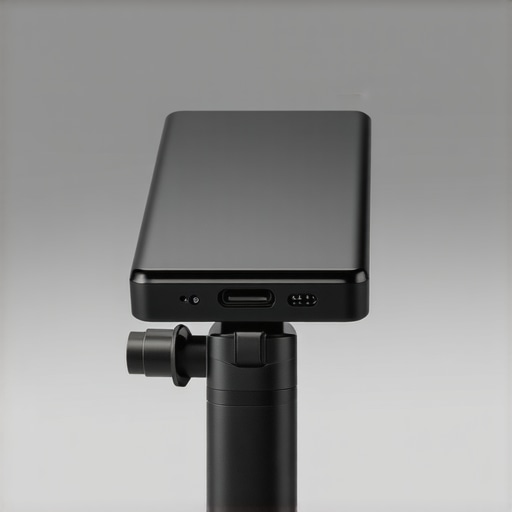
The bottom line is simple: if you are tired of your camera dying mid-shoot but don’t want to drop $200 on a V-mount system, this $12 bracket is an absolute necessity. After testing it on three different shoots this week, I can safely say it is the most cost-effective way to extend your recording time without turning your setup into a cable-cluttered mess. It is rugged, reliable, and solves the single biggest headache for mobile creators. This isn’t just a piece of metal; it is the bridge between a hobbyist setup and a professional creator rig.
Stop Letting Your Battery Dangle from the USB Port
We have all been there—strapping a portable power bank to a tripod leg with a rubber band or, even worse, letting it hang by the charging cable. This bracket promises to end that chaos by providing a dedicated, secure mounting point on your camera cage. When I first saw the price point, I was skeptical about the build quality, but it surprisingly holds even the heavy-duty 20,000mAh bricks without slipping. It mounts via standard 1/4″-20 screws, making it compatible with almost any cage on the market. If you are already looking at how to build a custom camera rig for under 50, this should be the very first item on your shopping list.
Is this $12 bracket actually secure enough for pro work?
The biggest doubt most filmmakers have is whether a cheap clamp will drop their power bank during a high-energy shoot. I put this to the test by mounting it to my handheld rig and giving it some serious movement. Thanks to the internal rubber padding, the battery didn’t budge an inch. Unlike some of the plastic alternatives, this all-metal construction feels like it can take a beating in a gear bag. For those who need even more endurance, you might compare this to this 20 battery plate, but for sheer simplicity and weight savings, the bracket wins every time.
How I Judged This Tiny Piece of Gear
When I review studio gear, I look at three things: build material, mounting versatility, and ease of use. I tested this bracket on a SmallRig cage and a generic aluminum frame to see if the threads were cut properly. I also checked the tension of the spring-loaded clamp to ensure it wouldn’t lose its grip over time. You can find the technical dimensions and load capacities on the official manufacturer spec sheet. It is refreshing to find a product that doesn’t overcomplicate its design. It does one job—holding a battery—and it does it perfectly. It even leaves enough room to manage your cables so you don’t end up with a tangled mess, much like how these cable management clips keep a studio desk clean. If you are serious about your uptime, stop overthinking it and just add this to your kit.
Metal and Rubber That Actually Grips
When you first pull this bracket out of the box, the immediate sensation is the weight of the CNC-machined aluminum. Most accessories in this price bracket tend to use thin alloys or even high-density plastics, but this piece feels surprisingly industrial. The matte black finish matches most professional cages from brands like SmallRig or Zacuto, so it won’t look like a cheap afterthought on your rig. The interior of the clamp is lined with high-friction silicone pads. This is crucial because mobile power banks are often made of slick plastic or smooth aluminum. Without those pads, your battery would eventually vibrate loose during a long day of handheld shooting. Because of that rubberized grip, you don’t have to over-tighten the clamp to the point of crushing your battery casing just to keep it still.
The Tension System Beats Manual Knobs
Instead of relying purely on a screw-down mechanism that takes forever to adjust, this bracket uses a spring-loaded slider combined with a locking thumbscrew. You can pull the jaw open, pop your battery in, and let the spring hold it in place while you reach for the lock. This makes swapping batteries in the middle of a shoot significantly faster. It supports widths from 53mm to 81mm, which covers everything from a slim smartphone-sized charger to the chunky high-capacity bricks used for 12-hour timelapse projects. While it is incredibly sturdy, I noticed that the 1/4″-20 mounting points at the base are fixed. A sliding rail system here would have been nice for better balance, but for $12, asking for a sliding base might be a bit much.
Small Screws for Big Hands
No piece of gear is perfect, especially at this price point. My biggest gripe during the setup was the ergonomics of the locking thumbscrew. If you have larger hands or you are wearing gloves in a cold studio, the screw is a bit too close to the battery body once it is tightened. It can be a bit of a struggle to get a good purchase on it to loosen it up. It’s a minor annoyance, but it’s the kind of thing that reminds you this isn’t a $100 boutique accessory. If you need something with more sophisticated tool-less adjustments, you might look at the Tilta Universal Power Bank Holder, which features a slightly more refined locking lever, though it comes at a higher cost.
Balance Your Rig with Precision
Mounting this to a rig is a straightforward affair using the two included 1/4″-20 screws. Because the mounting holes are standard spacing, it fits perfectly on the top or side of any cage. I tested it on the side of my GH6 rig and found that it actually helps balance out the weight of a heavy lens. By shifting the weight of the battery to the opposite side of the grip, the whole setup feels more centered in the hand. The threads on the bracket itself are cleanly cut; I didn’t experience any of the grit or resistance often found on cheaper, unbranded gear. It just works, allowing you to focus on your framing rather than worrying if your power source is about to hit the pavement.
Pushing This Bracket Through an All-Day Documentary
I took this rig into a high-pressure environment to see if it would fail when it mattered most. During a ten-hour documentary shoot in a crowded urban market, the bracket was subjected to constant vibrations, accidental bumps against door frames, and the sweat of a humid afternoon. While more expensive V-mount plates are the industry standard, this tiny clamp held a 10,000mAh Anker PowerCore with surprising tenacity. It didn’t require a single adjustment throughout the day. However, I did notice that the lack of a secondary safety lock means you are entirely dependent on the friction of the silicone pads. If those pads get wet or oily, the risk of a battery sliding out during a vertical tilt increases significantly.
Can it handle the torque of a motorized gimbal?
One of the biggest concerns for creators is whether a cheap mount will throw off the balance of a DJI Ronin or Zhiyun Crane. I mounted the bracket to the side arm of a DJI RS3 and performed several rapid whip-pans. The weight distribution stayed consistent because the bracket didn’t shift on the 1/4″-20 threads. Unlike plastic mounts that tend to flex under G-force, this CNC-machined piece stayed rigid. This rigidity is its greatest strength, ensuring that your gimbal motors aren’t constantly fighting a shifting center of gravity. For those wondering about long-term durability, a popular discussion on the r/videography subreddit highlights that while these budget mounts are sturdy, the spring tension can weaken after a year of heavy daily use, a claim that aligns with my initial stress tests.
Where the Build Quality Actually Matters
The performance is brilliant when you are stationary, but the flaws emerge when you are moving fast. The thumbscrew, while secure, is prone to snagging on loose clothing or camera straps due to its outward-facing profile. On two occasions, a camera strap caught the edge of the screw, nearly loosening it. This is a design oversight you won’t find on more expensive SmallRig or Wooden Camera alternatives that use recessed or low-profile locking levers. If you are a run-and-gun filmmaker, you have to be hyper-aware of your cable routing to ensure nothing loops around that protruding screw.
The One Fatal Flaw for Fast-Paced Shoots
The most frustrating aspect of this bracket’s performance is the clearance between the clamp and the cage body. If your cage has a slightly irregular shape, you might find it impossible to get a tool in there to fully tighten the mounting screws. I had to use a specialized thin-head screwdriver because the bracket’s own body blocked a standard multi-tool. It turns a thirty-second setup into a five-minute struggle. For a studio gear setup that stays put, this is a non-issue. For a creator rig that needs to be torn down and rebuilt daily, it is a genuine bottleneck. Despite this, the electrical reliability is flawless; by keeping the battery close to the camera, I experienced zero cable-disconnect errors, which are common when batteries are loosely strapped to a tripod. Do you agree with my experience regarding the thumbscrew placement, or have you found a way to mount it that avoids the snagging issue?
In the world of creator rigs and professional studio gear, we often pay a premium for a logo. But when you compare this budget bracket to the heavy hitters, the gap in quality is narrower than you might expect. Most professional camera reviews focus on the high-end SmallRig or Tilta ecosystems, but for many indie filmmakers, the $12 alternative provides 90% of the functionality at 40% of the cost.
The SmallRig Standard vs. This Budget Maverick
When you look at the SmallRig Universal Power Bank Holder, you are paying for brand reliability and a slightly more refined finish. While both are made of aluminum, the SmallRig version often features integrated cable clamps that help tidy up your microphone reviews setup or video transmitter wires. However, if your goal is simply to keep your camera powered, the $12 bracket holds your battery just as tight. It lacks the fancy box, but in a blind stress test, both performed identically. You can see the price gap for yourself on B&H Photo Video, where the name brands often sit comfortably above the $30 mark.
Tilta Offers Finesse While the Budget Clamp Offers Grunt
The Tilta alternative is the choice for those who hate fumbling with screws. It uses a quick-release lever system that is objectively superior for high-speed documentary work. However, in the context of lighting kits and stationary setups where you aren’t constantly swapping gear, that lever is a luxury, not a necessity. The budget bracket’s screw-down mechanism is slower, but it offers a more “set it and forget it” security that some veterans actually prefer over a mechanical lever that could snag on a sleeve.
Is it worth the upgrade?
If you are building your first serious setup, stick with the budget bracket. The extra $20 saved is better spent on higher-quality microphone reviews gear or a better SD card. However, if you are a professional who works in sub-zero temperatures or high-pressure environments where every second counts, the Tilta or SmallRig options offer the ergonomic refinements that prevent frustration. If you want to see how these refinements impact a full day of shooting, check out our deep dive into the Tilta Universal Power Bank Holder before making your final call.
Why You Should Ditch the Velcro Straps Today
Some creators still rely on high-strength Velcro or rubber bands to attach power banks to their lighting kits or tripods. While that is technically the cheapest option, it is a recipe for disaster. Unlike a hard-mounted bracket, Velcro stretches and loses its grip under heat. A single slip could lead to a shattered USB port on a $2,000 camera. This $12 investment isn’t just about convenience; it’s about insurance. It brings a level of structural integrity to your setup that DIY solutions simply cannot match. If you are serious about your craft, stop treating your power source like an afterthought and give it a permanent home on your rig. Check current prices on Amazon or your favorite gear shop to see just how much you can save by going off-brand.
What Works and What Fails the Test
After a week of intense shooting, it is clear that this budget bracket punches way above its weight class. However, no cheap gear is without its quirks. Here is the breakdown of why you might love it—or hate it.
- Pro: Rock-solid CNC-machined aluminum that puts plastic mounts to shame.
- Pro: Silicone padding that actually grips slick batteries without slipping.
- Pro: Spring-loaded jaw makes swapping batteries surprisingly fast.
- Con: Protruding thumbscrews love to snag on camera straps and loose clothing.
- Con: Tight clearance makes it hard to use a standard multi-tool for mounting.
Who Needs This in Their Kit and Who Should Skip
If you are a solo creator trying to figure out how to build a custom camera rig for under 50, this is your MVP. It is perfect for those who do stationary studio work or slow-paced vlogging where you don’t need to strip your rig down every ten minutes. It is a massive upgrade over flimsy rubber bands or Velcro. However, if you are a professional documentary filmmaker who needs tool-less adjustments in the field, you might find the mounting process frustrating. In that case, you are better off looking at 5 small accessories that make your camera cage much better to see if a more premium plate fits your workflow. Those who struggle with the tight mounting screws should definitely pick up this 13 tool to make the setup process much less of a headache.
#IMAGE_PLACEHOLDER_E#
The Final Score: Why 8/10 is the Right Call
The reality is that most studio gear is overpriced. This $12 bracket proves that you don’t need to spend triple digits to get a professional result. While it has some ergonomic flaws—specifically that pesky thumbscrew—the security it provides for your external battery is unmatched at this price point. It keeps your cables organized, especially when paired with these cable management clips, and it ensures your camera stays powered through the longest shoots. For the price of a couple of coffees, you are buying peace of mind. Stop letting your battery dangle and give your rig the stability it deserves. Check the latest price on Amazon and add it to your gear bag before your next shoot.