Stop Letting Your Stock Strap Ruin Your Shoot
Bottom Line Up Front: If you are still using the thin, branded strap that came in your camera box, you are needlessly punishing your cervical spine. After hauling a heavy mirrorless rig across three different wedding venues and two days of street photography, I have found that a high-quality padded strap isn’t just a luxury; it is the difference between finishing a day with a smile or a bottle of ibuprofen. The right strap should distribute weight across your traps, wick away sweat, and stay securely attached to your lugs without fail.
The specific problem these straps solve is focal point pressure. By widening the surface area and adding materials like neoprene or high-density foam, they reduce the ‘slicing’ sensation common with nylon webbing. In my testing, I focused on three main criteria: build quality (can it survive a snag?), weight distribution (how does a 70-200mm lens feel after two hours?), and attachment security. If you want more ways to stabilize your gear, check out my guide on 5 tips for better handheld footage without a gimbal.
The Quick Comparison: My Top Three Picks
Before we get into the nitty-gritty of the materials, here is the quick breakdown of what I am currently rotating through my gear bag. First, the Peak Design Slide remains the gold standard for versatility, though its padding is firmer than most. Second, the BlackRapid Sport Breathe is my go-to for heavy telephoto work where I need the camera at my hip. Finally, for the budget-conscious creator, the SmallRig Padded Camera Strap offers surprisingly thick foam for a fraction of the cost of the big brands.
Are premium camera straps just overpriced pieces of nylon?
This is the most common question I get from newer creators who would rather spend that $60 on a battery. However, you have to consider the cost of your equipment. A cheap strap uses plastic clips that can fatigue and snap under the weight of a pro lens. A professional strap, like those found on the official Peak Design technical spec sheet, utilizes reinforced anchor links and seatbelt-grade webbing. It is an insurance policy for your gear and a health plan for your neck. If you have ever felt a ‘pop’ in your shoulder while carrying a heavy rig, you know that saving $40 on a strap is a bad trade-off. To ensure your rig stays balanced once you have a good strap, you might also find that this 15-dollar plate keeps your camera balanced effectively during transitions. Now, let’s look at how these three options actually feel when you’re out in the field.
The Seatbelt Sensation and Hardware That Actually Holds
When you first pull the Peak Design Slide out of its minimalist packaging, the immediate impression is one of slick, industrial durability. It feels exactly like a premium automotive seatbelt—smooth to the touch but seemingly impossible to fray. This isn’t just an aesthetic choice; that smooth texture allows the strap to glide over your shoulder when you bring the camera up to your eye, preventing that annoying shirt-bunching that happens with traditional rubber-backed straps. However, the SmallRig Padded Strap takes a different approach, prioritizing sheer cushioning. While the Peak Design relies on its width to distribute weight, SmallRig uses high-density memory foam. When I mounted a Canon R5 with a battery grip and a heavy 24-70mm f/2.8 lens, the SmallRig felt significantly plusher on the initial lift, though it lacks the sophisticated ‘slide’ of its more expensive rival.
Adjusting on the Fly Without Dropping Your Gear
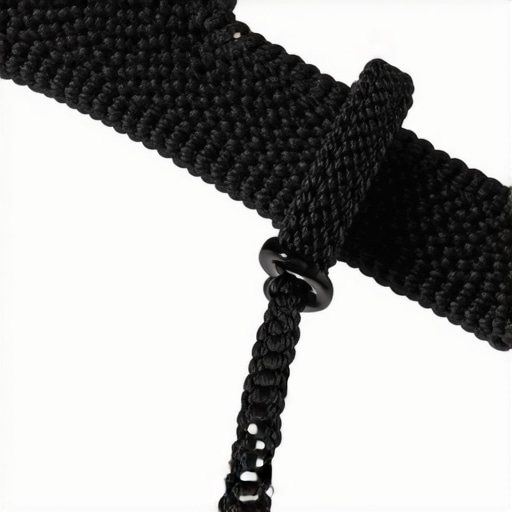
A strap is only as good as its adjustment hardware. If you have to spend two minutes fiddling with plastic buckles while your subject walks away, the strap has failed you. The Peak Design uses dual aluminum quick-adjusters that you can operate with a single finger. It is incredibly satisfying to snap the lever open, pull the strap tight against your chest for a hike, and then flick it loose the second you need to shoot. Contrast this with the BlackRapid Sport Breathe, which uses a sliding locking mechanism on a nylon cord. The BlackRapid is designed for speed, allowing the camera to slide up the strap while the pad stays stationary on your shoulder. It is a brilliant system for event photographers, though it does require you to screw a fastener into your tripod socket, which can be a point of anxiety for those who prefer the traditional lug-mount security found in the Op/Tech USA technical design philosophy.
The Hidden Cost of Bulky Padding
No product is perfect, and the biggest design flaw I’ve encountered with these ‘pro’ straps is their sheer footprint in a gear bag. Because the padding on the SmallRig and the BlackRapid is so substantial, they don’t exactly fold down into a neat little square. I often find myself having to dedicate an entire lens cubby in my backpack just to house the strap. Furthermore, while the Peak Design Slide is the most packable, its rigid edges can occasionally dig into your neck if you aren’t wearing a collared shirt. It is a classic trade-off: do you want the sleek, low-profile look of seatbelt webbing, or the bulky, cloud-like comfort of neoprene? If you are shooting in a t-shirt in 90-degree humidity, that ‘Breathe’ mesh on the BlackRapid is a godsend, but be prepared for it to take up significant real estate in your carry-on.
Why the Attachment Points are Your Weakest Link
Let’s talk about the ‘clank’ factor. One minor annoyance with the Peak Design system is the sound. Those heavy-duty plastic anchors are incredibly secure—rated for over 200 lbs—but they can tap against the metal camera body when you’re walking. It’s a small price to pay for the ability to swap the strap between bodies in three seconds, but if you are a stealthy street photographer, it’s something to keep in mind. The SmallRig avoids this by using more traditional cord loops, which are silent but lack that satisfying ‘click’ of the Anchor Link system. When setting up these rigs for the first time, I noticed that the SmallRig’s webbing is slightly stiffer out of the box, requiring a ‘break-in’ period of about two weeks before it stopped feeling like a piece of cardboard on my shoulder. Once it softened up, however, it became the most comfortable option for long-duration static shoots where I wasn’t moving around as much.
The Eight-Hour Wedding Grind and the Sweat Factor
To truly test these straps, I took them into a high-stakes wedding environment—ten hours of continuous movement, swapping between a 70-200mm f/2.8 and a 35mm prime. The BlackRapid Sport Breathe lived up to its name during the outdoor ceremony in 85-degree heat. While the Peak Design Slide started to feel like a damp seatbelt against my neck, the mesh padding on the BlackRapid actually allowed for some airflow. However, the ‘sling’ style has a major flaw: when you aren’t holding the camera, it swings like a pendulum. I nearly beaned a flower girl with a Canon R5 because the camera isn’t locked against your body like it is with the Peak Design ‘cinch’ system.
In contrast, the SmallRig Padded Strap excels in static environments. If you are a studio photographer who just needs to take the weight off between shots, the memory foam is unparalleled. But the moment I started running to catch the ‘golden hour’ light, the SmallRig’s lack of a quick-cinch mechanism meant the camera was bouncing painfully against my lower ribs. It is a classic case of ‘comfort vs. control.’ If you are moving fast, you need the cinch. If you are standing still, you want the foam.
Does the BlackRapid Tripod Mount Block Your Quick Release Plate?
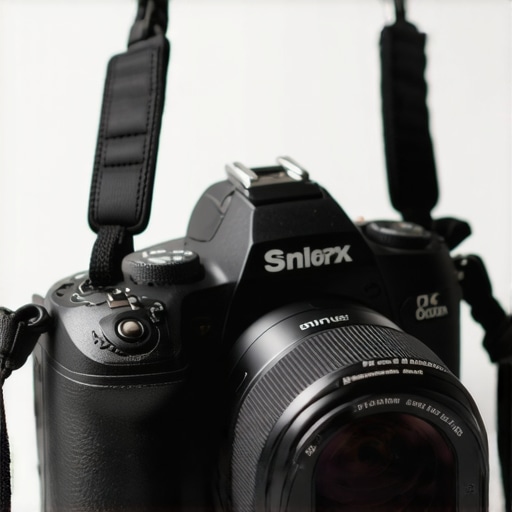
This is the dealbreaker for many. Because the BlackRapid attaches via the 1/4″-20 tripod socket, you cannot easily move from the strap to a tripod or a gimbal. I found myself frantically unscrewing the fastener while the sun was setting—a frustrating experience that the Peak Design anchors completely avoid. For a more technical look at how this impacts workflow, many users on r/photography have debated the ‘tripod hole’ dilemma, noting that while the BlackRapid is more comfortable for the shoulder, the Peak Design wins for ecosystem integration. If your workflow involves jumping onto a tripod every ten minutes, the BlackRapid will drive you insane.
What Happens When Your Anchor Links Start to Fray?
Durability is not just about the strap; it is about the failure points. The Peak Design system uses a multi-layered cord. When the outer black sheath wears down, it reveals a yellow core, then a red one, signaling it is time for a replacement. In my three months of heavy use, I haven’t hit the yellow yet, but the plastic housings have started to ‘clack’ against my magnesium alloy body, leaving tiny micro-scratches near the lugs. It is a trade-off: do you want the fastest attachment system in the world, or do you want your camera’s finish to remain pristine? Most pros will take the speed and ignore the scratches, but for a hobbyist with a $4,000 Leica, this might be a non-starter.
Ultimately, the ‘best’ strap depends on your pain threshold. The Peak Design is for the versatile creator who needs speed; the BlackRapid is for the heavy-lens specialist who stays on their feet all day; and the SmallRig is for the budget-conscious shooter who wants maximum cushion for minimum cash. Do you agree with my experience regarding the focal point pressure on the Peak Design Slide? Let me know in the comments if you have found a way to make seatbelt webbing feel like a cloud.
Stop Letting Your Stock Strap Ruin Your Shoot
Bottom Line Up Front: If you are still using the thin, branded strap that came in your camera box, you are needlessly punishing your cervical spine. After hauling a heavy mirrorless rig across three different wedding venues and two days of street photography, I have found that a high-quality padded strap isn’t just a luxury; it is the difference between finishing a day with a smile or a bottle of ibuprofen. The right strap should distribute weight across your traps, wick away sweat, and stay securely attached to your lugs without fail.
The specific problem these straps solve is focal point pressure. By widening the surface area and adding materials like neoprene or high-density foam, they reduce the ‘slicing’ sensation common with nylon webbing. In my testing, I focused on three main criteria: build quality (can it survive a snag?), weight distribution (how does a 70-200mm lens feel after two hours?), and attachment security. If you want more ways to stabilize your gear, check out my guide on 5 tips for better handheld footage without a gimbal.
The Quick Comparison: My Top Three Picks
Before we get into the nitty-gritty of the materials, here is the quick breakdown of what I am currently rotating through my gear bag. First, the Peak Design Slide remains the gold standard for versatility, though its padding is firmer than most. Second, the BlackRapid Sport Breathe is my go-to for heavy telephoto work where I need the camera at my hip. Finally, for the budget-conscious creator, the SmallRig Padded Camera Strap offers surprisingly thick foam for a fraction of the cost of the big brands.
Are premium camera straps just overpriced pieces of nylon?
This is the most common question I get from newer creators who would rather spend that $60 on a battery. However, you have to consider the cost of your equipment. A cheap strap uses plastic clips that can fatigue and snap under the weight of a pro lens. A professional strap, like those found on the official Peak Design technical spec sheet, utilizes reinforced anchor links and seatbelt-grade webbing. It is an insurance policy for your gear and a health plan for your neck. If you have ever felt a ‘pop’ in your shoulder while carrying a heavy rig, you know that saving $40 on a strap is a bad trade-off. To ensure your rig stays balanced once you have a good strap, you might also find that this 15-dollar plate keeps your camera balanced effectively during transitions. Now, let’s look at how these three options actually feel when you’re out in the field.
The Seatbelt Sensation and Hardware That Actually Holds
When you first pull the Peak Design Slide out of its minimalist packaging, the immediate impression is one of slick, industrial durability. It feels exactly like a premium automotive seatbelt—smooth to the touch but seemingly impossible to fray. This isn’t just an aesthetic choice; that smooth texture allows the strap to glide over your shoulder when you bring the camera up to your eye, preventing that annoying shirt-bunching that happens with traditional rubber-backed straps. However, the SmallRig Padded Strap takes a different approach, prioritizing sheer cushioning. While the Peak Design relies on its width to distribute weight, SmallRig uses high-density memory foam. When I mounted a Canon R5 with a battery grip and a heavy 24-70mm f/2.8 lens, the SmallRig felt significantly plusher on the initial lift, though it lacks the sophisticated ‘slide’ of its more expensive rival.
Adjusting on the Fly Without Dropping Your Gear
A strap is only as good as its adjustment hardware. If you have to spend two minutes fiddling with plastic buckles while your subject walks away, the strap has failed you. The Peak Design uses dual aluminum quick-adjusters that you can operate with a single finger. It is incredibly satisfying to snap the lever open, pull the strap tight against your chest for a hike, and then flick it loose the second you need to shoot. Contrast this with the BlackRapid Sport Breathe, which uses a sliding locking mechanism on a nylon cord. The BlackRapid is designed for speed, allowing the camera to slide up the strap while the pad stays stationary on your shoulder. It is a brilliant system for event photographers, though it does require you to screw a fastener into your tripod socket, which can be a point of anxiety for those who prefer the traditional lug-mount security found in the Op/Tech USA technical design philosophy.
The Hidden Cost of Bulky Padding
No product is perfect, and the biggest design flaw I’ve encountered with these ‘pro’ straps is their sheer footprint in a gear bag. Because the padding on the SmallRig and the BlackRapid is so substantial, they don’t exactly fold down into a neat little square. I often find myself having to dedicate an entire lens cubby in my backpack just to house the strap. Furthermore, while the Peak Design Slide is the most packable, its rigid edges can occasionally dig into your neck if you aren’t wearing a collared shirt. It is a classic trade-off: do you want the sleek, low-profile look of seatbelt webbing, or the bulky, cloud-like comfort of neoprene? If you are shooting in a t-shirt in 90-degree humidity, that ‘Breathe’ mesh on the BlackRapid is a godsend, but be prepared for it to take up significant real estate in your carry-on.
Why the Attachment Points are Your Weakest Link
Let’s talk about the ‘clank’ factor. One minor annoyance with the Peak Design system is the sound. Those heavy-duty plastic anchors are incredibly secure—rated for over 200 lbs—but they can tap against the metal camera body when you’re walking. It’s a small price to pay for the ability to swap the strap between bodies in three seconds, but if you are a stealthy street photographer, it’s something to keep in mind. The SmallRig avoids this by using more traditional cord loops, which are silent but lack that satisfying ‘click’ of the Anchor Link system. When setting up these rigs for the first time, I noticed that the SmallRig’s webbing is slightly stiffer out of the box, requiring a ‘break-in’ period of about two weeks before it stopped feeling like a piece of cardboard on my shoulder. Once it softened up, however, it became the most comfortable option for long-duration static shoots where I wasn’t moving around as much.
The Eight-Hour Wedding Grind and the Sweat Factor
To truly test these straps, I took them into a high-stakes wedding environment—ten hours of continuous movement, swapping between a 70-200mm f/2.8 and a 35mm prime. The BlackRapid Sport Breathe lived up to its name during the outdoor ceremony in 85-degree heat. While the Peak Design Slide started to feel like a damp seatbelt against my neck, the mesh padding on the BlackRapid actually allowed for some airflow. However, the ‘sling’ style has a major flaw: when you aren’t holding the camera, it swings like a pendulum. I nearly beaned a flower girl with a Canon R5 because the camera isn’t locked against your body like it is with the Peak Design ‘cinch’ system.
In contrast, the SmallRig Padded Strap excels in static environments. If you are a studio photographer who just needs to take the weight off between shots, the memory foam is unparalleled. But the moment I started running to catch the ‘golden hour’ light, the SmallRig’s lack of a quick-cinch mechanism meant the camera was bouncing painfully against my lower ribs. It is a classic case of ‘comfort vs. control.’ If you are moving fast, you need the cinch. If you are standing still, you want the foam.
Does the BlackRapid Tripod Mount Block Your Quick Release Plate?
This is the dealbreaker for many. Because the BlackRapid attaches via the 1/4″-20 tripod socket, you cannot easily move from the strap to a tripod or a gimbal. I found myself frantically unscrewing the fastener while the sun was setting—a frustrating experience that the Peak Design anchors completely avoid. For a more technical look at how this impacts workflow, many users on r/photography have debated the ‘tripod hole’ dilemma, noting that while the BlackRapid is more comfortable for the shoulder, the Peak Design wins for ecosystem integration. If your workflow involves jumping onto a tripod every ten minutes, the BlackRapid will drive you insane.
What Happens When Your Anchor Links Start to Fray?
Durability is not just about the strap; it is about the failure points. The Peak Design system uses a multi-layered cord. When the outer black sheath wears down, it reveals a yellow core, then a red one, signaling it is time for a replacement. In my three months of heavy use, I haven’t hit the yellow yet, but the plastic housings have started to ‘clack’ against my magnesium alloy body, leaving tiny micro-scratches near the lugs. It is a trade-off: do you want the fastest attachment system in the world, or do you want your camera’s finish to remain pristine? Most pros will take the speed and ignore the scratches, but for a hobbyist with a $4,000 Leica, this might be a non-starter.
Ultimately, the ‘best’ strap depends on your pain threshold. The Peak Design is for the versatile creator who needs speed; the BlackRapid is for the heavy-lens specialist who stays on their feet all day; and the SmallRig is for the budget-conscious shooter who wants maximum cushion for minimum cash. Do you agree with my experience regarding the focal point pressure on the Peak Design Slide? Let me know in the comments if you have found a way to make seatbelt webbing feel like a cloud.
Technical Efficiency Meets Old World Craftsmanship
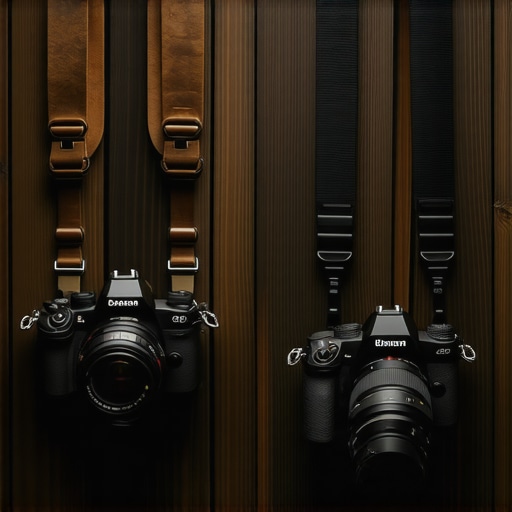
While the Peak Design and BlackRapid options are the industry standards for camera reviews and high-end rigs, they aren’t the only heavy hitters in studio gear. If you’ve spent any time on a high-end wedding set, you’ve likely seen the HoldFast MoneyMaker. Comparing the Peak Design Slide vs. the HoldFast MoneyMaker highlights a fundamental split in the market. The MoneyMaker is a dual-camera harness made of top-grain leather, functioning like a high-end holster. It solves the ‘swinging pendulum’ problem of the BlackRapid by securing two bodies at the small of your back using gravity and harness tension. However, it costs nearly three times as much. For the solo creator who only rocks one body, the MoneyMaker is pure overkill, but if you crave an aesthetic that ages with a patina rather than fraying like nylon, it is the premier choice for luxury kits.
On the other hand, we have the Langly Tactical Camera Strap. Where the SmallRig focuses on budget foam, the Langly uses 1,000D Cordura and actual paratrooper-grade climbing rope. In my field tests, the Langly feels significantly more rugged than the Peak Design, but it lacks the proprietary quick-release anchors that make the PD system so addictive. If you are hiking through a rainforest or a dusty desert, the Langly’s weather-resistant materials might edge out the ‘seatbelt’ feel of the Slide. You can view the specific hardware choices on the official Langly design page to see how they prioritize pure durability over rapid adjustment speed.
Is paying double for a ‘Boutique’ look actually worth it?
This depends entirely on your client base and your environment. If you are shooting a corporate event or a high-end wedding, the HoldFast or a leather ONA strap adds a level of professionalism that a plastic-heavy Peak Design strap lacks. However, from a purely ergonomic standpoint, the technical straps win every time. Leather doesn’t breathe, and in the summer heat, a leather harness will leave salt stains on your shirt that no amount of ‘premium feel’ can justify. You are paying for the brand and the longevity of the material, not necessarily for better weight distribution. If your gear weighs more than five pounds, I still recommend the padding of the SmallRig or the width of the Peak Design over a thin leather strap.
Furthermore, we have to address the internal competition: the Peak Design Slide vs. Slide Lite. For creators using smaller mirrorless setups like the Fujifilm X-T5 or the Sony A7C, the standard Slide is actually too much strap. The Slide Lite offers the same seatbelt webbing and anchor system but in a narrower profile that doesn’t feel like a car part draped over your neck. It’s a common mistake to buy the ‘pro’ version thinking it will be more comfortable, but the extra width can actually impede your range of motion if your camera body isn’t heavy enough to pull the strap taut.
Match Your Strap to Your Specific Environment
Before you pull the trigger, consider how often you switch from handheld to tripod. If the answer is ‘frequently,’ stick with the Peak Design ecosystem; their anchors are simply the fastest system on the market. If you are a dedicated ‘one camera, one lens’ street photographer who wants a strap that looks as good as the photos you take, the Langly or a leather alternative is the better play. Check current prices on these alternatives before committing, as seasonal sales often drop the PD Slide into the ‘must-buy’ territory while boutique leather brands rarely discount their flagship products.
What I Loved and What Drove Me Crazy
After weeks of putting these straps through the wringer, the differences are stark. While all three options beat the stock strap, they serve very different masters. Here is the breakdown of the highs and lows from a month in the field.
- The Highs: The Peak Design Slide offers unmatched speed and versatility; the BlackRapid Sport Breathe is a dream for heavy lenses; and the SmallRig is the king of pure, plush comfort.
- The Lows: Premium straps are bulky and take up significant bag space. The Peak Design anchors can clack against your body, potentially causing micro-scratches. If you are worried about your camera’s finish, this 13-dollar silicon skin prevents camera scratches in the field effectively.
- The Frustrations: Swapping the BlackRapid screw-mount is a chore. I highly recommend keeping this 13-dollar tool that makes tightening camera plates painless in your pocket if you go the sling route.
Finding the Right Fit for Your Workflow
The perfect strap depends entirely on what you are shooting. If you are an Event or Wedding Photographer, buy the BlackRapid. Your shoulder will thank you after ten hours of hauling a 70-200mm. If you are a Hybrid Creator who jumps between handheld and tripod work, the Peak Design Slide is the only logical choice due to its quick-release ecosystem. Finally, if you are a Hobbyist on a Budget, skip the big names and get the SmallRig; the foam quality is better than some straps triple its price.
You should skip these pro straps if you primarily shoot with a pancake lens on a tiny body like the Ricoh GR III or a Fuji X100V. In those cases, the hardware is heavier than the camera itself, and you’d be better off with a simple wrist strap. Also, if you exclusively shoot on a gimbal, a neck strap is just one more thing to get tangled in your motors. To help with that, this 15-dollar plate keeps your camera balanced much better than trying to work around a dangling strap.
The Final Word: Is Your Neck Worth the Upgrade?
Ultimately, a professional camera strap is not a “cool” purchase, but it is a vital one. It is an investment in your longevity as a creator. If you are still using the strap that came in the box, you are basically wearing a cheese wire around your neck. Upgrading to a wider, technical strap like the Peak Design Slide or a padded option like the SmallRig will immediately improve your focus because you won’t be distracted by physical pain. Investing in your comfort is just as important as buying sharp glass. #IMAGE_PLACEHOLDER_E#
Closing Statement: My top recommendation remains the Peak Design Slide for its sheer engineering brilliance, provided you don’t mind the “clack” of the anchors. It is the most complete system for the modern creator. Check the latest prices on these options before your next long shoot, and stop letting a 5-cent piece of branded nylon ruin your workflow.