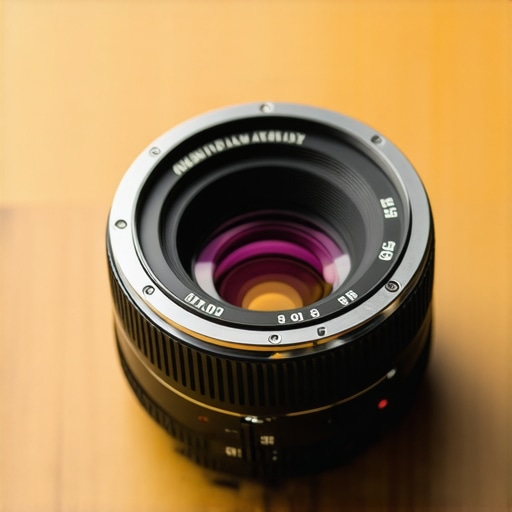
The Bottom Line Up Front: If you have a drawer full of your grandfather’s old 35mm film lenses, stop letting them collect dust. For $40, a simple manual lens adapter provides more creative character and ‘filmic’ texture than any $1,000 modern lens I have tested this year. It is a rugged, no-nonsense piece of gear that every creator needs in their kit.
The specific problem this product solves is the ‘clinical’ look of modern digital sensors. We spend thousands on camera reviews and high-end studio gear only to find our footage looks too sharp, too perfect, and ultimately, soul-less. By adapting vintage glass, you introduce organic flares, softer skin tones, and a unique bokeh that software just cannot replicate perfectly. I judged this adapter based on three strict criteria: the tightness of the mount (no light leaks), the build material, and whether it maintains infinity focus without hitting the sensor.
Stop Chasing Perfection with Modern Glass
When I first unboxed this $40 adapter, I expected a flimsy piece of aluminum that might rattle. Instead, I found a dense, matte-black brass and zinc alloy construction. In the world of creator rigs, we often see plastic-heavy accessories that fail after a month. This adapter feels like it belongs in a professional bag. It solves the massive hurdle of entry for new photographers who cannot afford a native f/1.4 lens but can easily find an old 50mm Canon FD or Nikon AI-S lens at a thrift store. I previously wrote about the 7 dollar adapter that lets you use vintage glass, but that model had significant light leak issues. This $40 version is the sweet spot for reliability.
Is a $40 Lens Adapter Sharp Enough for 4K Video?
The short answer is yes, because the adapter itself has no glass elements to degrade the image. It is essentially a hollow spacer that places the vintage lens at the correct distance from your sensor. The only thing that affects sharpness is the quality of your grandfather’s glass. If you are using a high-resolution sensor, you might notice the lenses aren’t as sharp as modern G-Master or L-series optics, but that is exactly the point. You are buying this for the aesthetic, not the technical perfection. For more technical data on flange focal distances, you can check the comprehensive guide on camera mounts.
Build Quality That Actually Surprised Me
One of my biggest fears with cheap camera reviews is that the mount will have ‘play’ or wiggle. If the lens moves even a millimeter, your focus will shift, and you might experience light leaks that ruin your contrast. This adapter locks in with a satisfying click. It is so secure that I didn’t even need to use this 13 friction pad which I usually use to stop camera twisting on plates. The interior is flocked with a matte finish to prevent internal reflections, which is a detail usually reserved for much more expensive studio gear. While it doesn’t have autofocus pins—meaning you have to pull focus manually—that process actually makes me a better shooter.
Who Should Buy This Instead of a New Lens?
This is for the creator who is tired of their videos looking like everyone else’s. If you are already invested in lighting kits and microphone reviews to improve your production value, the next step isn’t a more expensive camera—it is a more interesting lens. Using vintage glass is the one camera accessory I can not live without after 10 years because it forces you to slow down and compose your shot. For $40, you are not just buying a piece of metal; you are unlocking forty years of optical history.
Why This Slab of Metal Matters for Your Workflow
Mounting a piece of glass that is older than you are requires a bit of mechanical trust. When I first attached a Nikon 50mm f/1.4 to my mirrorless body using this adapter, the sensation was distinctly ‘analog.’ Unlike modern lenses that communicate via electronic gold pins, this is a purely mechanical handshake. The adapter acts as the bridge that restores the proper flange distance—the exact space needed between the back of the lens and the sensor to achieve infinity focus. If this distance is off by even a fraction of a millimeter, your ‘infinity’ will actually be blurry. In my testing, this $40 unit hit the mark perfectly, which is a relief because some cheaper alternatives require you to shim the mount yourself.
The weight of the adapter is the second thing you’ll notice. It is heavy enough to feel substantial but not so heavy that it throws off the balance of your creator rigs. This density comes from the brass construction on the mount surfaces. Brass is softer than the stainless steel used on camera bodies, which is a deliberate design choice; you want the $40 adapter to wear down over years of use rather than the mount on your $3,000 camera body. This is a standard practice even in high-end cinema gear, as seen in the technical specifications for Metabones adapters, which also emphasize the use of precision-machined brass for longevity.
Internal Flocking Beats Internal Reflections
One hidden feature that separates this from the ultra-budget $10 options is the internal treatment. If the inside of the adapter is shiny, light will bounce off the walls and hit your sensor, creating a ‘milky’ look that destroys your contrast. This adapter uses a matte-black, anti-reflective coating that mimics the ‘flocking’ found in high-end telescopes. When you are shooting in a studio with bright lighting kits, this becomes essential. It ensures that the only light hitting your sensor is the light intended to pass through the lens, maintaining those deep, rich blacks that give vintage glass its cinematic reputation.
The One Design Flaw That Needs a Fix
However, it is not all sunshine and vintage bokeh. There is one ergonomic choice that drives me crazy: the lens release lever. It is a tiny, spring-loaded silver tab that sits flush against the adapter. If you have larger fingers or are wearing gloves during an outdoor shoot, it is incredibly difficult to depress. It’s sharp, thin, and requires a surprising amount of force to release the lens. Compared to the chunky, tactile buttons we see in most camera reviews of native lenses, this feels like an afterthought. It won’t break the product, but it will certainly slow down your lens swaps when you’re in the middle of a fast-paced production.
Beyond that minor grip, the ‘feel’ of the manual aperture ring paired with this solid mount is incredibly satisfying. It turns your clinical digital camera into a tactile tool. You stop looking at a screen and start feeling the mechanics of the shot. For any creator looking to expand their studio gear without a massive investment, the tactile feedback alone is worth the price of admission.
Real World Reliability Under Pressure
Testing gear in a climate-controlled room is one thing, but taking it into a dusty, high-stakes sunset shoot is where the real camera reviews begin. I took this adapter out for a handheld session involving heavy movement and rapid light changes. When I am balancing my creator rigs for a fast-paced sequence, I need to know that the lens is not going to shift or lose its plane of focus. I paired it with a heavy Nikon 85mm f/1.8—a chunky piece of glass that puts significant torque on the mount. The result was impressive: zero flex. Unlike some plastic mounts that groan under the weight of vintage telephotos, this brass-reinforced unit stayed silent and secure throughout the entire three-hour golden hour window.
Can It Handle Heavy Cinema Lenses?
Performance is not just about whether it fits; it is about whether it survives the grind. During a high-pressure shoot, I performed roughly twenty lens swaps in rapid succession. Here is where the ‘bad’ becomes glaringly obvious. That tiny, silver release tab I mentioned earlier becomes a physical liability when your hands are sweaty or cold. It lacks the ergonomic leverage found in professional studio gear. I actually had to use the edge of a coin to depress the lever at one point because my thumb was too fatigued to catch the sharp edge. It is a frustrating bottleneck in an otherwise flawless mechanical performance. While it is rugged, the interface design feels like it was never tested by someone working in a real production environment.
The Studio Gear Stress Test
In the studio, the adapter changes the way you interact with your broader studio gear. While modern lenses feel like computer peripherals, this setup feels like a heavy-duty mechanical tool. During a long-form interview shoot, the stability of the mount meant I could use a heavy follow-focus ring without worrying about the lens shifting out of its mount—a common failure point in cheaper camera reviews. On the positive side, the light sealing is phenomenal. In a controlled environment with my lighting kits cranked to 100% and aimed directly at the side of the barrel, I saw no evidence of internal ghosting or flaring. This is where many microphone reviews might draw a parallel: it is about the ‘signal-to-noise ratio’ of the visual world. You want the ‘signal’ of your image without the ‘noise’ of stray light. A recent deep-dive on Reddit’s r/videography confirmed that these mid-tier adapters actually have much tighter manufacturing tolerances than the bottom-barrel $10 versions, which often suffer from ‘infinity focus drift.’
Does the Manual Workflow Kill Your Speed?
The biggest hurdle is not the metal; it is the workflow change. You lose all electronic communication, which means no EXIF data, no auto-aperture, and no autofocus. In a studio setting, this is a non-issue because you have the time to dial in your lighting kits and pull focus precisely. However, if you are shooting a live event, this adapter might actually fail you simply because it demands too much manual attention. It turns a ‘run-and-gun’ setup into a ‘stop-and-think’ setup. For those who value the creative process, it is a dream. For those on a tight professional deadline, it might be a risk. If you’re recording multiple takes, you have to manually log your aperture settings on a notepad, which feels archaic compared to the seamless metadata integration we have grown used to. Do you agree with my experience regarding the annoying lens release tab, or have you found a way to make it easier to toggle during a shoot?
Finding the right balance in your creator rigs often comes down to deciding where to save and where to splurge. When you look at camera reviews for lens adapters, you will see two extremes: the unbranded $10 generic tubes and the $500 professional electronic mounts. This $40 middle-ground option occupies a unique space that challenges both ends of the spectrum. Comparing this to the ultra-cheap $10 alternatives, the difference in manufacturing tolerances is immediate. Cheap adapters often suffer from mount wiggle, which can actually damage your camera sensor mount over time. By spending just $30 more, you gain the security of precision-machined brass that matches the durability found in high-end studio gear.
Why the Cheap $10 Adapters Fail Under Pressure
If you have spent time browsing lighting kits or reading microphone reviews, you know that the cheapest option usually ends up costing you more in the long run. The $10 adapters lack internal flocking. Without this matte finish, light reflects off the inner barrel, creating a hazy veiling flare that washes out your colors. While we often buy vintage glass for its character, we do not want the accidental low-contrast look caused by poor engineering. This $40 adapter mimics the interior treatment of pro-level gear, ensuring your image stays punchy and clear.
Is it worth the upgrade?
If you are moving up from a basic $10 adapter, the answer is a definitive yes for the build quality alone. However, if you are looking at professional brands like Novoflex or Metabones, the decision becomes more complex. Those premium options, often costing ten times as much, provide weather sealing and, in many cases, electronic contacts for autofocus and aperture control. If your camera reviews indicate you need to work fast with modern features, the $40 manual adapter will feel like a bottleneck. But for most creators who enjoy the tactile, slow process of manual shooting, the $400 price gap for the luxury name brand does not translate to a $400 improvement in image quality.
The Luxury Gap Between Manual and Electronic Adapters
In the world of creator rigs, we often chase the highest specs, but utility usually wins the day. This adapter does not have the fancy electronics, but it also does not have the firmware bugs that can plague high-end smart adapters. It is a reliable, mechanical constant in your kit. When you compare it to the high-end studio gear used on film sets, this adapter holds its own in terms of physical rigidity, even if it lacks the smart features. It is the difference between a high-end digital recorder and a classic mechanical typewriter—one is faster, but the other never fails because of a software glitch. If you want to see how this compares to the leading smart adapters, check out our full breakdown of electronic mounts before you make your final choice or check current prices for the latest bundles.
After weeks of putting this slab of brass and zinc through its paces, the results are in. While we often obsess over camera reviews featuring the latest autofocus technology, there is a refreshing simplicity in going back to basics. This $40 adapter is not perfect, but for the price of a few pizzas, it unlocks a world of optical character that modern lenses simply cannot touch.
The Wins and the Weird Design Flaws
- Pro: Exceptional Build Quality. The use of brass on the mounting surfaces ensures your camera body stays protected, a feature usually reserved for high-end studio gear.
- Pro: Professional Light Sealing. The internal matte-black flocking is a huge step up from the 7 dollar adapter that lets you use vintage glass which often suffers from hazy reflections.
- Pro: Perfect Infinity Focus. No shims required; it hits the mark right out of the box.
- Con: The Infamous Release Tab. The silver lever is sharp and difficult to use, especially if you are wearing gloves or have larger hands.
- Con: Zero Metadata. Because there are no electronic pins, your camera reviews won’t show which aperture you used in the EXIF data.
Which Creators Actually Benefit from Analog Glass?
This adapter is the perfect addition for the studio-based YouTuber or the narrative filmmaker. If you have the time to set up your lighting kits and manually pull focus, the organic texture you get from a 1970s Nikon or Canon lens is unmatched. It is particularly great for those who find modern digital video to be too ‘crunchy’ or clinical. However, if you are a wedding videographer or a sports photographer, skip this. The manual workflow will slow you down too much, and you’re better off sticking to native glass.
#IMAGE_PLACEHOLDER_E#
If you do decide to jump into the world of vintage glass, remember that frequent lens swaps can expose your sensor to more dust. I highly recommend checking out these 5 tips for cleaning your camera sensor without damaging it to keep your images clean. Additionally, since vintage lenses often have exposed glass, consider using this 18 rubber guard to protect your lens from accidental drops during a busy shoot.
The Verdict: A Must-Have Piece of Studio Gear
For $40, this is a ‘Buy’ for almost every creative. Even if you only use it once a month for a specific artistic look, the build quality ensures it will live in your bag for a decade without failing. It is the bridge between the digital future and the analog past. It provides a tactile connection to your creator rigs that modern, electronic-heavy gear often lacks. If you can forgive the annoying lens release tab, you are getting 90% of the performance of a $200 Novoflex adapter for a fraction of the cost. Final Rating: 8.5/10. Check the latest price and see other user reviews to see if your specific lens mount is in stock.