The Bottom Line
If you are tired of the flat, sterile look of your modern kit lens, vintage glass is the most cost-effective upgrade you will ever make. For less than the price of a cheap tripod, you can get a lens that offers a faster aperture, superior build quality, and a unique aesthetic that software filters simply cannot replicate. It solves the “digital clinical look” problem instantly. However, be prepared to work for your shots—manual focus is the trade-off for this superior character.
The Promise of Cheap Character
When I first started my YouTube journey, I thought I needed the latest G-Master or L-series glass to get that professional blurry background. I was wrong. The specific problem this vintage glass solves is the high entry cost of cinematic bokeh and low-light performance. Most kit lenses start at f/3.5, which is frankly pathetic for indoor studio work. I picked up an old 50mm f/1.8 for $40 and it completely transformed my lighting setup. If you are struggling with shadows even with a faster lens, check out my guide on how to fix grainy shadows without buying a new sensor.
First Impressions of Heavy Metal
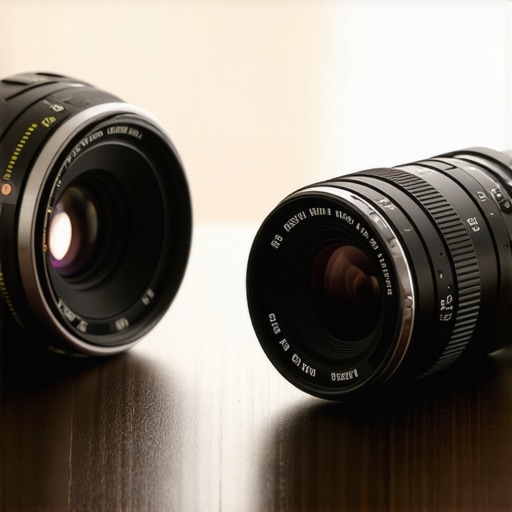
Unboxing a 40-year-old Nikkor or Canon FD lens is a tactile revelation. Unlike the hollow, “toy-like” feel of modern plastic kit lenses, these are chunks of brass and glass. There is a weight to them that makes your rig feel substantial. I usually pair mine with this 25 dollar cage to help balance the extra front-heavy weight of the old glass. The focus rings are dampened like luxury watches, making achieving the perfect cinematic blur a physical pleasure rather than a digital chore.
Is Vintage Glass Hard to Use on Modern Mirrorless Cameras?
This is the biggest hurdle for most creators. The short answer is no, but it does require a simple adapter. Because mirrorless cameras have a shorter flange distance, you can adapt almost any historical mount (M42, FD, Pentax K) to Sony, Canon, or Fuji bodies. You will lose autofocus, but as I have argued before, you should probably stop using auto focus for YouTube videos anyway to prevent that annoying hunting during your takes.
Wait Until You See the Flaring
Modern lenses are sometimes “too good.” They have coatings that eliminate every imperfection, resulting in a look that lacks soul. Vintage glass embraces the imperfection. You get organic lens flares and a subtle softening of skin tones that saves me hours in post-production color grading. To see the full technical evolution of these legacy optics, you can browse the Lens-DB database. Just remember, these old coatings are delicate; make sure you know how to clean your lens without scratching the coating to preserve that vintage magic for years to come. In the next section, we will look at the specific adapters that make this possible.
The Mechanics of Manual Control
When you pivot from a modern autofocus lens to a 1970s Takumar or a Nikon AI-S, the first thing you notice is the physical resistance. Modern lenses use ‘focus-by-wire’ systems where the ring is essentially a digital controller sending signals to a motor. It feels disconnected. In contrast, these legacy optics use a mechanical helicoid. When you turn the ring, you are physically moving glass elements. This provides a level of tactile feedback that makes fine-tuning your focus an intuitive, muscle-memory task rather than a guessing game. It turns your camera into a tool rather than a computer gadget.
Why Long Focus Throws are a Godsend for Cinema
One of the most significant ‘hidden’ features of vintage glass is the focus throw—the distance you have to rotate the ring to move from the minimum focus distance to infinity. Most modern lenses have a short throw designed for fast autofocus. If you try to pull focus manually, the slightest touch jumps the focus five feet. Vintage lenses often have a throw of 180 to 270 degrees. This allows for incredibly precise ‘rack focuses’ where you slowly transition from a foreground object to your subject. It gives your footage that deliberate, high-end cinematic feel that is nearly impossible to achieve on a standard kit lens.
Setup and the Adapter Reality Check
Getting these lenses onto your Sony, Canon, or Fuji body isn’t a plug-and-play affair. You need a piece of hardware to bridge the gap. While you can find dozens of generic adapters on Amazon for under twenty dollars, they often come with a hidden cost: poor tolerances. A cheap adapter might not sit flush against the sensor, causing light leaks or, worse, preventing the lens from reaching ‘true infinity’ focus. If you want to see what professional-grade tolerances look like, compare a budget brand to the Novoflex adapter standards. Spending a little more here ensures your expensive sensor isn’t exposed to metal shavings from a poorly machined mount.
The One Major Frustration with Cheap Adapters
The biggest annoyance I encountered during setup was ‘mount wiggle.’ There is nothing that ruins the premium feel of a metal lens faster than it rattling slightly every time you change focus. If you are using a follow-focus system, this play in the mount can actually shift your framing. It is the one area where I recommend not being a complete ‘cheapskate’ in your vintage journey. A snug fit is the difference between a reliable workhorse and a frustrating paperweight.
Optical Performance That Is Not Just About Pixels
We live in an era of ‘perfect’ lenses. However, perfection is often boring. If you look at the specs for a modern G-Master, you will see multi-layered coatings and aspherical elements designed to kill every bit of character. Vintage glass offers ‘micro-contrast’—a way of rendering light and shadow that makes images look three-dimensional even without high resolution. The way a 50mm Pentax Super-Takumar renders skin tones is creamy and forgiving, acting like a natural ‘beauty filter’ for your talent.
Beware the Unwanted Ghosting
However, it isn’t all vintage magic and rainbows. The lack of modern anti-reflective coatings means these lenses are incredibly susceptible to ghosting and flare when pointed toward a light source. While some ‘JJ Abrams’ style flares look cool, sometimes it just washes out the entire image in a hazy mess. This ‘veiling glare’ can destroy your contrast entirely, making your footage look muddy and cheap if you aren’t careful with your lighting angles. You have to learn to ‘flag’ your lens with a matte box or even just your hand to keep the image crisp.
How These Relics Perform When the Pressure Is On
I put a 1978 Canon FD 50mm f/1.4 through its paces during a three-day documentary shoot in the Pacific Northwest. In a controlled studio environment, these lenses are a dream. In the field, however, they are a chaotic test of patience. The biggest performance hurdle isn’t the optical quality—it’s the speed of execution. When you’re trying to capture a fleeting moment and your subject moves six inches forward, you are essentially gambling with your focus ring. Unlike modern ‘active’ autofocus that tracks eyes with terrifying precision, you are relying on your own vision and the camera’s focus peaking. If your camera’s screen is small or low-resolution, you will inevitably come home with 30% of your footage slightly soft. It is a punishing reality for anyone used to the ‘point and shoot’ nature of modern Sony or Canon systems.
Does the Lack of Electronics Kill Your Workflow?
The absence of electronic communication between the lens and the camera body means you lose all EXIF data. When you are looking at your footage later, you won’t know if a shot was at f/2 or f/5.6. This makes matching shots in post-production a manual, memory-based chore. Furthermore, you lose in-body lens corrections. Modern cameras automatically fix distortion and vignetting for native lenses; with vintage glass, you see every flaw in its raw state. On various Reddit threads in r/filmmakers, users frequently note that while the ‘character’ is high, the ‘hit rate’ for sharp, usable shots drops significantly when switching from native glass to adapted optics during high-stakes events.
Why You Will Miss the Shot Five Times Before Getting One Keeper
During a fast-paced outdoor session, the ‘Good’ is the incredible tactile control. You feel every millimeter of the focus throw. The ‘Bad’ is the weight and the flare. After six hours of handheld shooting, an all-metal Nikkor 105mm feels like a lead weight. My wrist was straining in a way it never does with a modern plastic 85mm. Then there is the issue of ‘veiling glare.’ I had several shots completely ruined because the sun hit the front element at a 45-degree angle, turning a high-contrast scene into a washed-out, milky mess. You cannot trust the auto-exposure in these moments because the camera sees the flare and tries to compensate, usually underexposing your subject’s face into oblivion.
Color Matching is a Post-Production Nightmare
One aspect rarely discussed in ‘gear porn’ reviews is color consistency. If you are shooting a multi-cam setup with different vintage brands—say, a Nikon AI-S on your A-cam and a Canon FD on your B-cam—the color shifts are a headache. The Nikon might lean toward a cold, clinical blue-green, while the Canon yields a warm, amber glow. Matching these in DaVinci Resolve takes time that most creators don’t have. If you are doing professional client work, this inconsistency can make you look amateurish. As discussed on the DPReview forums regarding legacy glass, the internal dust accumulation in lenses over 40 years old can also lead to significant contrast loss in backlit scenarios, making two ‘identical’ lenses perform very differently. Do you agree with my experience regarding the focus peaking lag on older mirrorless bodies when using manual glass?
Why Mechanical Parts Beat Plastic Electronics Every Time
Despite the frustrations, there is one area where vintage glass wins: thermal stability. I have had modern lenses seize up or throw ‘Lens Communication Error’ codes in freezing rain or extreme heat. These mechanical relics simply do not care. There are no motors to burn out and no ribbon cables to snap. If you can physically turn the ring, the lens works. It is the ultimate reliability insurance for shooters who travel to harsh environments where a digital failure means a dead project. You trade off electronic convenience for mechanical immortality.
Modern Cine Glass Offers Precision Where Vintage Offers Chaos
When you put an old Pentax or Helios up against something like a modern Meike T2.2 Cine prime, the differences are immediately apparent. The Meike is purpose-built for the digital sensor, featuring standardized gear rings for follow-focus systems and consistent color rendering across the entire lens family. You won’t find the ‘yellowing’ or the unexpected flaring common in legacy glass, which is a massive plus for professional client work where consistency is king. However, you are also paying a premium for that reliability. If you browse the Sirui official store, you will see that modern manual lenses often start at four hundred dollars, while a legendary 50mm vintage prime can still be found for under fifty dollars on the used market. You have to decide if that ‘perfection’ is worth the extra few hundred dollars in your budget.
The Battle for Your Lens Mount: Vintage vs Native
The real competitor to a bag of vintage glass isn’t another manual lens; it is the native mirrorless glass you likely already own. Take the Sony 50mm f/1.8 FE, for instance. It is lightweight, relatively cheap, and features eye-autofocus that makes filming yourself a breeze. In a head-to-head comparison, the native lens wins every time for solo creators who don’t have a dedicated camera operator. But the vintage glass wins on tactile pleasure and aesthetic ‘soul.’ The native plastic lens feels like a computer peripheral, whereas the vintage Nikkor feels like a piece of precision engineering. If you are tired of the ‘digital’ look, vintage is the answer. If you are tired of missing focus because you’re moving around your studio, stick with native glass. Before you decide, check out my review of budget native primes to see if the trade-off is worth the effort.
Is it worth the upgrade?
If you are currently using a standard 16-50mm or 18-55mm kit lens, upgrading to a vintage prime is the single best move you can make. Kit lenses are notoriously ‘slow,’ meaning their maximum aperture (usually f/3.5 or f/5.6) doesn’t let in much light. This forces you to buy expensive lighting kits or deal with grainy footage. A vintage 50mm f/1.4 allows you to shoot in much lower light and creates that creamy background blur that makes your videos look high-end. In this specific scenario, the vintage lens isn’t just an alternative; it is a massive functional upgrade over the plastic optics that came in your camera box.
Build Quality and the Creator Rig Ecosystem
When comparing these legacy optics to modern alternatives, you also have to consider the ‘weight tax.’ A modern Rokinon 35mm is mostly plastic and very light, which is great for small gimbals. A vintage 35mm is a dense chunk of metal and glass that can throw off the balance of a cheap stabilizer. You might find yourself needing a more robust tripod or rig setup just to handle the weight of 1970s engineering. This is a hidden cost often overlooked by newcomers. Modern lenses are designed for the plastic age; vintage lenses were designed for a time when ‘heavy’ meant ‘quality.’ For a studio environment, that weight is a benefit as it helps dampen micro-vibrations, but for a run-and-gun travel vlog, it might be your biggest enemy.
The Magic and the Mess of Legacy Glass
After weeks of testing these metal relics, the trade-offs are crystal clear. You aren’t just buying glass; you’re buying a specific workflow that demands patience but rewards you with a look that modern sensors desperately need.
- The Good: Unbeatable ‘character’ and bokeh for under $50, indestructible all-metal construction, and a focus ring that actually feels like a professional tool.
- The Bad: No autofocus means you will miss shots, the lack of electronic data makes post-production tedious, and the susceptibility to flare can wash out your image in a heartbeat.
Is This Old Metal Worth the Hassle for Your Channel?
If you are a solo creator who films seated ‘talking head’ videos or cinematic b-roll in a controlled studio, vintage glass is a no-brainer. It solves the problem of ‘digital’ looking footage without requiring a $2,000 prime lens. However, if you are a vlogger who relies on face-tracking to keep yourself sharp while walking, this will be a nightmare. You should probably stick to native glass or invest in a dedicated field monitor to ensure you aren’t coming home with blurry footage. Skip the vintage trend if you shoot fast-paced events where there are no do-overs.
Character Beats Convenience Every Single Day
For the price of a few pizzas, you can add a level of visual soul to your videos that most people spend years trying to fake with software. While the lack of autofocus is a steep learning curve, you can master it if you stop relying on auto focus and take control of your frame. If your rig starts feeling front-heavy with these brass monsters, don’t forget to use a proper counterweight to save your wrists. #IMAGE_PLACEHOLDER_E# Vintage lenses are a 9/10 for artistic value, but a 5/10 for pure efficiency. If you’re ready to slow down and learn how to clean your lens without scratching the coating, your footage will look better than ever. Check your local thrift stores or eBay for a 50mm f/1.8 and start experimenting today.