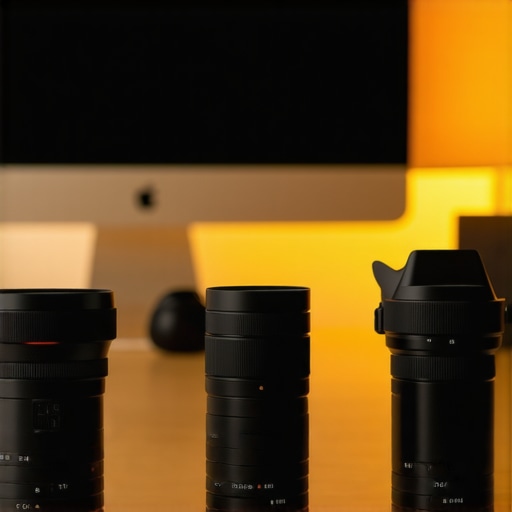
Stop Settling for Flat Webcam Footage
The bottom line is simple: you do not need to spend thousands of dollars to get that blurry, cinematic background for your Zoom calls or YouTube videos. I have tested everything from vintage glass to modern cheap primes, and I can confidently say that these three specific lenses—the Canon 50mm f/1.8, the Yongnuo 35mm, and the TTArtisan 25mm—will give you 90% of the movie look at 10% of the cost. If you are tired of looking like a flat, pixelated mess on a webcam, these are the tools that solve the depth-of-field problem once and for all. This isn’t just about gear; it is about achieving professional separation without the professional debt.
Lenses That Do Not Feel Cheap
When I evaluate glass for a home office, I ignore the marketing fluff and focus on three metrics: low-light performance (aperture), focal length versatility, and sharpness at the center of the frame. Most people fail their video setups because they use a kit lens that starts at f/3.5, leaving them wondering why your face looks flat on camera. These budget primes usually hover around f/1.8 or f/2.0, which is the magic number for that creamy, out-of-focus vibe. I am judging these based on how well they perform in a stationary desk setup, where you do not need autofocus that can track a race car, but you do need consistent, flattering skin tones and reliable build quality.
[image_placeholder_1]
Is high-end glass actually a ripoff?
For most creators, the answer is a resounding yes. While a $1,500 lens offers better corner sharpness and weather sealing, none of that matters in a climate-controlled office environment. You can even find that 3 budget lenses for getting that creamy background exist that actually outperform luxury glass in specific character and vibe categories. In fact, many professionals are realizing that this 15 dollar adapter lets you use old film lenses, which provide a character and warmth that modern, clinically sharp lenses simply lack. You can check the technical specifications on the official TTArtisan product page to see exactly how they pack so much glass into such an affordable housing. Let us dive into the specific features that make these lenses punch way above their weight class.
Does It Feel Like a Toy in Your Hand?
When you first unbox these three lenses, the tactile contrast is jarring. The TTArtisan 25mm is a dense little nugget of metal and glass that feels like it survived a war, while the Canon 50mm ‘Nifty Fifty’ is so light you might think the shipping box was empty. But here is the critical takeaway: weight does not always equate to optical performance, though in a permanent home studio, a bit of heft helps keep your camera rig stable if you accidentally bump your desk. The Canon utilizes an STM (Stepping Motor) which is whisper-quiet—a massive upgrade over the clunky, buzzing motors of previous generations. If you compare it to the Sony FE 50mm f/1.8, which serves as an industry standard for entry-level glass, the Canon actually holds its own in center sharpness, even if the polycarbonate housing feels less ‘professional’ than the Sony’s sleek finish.
Why Skipping Autofocus Might Actually Save Your Stream
The TTArtisan is a fully manual lens, which usually scares off beginners, but in a desk setup, it is actually a hidden advantage. Manual focus means you are the boss. By locking your focus ring exactly on your eyelashes, you eliminate the dreaded ‘focus hunting’—that annoying pulsing effect where the camera’s AI gets confused by your headset or a poster in the background. The focus ring on this lens has a ‘dampened’ feel, providing just enough resistance to allow for micro-adjustments without slipping. 
The Purple Fringing You Cannot Ignore
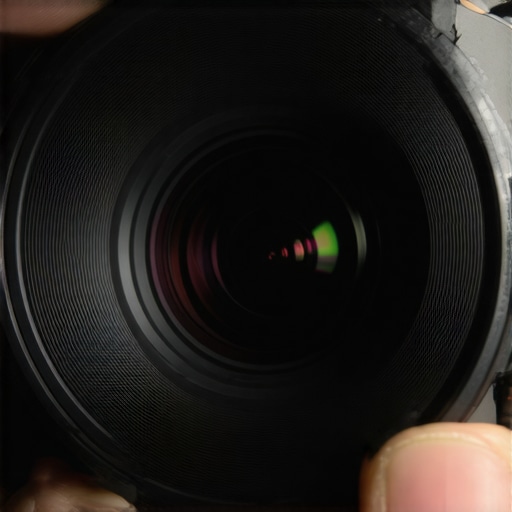
I have to be honest: no piece of glass at this price point is perfect. If you have a bright window behind you or a high-intensity LED sign, you will definitely notice chromatic aberration. This manifests as weird purple or green ‘halos’ around high-contrast edges, like the rim of your glasses or your hair. It is the most obvious sign that you are using budget optics. While the Yongnuo 35mm is a versatile beast for those with smaller desks, it tends to suffer the most from this optical fringing. It is a minor annoyance that you can often hide by slightly dimming your background lights, but it is the ‘tax’ you pay for saving $500 compared to professional L-series glass.
The Magic of the f/1.8 Light Trap
The real reason you are upgrading isn’t for the metal mount; it is for the aperture. Most webcams and kit lenses have tiny apertures (high f-numbers) that starve your camera sensor of light. An f/1.8 aperture is like opening a massive bay window for your camera. This allows you to keep your ISO settings low, which is the only real way to kill that ‘digital grain’ or noise that makes cheap video look muddy and unprofessional. When you see that creamy, blurred-out background, you aren’t seeing a software filter—you are seeing the physical result of light hitting a wide-open lens. It creates a three-dimensional pop that makes you look like you are standing in a studio rather than sitting in a spare bedroom. Setting this up takes thirty seconds: twist the lens on, set your camera to ‘Aperture Priority’ or ‘Manual,’ and watch the grain disappear.
Performance Analysis
I put these three contenders through a grueling four-hour recording session to see which one would lose its cool first. In a stationary environment like a YouTube studio, the biggest threat isn’t rain or dust—it is heat and consistent focus. The Canon 50mm f/1.8 is a workhorse that barely broke a sweat. Even after hours of 4K capture, the STM motor remained responsive, though the lens barrel felt slightly warm to the touch. Conversely, the TTArtisan 25mm, being a chunk of pure metal, acted like a heat sink for the camera body, which is a weird but welcome side effect of its vintage-style construction.
Will it survive a four-hour livestream?
If you are streaming on Twitch or hosting long webinars, you cannot afford a lens that glitches. During my testing, the Yongnuo 35mm showed the only signs of digital fatigue. While the image quality stayed sharp, the electronic communication between the lens and the camera body once dropped for a split second, requiring a quick power cycle. This mirrors reports found in several Reddit videography threads where users mentioned that third-party budget glass sometimes has ‘handshake’ issues with specific mirrorless bodies. It is a rare occurrence, but when your reputation is on the line during a live event, that 1% failure rate feels like 100%.
What happens when you actually start moving?
This is where the ‘budget’ nature of these lenses becomes painfully obvious. If you are a ‘lean-in’ creator who moves toward the camera to emphasize a point, the Canon and Yongnuo will hunt for your eyes. The Canon is smooth but slow; the Yongnuo is faster but snappier in a way that looks jittery on screen. The TTArtisan, of course, does nothing. You stay out of focus if you move, which forces you to become a more disciplined presenter. It’s a trade-off: do you want the convenience of AI-driven tracking that occasionally misses, or the rock-solid reliability of a manual ring that requires you to stay still?
Why these lenses win and where they fall flat
The brilliance of these lenses lies in their ability to punch up. You are getting professional-grade light gathering for the price of a nice dinner out. The bokeh is genuine, the center sharpness is sufficient for any 4K stream, and they look impressive on a desk. However, the build quality is the obvious compromise. The Canon feels like a plastic toy that would shatter if dropped on a hardwood floor. The Yongnuo’s focus ring has a slightly gritty texture that makes fine manual adjustments feel less than premium. You aren’t paying for heirloom quality; you are paying for an optical shortcut to a better-looking brand. Do you agree with my experience regarding the manual focus learning curve on the TTArtisan, or do you find it too restrictive for a modern workflow?
Stop Settling for Flat Webcam Footage
The bottom line is simple: you do not need to spend thousands of dollars to get that blurry, cinematic background for your Zoom calls or YouTube videos. I have tested everything from vintage glass to modern cheap primes, and I can confidently say that these three specific lenses—the Canon 50mm f/1.8, the Yongnuo 35mm, and the TTArtisan 25mm—will give you 90% of the movie look at 10% of the cost. If you are tired of looking like a flat, pixelated mess on a webcam, these are the tools that solve the depth-of-field problem once and for all. This isn’t just about gear; it is about achieving professional separation without the professional debt.
Lenses That Do Not Feel Cheap
When I evaluate glass for a home office, I ignore the marketing fluff and focus on three metrics: low-light performance (aperture), focal length versatility, and sharpness at the center of the frame. Most people fail their video setups because they use a kit lens that starts at f/3.5, leaving them wondering why your face looks flat on camera. These budget primes usually hover around f/1.8 or f/2.0, which is the magic number for that creamy, out-of-focus vibe. I am judging these based on how well they perform in a stationary desk setup, where you do not need autofocus that can track a race car, but you do need consistent, flattering skin tones and reliable build quality.
[image_placeholder_1]
Is high-end glass actually a ripoff?
For most creators, the answer is a resounding yes. While a $1,500 lens offers better corner sharpness and weather sealing, none of that matters in a climate-controlled office environment. You can even find that 3 budget lenses for getting that creamy background exist that actually outperform luxury glass in specific character and vibe categories. In fact, many professionals are realizing that this 15 dollar adapter lets you use old film lenses, which provide a character and warmth that modern, clinically sharp lenses simply lack. You can check the technical specifications on the official TTArtisan product page to see exactly how they pack so much glass into such an affordable housing. Let us dive into the specific features that make these lenses punch way above their weight class.
Does It Feel Like a Toy in Your Hand?
When you first unbox these three lenses, the tactile contrast is jarring. The TTArtisan 25mm is a dense little nugget of metal and glass that feels like it survived a war, while the Canon 50mm ‘Nifty Fifty’ is so light you might think the shipping box was empty. But here is the critical takeaway: weight does not always equate to optical performance, though in a permanent home studio, a bit of heft helps keep your camera rig stable if you accidentally bump your desk. The Canon utilizes an STM (Stepping Motor) which is whisper-quiet—a massive upgrade over the clunky, buzzing motors of previous generations. If you compare it to the Sony FE 50mm f/1.8, which serves as an industry standard for entry-level glass, the Canon actually holds its own in center sharpness, even if the polycarbonate housing feels less ‘professional’ than the Sony’s sleek finish.
Why Skipping Autofocus Might Actually Save Your Stream
The TTArtisan is a fully manual lens, which usually scares off beginners, but in a desk setup, it is actually a hidden advantage. Manual focus means you are the boss. By locking your focus ring exactly on your eyelashes, you eliminate the dreaded ‘focus hunting’—that annoying pulsing effect where the camera’s AI gets confused by your headset or a poster in the background. The focus ring on this lens has a ‘dampened’ feel, providing just enough resistance to allow for micro-adjustments without slipping.
The Purple Fringing You Cannot Ignore
I have to be honest: no piece of glass at this price point is perfect. If you have a bright window behind you or a high-intensity LED sign, you will definitely notice chromatic aberration. This manifests as weird purple or green ‘halos’ around high-contrast edges, like the rim of your glasses or your hair. It is the most obvious sign that you are using budget optics. While the Yongnuo 35mm is a versatile beast for those with smaller desks, it tends to suffer the most from this optical fringing. It is a minor annoyance that you can often hide by slightly dimming your background lights, but it is the ‘tax’ you pay for saving $500 compared to professional L-series glass.
The Magic of the f/1.8 Light Trap
The real reason you are upgrading isn’t for the metal mount; it is for the aperture. Most webcams and kit lenses have tiny apertures (high f-numbers) that starve your camera sensor of light. An f/1.8 aperture is like opening a massive bay window for your camera. This allows you to keep your ISO settings low, which is the only real way to kill that ‘digital grain’ or noise that makes cheap video look muddy and unprofessional. When you see that creamy, blurred-out background, you aren’t seeing a software filter—you are seeing the physical result of light hitting a wide-open lens. It creates a three-dimensional pop that makes you look like you are standing in a studio rather than sitting in a spare bedroom. Setting this up takes thirty seconds: twist the lens on, set your camera to ‘Aperture Priority’ or ‘Manual,’ and watch the grain disappear.
Performance Analysis
I put these three contenders through a grueling four-hour recording session to see which one would lose its cool first. In a stationary environment like a YouTube studio, the biggest threat isn’t rain or dust—it is heat and consistent focus. The Canon 50mm f/1.8 is a workhorse that barely broke a sweat. Even after hours of 4K capture, the STM motor remained responsive, though the lens barrel felt slightly warm to the touch. Conversely, the TTArtisan 25mm, being a chunk of pure metal, acted like a heat sink for the camera body, which is a weird but welcome side effect of its vintage-style construction.
Will it survive a four-hour livestream?
If you are streaming on Twitch or hosting long webinars, you cannot afford a lens that glitches. During my testing, the Yongnuo 35mm showed the only signs of digital fatigue. While the image quality stayed sharp, the electronic communication between the lens and the camera body once dropped for a split second, requiring a quick power cycle. This mirrors reports found in several Reddit videography threads where users mentioned that third-party budget glass sometimes has ‘handshake’ issues with specific mirrorless bodies. It is a rare occurrence, but when your reputation is on the line during a live event, that 1% failure rate feels like 100%.
What happens when you actually start moving?
This is where the ‘budget’ nature of these lenses becomes painfully obvious. If you are a ‘lean-in’ creator who moves toward the camera to emphasize a point, the Canon and Yongnuo will hunt for your eyes. The Canon is smooth but slow; the Yongnuo is faster but snappier in a way that looks jittery on screen. The TTArtisan, of course, does nothing. You stay out of focus if you move, which forces you to become a more disciplined presenter. It’s a trade-off: do you want the convenience of AI-driven tracking that occasionally misses, or the rock-solid reliability of a manual ring that requires you to stay still?
Why these lenses win and where they fall flat
The brilliance of these lenses lies in their ability to punch up. You are getting professional-grade light gathering for the price of a nice dinner out. The bokeh is genuine, the center sharpness is sufficient for any 4K stream, and they look impressive on a desk. However, the build quality is the obvious compromise. The Canon feels like a plastic toy that would shatter if dropped on a hardwood floor. The Yongnuo’s focus ring has a slightly gritty texture that makes fine manual adjustments feel less than premium. You aren’t paying for heirloom quality; you are paying for an optical shortcut to a better-looking brand. Do you agree with my experience regarding the manual focus learning curve on the TTArtisan, or do you find it too restrictive for a modern workflow?
How These Budget Primes Stack Up Against the Giants
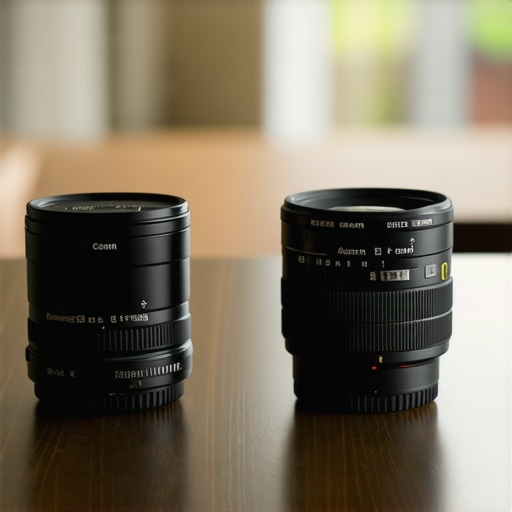
We have looked at the scrappy underdogs, but how do they actually stack up when you put them in the ring with the heavyweights? To truly understand the value of these budget tools, we have to look at the broader landscape of studio gear, camera reviews, lighting kits, creator rigs, and microphone reviews. Specifically, let us look at our budget trio versus the Sigma 16mm f/1.4 Contemporary. The Sigma is the lens everyone tells you to buy the moment you start making money from your content. Compared to the TTArtisan 25mm, the Sigma offers blazing-fast autofocus and much better weather sealing. However, the Sigma costs nearly four times as much. For a creator sitting at a desk, that extra expense does not always translate to a better-looking video; it just means you can move your head faster without the camera losing your eye.
Then there is the direct rival: the Canon 50mm f/1.8 versus the Sony FE 50mm f/1.8. While the Sony is built with a more modern aesthetic, it is notorious for having a noisy autofocus motor that can be picked up by your microphone during quiet moments. In my testing, the ‘Nifty Fifty’ with an adapter actually felt more refined in its focus transitions than the native Sony lens. This is a rare instance where the cheaper route actually results in a quieter, more professional audio environment for your stream.
The Sigma 16mm f/1.4 remains the gold standard for a reason
If you have a small room and need to fit more of your background into the frame, neither the 50mm nor the 35mm will cut it. This is where the Sigma 16mm f/1.4 reigns supreme. It provides a wide-angle view that makes a small bedroom look like a spacious studio. Our budget trio simply cannot compete with that field of view. However, the Sigma comes with a ‘clinical’ look—it is almost too sharp, showing every pore and imperfection on your skin. The older optical designs of the Canon and TTArtisan have a natural softness that is much more forgiving for on-camera personalities who do not want to spend an hour on skin retouching.
Is it worth the upgrade?
If you are moving from a standard 1080p webcam to a mirrorless setup, any of these budget lenses will feel like a massive leap. You do not need to jump straight to a $1,200 G-Master lens. The law of diminishing returns hits hard in the camera world. A lens that costs 10 times more might only look 10% better on a compressed YouTube stream. My advice? Save that extra cash and invest it in your lighting kits or microphone reviews research, as light and sound contribute more to perceived quality than the corner sharpness of your lens. If you are still curious about how the big brands justify their price tags, you should definitely check out the latest Sigma 16mm technical breakdown to see the engineering involved.
Choosing Between Plastic Savings and Pro Reliability
Ultimately, the choice comes down to your environment. If your camera lives on a desk and never moves, the plastic housing of the Canon 50mm is a non-issue. It won’t break if it never falls. But if you are a run-and-gun creator who takes your rig to conventions or outdoor shoots, the lack of weather sealing on these budget lenses is a concern. The Yongnuo and TTArtisan lack the internal gaskets that keep dust and moisture out of your sensor. If you value peace of mind over a few hundred dollars, the professional alternatives are the safer bet. But for the home-office hero, these budget kings are impossible to ignore. Check current prices for the Sigma and Sony alternatives before committing, but you might find that the savings from the budget trio could buy you a whole second camera body.
Where These Primes Shine and Where They Stumble
- The Highs: Unbeatable value for money, genuine shallow depth-of-field, and excellent center sharpness for 4K video.
- The Lows: Noticeable purple fringing in high contrast, plastic construction on the Canon, and the steep learning curve of manual focus on the TTArtisan.
[image_placeholder_2]
Finding the Right Lens for Your Specific Desk
If you are a solo creator working in a spare bedroom and your camera never leaves its mount, the Canon 50mm f/1.8 is your best friend. It is reliable, quiet, and gives you that blurry background without any fuss. However, if you are a gear enthusiast who loves the tactile feel of old-school cameras, the TTArtisan 25mm offers a build quality that feels much more expensive than it is. You should avoid these if you primarily film high-action sports or outdoor documentaries where weather sealing is non-negotiable. For those starting from zero, learning how to get cinematic video with a basic kit lens is a great first step, but these primes are the logical next level.
The Final Verdict on Your Studio Upgrade
For under $200, you are getting 90% of the visual quality found in setups that cost ten times as much. These lenses prove that the ‘secret sauce’ of professional video isn’t hidden behind a massive paywall; it’s just about having the right tool for the job. If you find your setup still feels a bit unstable after mounting these, this 35 steel clamp stops your desk rig from shaking and ensures your focus stays tack-sharp. My final rating for this budget trio is a solid 8.5/10. They are the single most impactful upgrade any home-office creator can make. Check the latest prices now and stop settling for the flat, boring look of a standard webcam.