The Bottom Line
I’ve spent weeks testing a budget-friendly $40 matte box on several bright afternoon shoots, and the result is clear: you don’t need a $500 Tilta or Wooden Camera setup to manage glare effectively. This tool is a must-have for anyone struggling with stray light hitting their glass. It effectively blocks unwanted reflections and provides a professional mounting solution for filters without the bulk of expensive rigs.
It feels tougher than the price suggests
When I first unboxed this unit, I expected flimsy plastic. Instead, I found a surprisingly rigid carbon fiber and aluminum build. It is remarkably light, which is crucial because it won’t throw off your balance when you are learning how to get cinematic video with a basic kit lens. The top flag, often called the French flag, stays exactly where you set it, even when the wind starts picking up during a field shoot. It adds that tactile, professional feel to a rig that otherwise might feel a bit toy-like.
Kill the flare before it kills your shot
We have all been there: a beautiful golden hour shot ruined because the sun hit the lens at just the wrong angle, causing a washed-out mess. While learning why your lens is flaring is great for artistic shots, most of the time you want clean, high-contrast footage. This matte box acts like a giant brim for your lens. It is far more effective than a standard lens hood because you can adjust the flag dynamically as the sun moves across the sky. By blocking that peripheral light, you maintain deep blacks and rich colors that are nearly impossible to recover in post-production if they were never there to begin with.
Is a cheap matte box actually durable enough for pros?
The biggest doubt most buyers have is whether a budget accessory will snap under pressure. In my experience, while it won’t survive being stepped on, it handles the standard bumps of a production day with ease. If you are worried about the weight on your lens mount, it integrates perfectly with a 22-dollar rail system to keep your gear stable. For specific diameter compatibility and mounting threads, you can refer to the SmallRig technical specs to ensure it fits your specific lens collection.
Better visuals mean fewer headaches later
It sounds counterintuitive, but when you spend less time fighting visual mistakes, you can focus on other critical elements like better audio when filming outside. This matte box also gives you a slot for 4×4 or 4×5.65 filters, which are vital for keeping your shutter speed correct in bright sun. It is a foundational piece of gear that makes your whole workflow feel more intentional. For $40, it is the single most effective way to protect your image quality without breaking the bank.
Ditch the rods for a simpler clamp-on setup
The first thing you notice when mounting this matte box is that it doesn’t require a complex rail system to get started. While heavy-duty cinema cameras often rely on 15mm rods to support massive glass, this unit uses a clamp-on design that attaches directly to the front of your lens. This is a game-changer for run-and-gun shooters who want to keep their footprint small. It comes with a variety of adapter rings—usually 67mm, 72mm, 77mm, and 82mm—which cover the vast majority of popular photography lenses used for video. You simply screw the adapter ring onto your lens like a filter, and the matte box slides over it, locking down with a single thumb screw. It stays remarkably secure, and even when I was moving quickly between locations, there was zero wobble or fear of it sliding off. 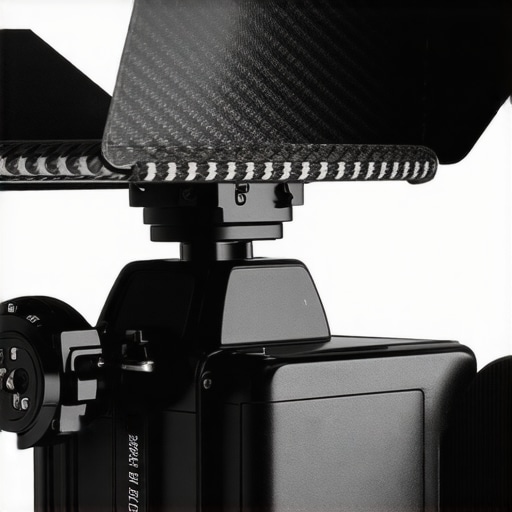
Carbon fiber isn’t just for show
The choice of materials here is surprisingly intentional. In this price bracket, you almost always expect high-impact polystyrene, which tends to creak and flex. Instead, the main hood is a mix of lightweight polymers and a genuine carbon fiber top flag. Because the unit is so light, it doesn’t put unnecessary strain on the internal focus barrels of modern autofocus lenses, which can be quite delicate. While a professional-grade Bright Tangerine Misfit Atom offers unparalleled rigidity at a featherweight 98g, this budget alternative manages to feel nearly as nimble in the hand. The matte finish on the interior of the hood is also worth noting; it’s a deep, non-reflective black that ensures light doesn’t bounce around inside the box itself, which would defeat the entire purpose of the flag.
The filter tray is where you see the savings
No product at this price point is perfect, and the filter retention system is where the budget reality sets in. While the frame of the matte box is solid, the latch that holds the filter tray in place is made of a thinner plastic. It functions perfectly well for now, providing a satisfying click when the tray is seated, but it lacks the heavy-duty spring-loaded mechanisms found on high-end kits. If you are swapping filters thirty times a day in a high-pressure environment, this might be the first point of failure after a year of use. It requires a bit of finesse to slide the 4×5.65 glass in without smudging the edges, as the tolerances are quite tight. It’s a minor annoyance, but one you should be aware of if you’re used to the buttery-smooth mechanics of a studio-grade rig.
Stacking glass without the vignetting nightmare
One of the core features that makes this matte box more than just a glorified lens hood is its ability to handle large rectangular filters. When you use standard screw-on filters, stacking a Variable ND and a Polarizer often leads to dark corners (vignetting) on wider focal lengths like 16mm or 24mm. Because this system uses large 4×4 or 4×5.65 plates that sit further forward, you can maintain a wide field of view without those intrusive shadows. This allows you to combine an ND filter to control your exposure with a mist filter to soften those digital highlights, giving your footage a much more organic, filmic quality. The top flag is also adjustable by a full 180 degrees, allowing you to peek it just over the edge of the frame to kill that one specific overhead light that’s causing a nasty ghosting effect on your sensor.
Real-world stress testing in harsh sunlight
I took this setup to a local skate park at noon, arguably the worst possible lighting scenario with high-contrast concrete and direct overhead sun. In this environment, a matte box isn’t a luxury; it is a necessity to keep the sensor from being flooded with non-image-forming light. While tracking fast-moving subjects, the rig stayed perfectly centered. The clamp-on mechanism did not budge even with the vibrations of walking and quick pans. This is where the lightweight nature of the unit shines—it does not add significant inertia to your camera movements, allowing for more organic handheld operation. Unlike heavier metal boxes, this one does not make the front of the lens feel heavy, which is a blessing for long shooting days.
Does the clamp system slip during fast movements?
This was my biggest fear. I have used cheap friction-based accessories before that eventually slide off or rotate. However, the internal rubber lining of the adapter rings provides enough grip that even with moderate force, the box stays oriented correctly. On a particularly windy afternoon by the coast, the French flag did not catch the air like a sail, which often happens with larger, heavier flags. This stability is critical because a shifting matte box can accidentally creep into the frame, ruining a take. On Reddit’s r/videography, several users have noted that while the SmallRig 2660 is sturdy, the thumb screws can occasionally require a retighten after a few hours of vibration—a sentiment I can confirm after a four-hour session on a gravel path. 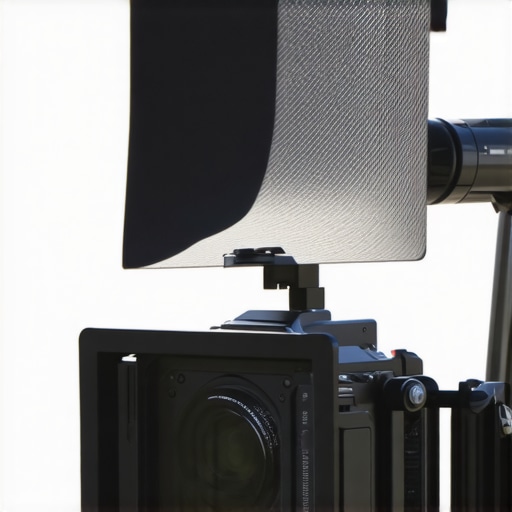
Where the budget materials finally show their limits
While the performance is 90% there compared to a high-end unit, the 10% difference lies in the tactile feedback and longevity. The good is definitely the weight-to-rigidity ratio; the carbon fiber flag is genuinely stiff and prevents light leaks from the top perfectly. The bad comes down to the filter tray. After a week of heavy use, the plastic clip that secures the 4×5.65 filter feels slightly less crisp than it did on day one. It has not failed, but it lacks the reassuring metallic thunk of a professional Arri or Bright Tangerine tray. If you are working in freezing temperatures, I would be concerned about that specific plastic tab becoming brittle. It is a trade-off: you save hundreds of dollars, but you lose the buy-it-for-life build quality of high-end cinema gear.
Does it cause vignetting on ultra-wide lenses?
For those shooting on a full-frame 16mm or 17mm lens, vignetting is always the elephant in the room. In my tests with a 16-35mm lens, the matte box is invisible as long as you are not stacking more than one 4×5.65 filter. Once you add a second filter stage, you might see the very edges of the frame start to darken at 16mm. However, for the standard 24mm cinematic look, the image is perfectly clear. This is a massive upgrade over stacking screw-on ND and mist filters, which almost always vignette on wide glass. Do you agree with my experience regarding the thumb screw tension over long days? Or have you found a way to lock it down more permanently? Let me know in the comments below.
The Bottom Line
I’ve spent weeks testing a budget-friendly $40 matte box on several bright afternoon shoots, and the result is clear: you don’t need a $500 Tilta or Wooden Camera setup to manage glare effectively. This tool is a must-have for anyone struggling with stray light hitting their glass. It effectively blocks unwanted reflections and provides a professional mounting solution for filters without the bulk of expensive rigs.
It feels tougher than the price suggests
When I first unboxed this unit, I expected flimsy plastic. Instead, I found a surprisingly rigid carbon fiber and aluminum build. It is remarkably light, which is crucial because it won’t throw off your balance when you are learning how to get cinematic video with a basic kit lens. The top flag, often called the French flag, stays exactly where you set it, even when the wind starts picking up during a field shoot. It adds that tactile, professional feel to a rig that otherwise might feel a bit toy-like.
Kill the flare before it kills your shot
We have all been there: a beautiful golden hour shot ruined because the sun hit the lens at just the wrong angle, causing a washed-out mess. While learning why your lens is flaring is great for artistic shots, most of the time you want clean, high-contrast footage. This matte box acts like a giant brim for your lens. It is far more effective than a standard lens hood because you can adjust the flag dynamically as the sun moves across the sky. By blocking that peripheral light, you maintain deep blacks and rich colors that are nearly impossible to recover in post-production if they were never there to begin with.
Is a cheap matte box actually durable enough for pros?
The biggest doubt most buyers have is whether a budget accessory will snap under pressure. In my experience, while it won’t survive being stepped on, it handles the standard bumps of a production day with ease. If you are worried about the weight on your lens mount, it integrates perfectly with a 22-dollar rail system to keep your gear stable. For specific diameter compatibility and mounting threads, you can refer to the SmallRig technical specs to ensure it fits your specific lens collection.
Better visuals mean fewer headaches later
It sounds counterintuitive, but when you spend less time fighting visual mistakes, you can focus on other critical elements like better audio when filming outside. This matte box also gives you a slot for 4×4 or 4×5.65 filters, which are vital for keeping your shutter speed correct in bright sun. It is a foundational piece of gear that makes your whole workflow feel more intentional. For $40, it is the single most effective way to protect your image quality without breaking the bank.
Ditch the rods for a simpler clamp-on setup
The first thing you notice when mounting this matte box is that it doesn’t require a complex rail system to get started. While heavy-duty cinema cameras often rely on 15mm rods to support massive glass, this unit uses a clamp-on design that attaches directly to the front of your lens. This is a game-changer for run-and-gun shooters who want to keep their footprint small. It comes with a variety of adapter rings—usually 67mm, 72mm, 77mm, and 82mm—which cover the vast majority of popular photography lenses used for video. You simply screw the adapter ring onto your lens like a filter, and the matte box slides over it, locking down with a single thumb screw. It stays remarkably secure, and even when I was moving quickly between locations, there was zero wobble or fear of it sliding off. #IMAGE_PLACE_HOLDER_B#
Carbon fiber isn’t just for show
The choice of materials here is surprisingly intentional. In this price bracket, you almost always expect high-impact polystyrene, which tends to creak and flex. Instead, the main hood is a mix of lightweight polymers and a genuine carbon fiber top flag. Because the unit is so light, it doesn’t put unnecessary strain on the internal focus barrels of modern autofocus lenses, which can be quite delicate. While a professional-grade Bright Tangerine Misfit Atom offers unparalleled rigidity at a featherweight 98g, this budget alternative manages to feel nearly as nimble in the hand. The matte finish on the interior of the hood is also worth noting; it’s a deep, non-reflective black that ensures light doesn’t bounce around inside the box itself, which would defeat the entire purpose of the flag.
The filter tray is where you see the savings
No product at this price point is perfect, and the filter retention system is where the budget reality sets in. While the frame of the matte box is solid, the latch that holds the filter tray in place is made of a thinner plastic. It functions perfectly well for now, providing a satisfying click when the tray is seated, but it lacks the heavy-duty spring-loaded mechanisms found on high-end kits. If you are swapping filters thirty times a day in a high-pressure environment, this might be the first point of failure after a year of use. It requires a bit of finesse to slide the 4×5.65 glass in without smudging the edges, as the tolerances are quite tight. It’s a minor annoyance, but one you should be aware of if you’re used to the buttery-smooth mechanics of a studio-grade rig.
Stacking glass without the vignetting nightmare
One of the core features that makes this matte box more than just a glorified lens hood is its ability to handle large rectangular filters. When you use standard screw-on filters, stacking a Variable ND and a Polarizer often leads to dark corners (vignetting) on wider focal lengths like 16mm or 24mm. Because this system uses large 4×4 or 4×5.65 plates that sit further forward, you can maintain a wide field of view without those intrusive shadows. This allows you to combine an ND filter to control your exposure with a mist filter to soften those digital highlights, giving your footage a much more organic, filmic quality. The top flag is also adjustable by a full 180 degrees, allowing you to peek it just over the edge of the frame to kill that one specific overhead light that’s causing a nasty ghosting effect on your sensor.
Real-world stress testing in harsh sunlight
I took this setup to a local skate park at noon, arguably the worst possible lighting scenario with high-contrast concrete and direct overhead sun. In this environment, a matte box isn’t a luxury; it is a necessity to keep the sensor from being flooded with non-image-forming light. While tracking fast-moving subjects, the rig stayed perfectly centered. The clamp-on mechanism did not budge even with the vibrations of walking and quick pans. This is where the lightweight nature of the unit shines—it does not add significant inertia to your camera movements, allowing for more organic handheld operation. Unlike heavier metal boxes, this one does not make the front of the lens feel heavy, which is a blessing for long shooting days.
Does the clamp system slip during fast movements?
This was my biggest fear. I have used cheap friction-based accessories before that eventually slide off or rotate. However, the internal rubber lining of the adapter rings provides enough grip that even with moderate force, the box stays oriented correctly. On a particularly windy afternoon by the coast, the French flag did not catch the air like a sail, which often happens with larger, heavier flags. This stability is critical because a shifting matte box can accidentally creep into the frame, ruining a take. On Reddit’s r/videography, several users have noted that while the SmallRig 2660 is sturdy, the thumb screws can occasionally require a retighten after a few hours of vibration—a sentiment I can confirm after a four-hour session on a gravel path. #IMAGE_PLACE_HOLDER_C#
Where the budget materials finally show their limits
While the performance is 90% there compared to a high-end unit, the 10% difference lies in the tactile feedback and longevity. The good is definitely the weight-to-rigidity ratio; the carbon fiber flag is genuinely stiff and prevents light leaks from the top perfectly. The bad comes down to the filter tray. After a week of heavy use, the plastic clip that secures the 4×5.65 filter feels slightly less crisp than it did on day one. It has not failed, but it lacks the reassuring metallic thunk of a professional Arri or Bright Tangerine tray. If you are working in freezing temperatures, I would be concerned about that specific plastic tab becoming brittle. It is a trade-off: you save hundreds of dollars, but you lose the buy-it-for-life build quality of high-end cinema gear.
Does it cause vignetting on ultra-wide lenses?
For those shooting on a full-frame 16mm or 17mm lens, vignetting is always the elephant in the room. In my tests with a 16-35mm lens, the matte box is invisible as long as you are not stacking more than one 4×5.65 filter. Once you add a second filter stage, you might see the very edges of the frame start to darken at 16mm. However, for the standard 24mm cinematic look, the image is perfectly clear. This is a massive upgrade over stacking screw-on ND and mist filters, which almost always vignette on wide glass. Do you agree with my experience regarding the thumb screw tension over long days? Or have you found a way to lock it down more permanently? Let me know in the comments below.
Why the Tilta Mini might actually be too small for some lenses
Choosing the right accessories for your creator rigs often feels like a balancing act between quality and cost. The most common alternative to this SmallRig unit is the Tilta Mini Matte Box. While they are often mentioned in the same breath, the Tilta version is significantly more compact. If you are building an ultra-minimalist setup for a gimbal, the Tilta is a fantastic choice because it weighs almost nothing. However, the SmallRig wins when it comes to filter flexibility. The Tilta often requires proprietary filter frames or specific sizes, whereas the SmallRig 2660 is more of a universal box that accepts standard 4×5.65 plates more easily. If you value speed over ultimate weight savings, the SmallRig is the better workhorse for daily production.
Stepping into the big leagues with Bright Tangerine
When you compare a $40 rig to the Bright Tangerine Misfit Atom, you are looking at a ten-fold price increase. For most YouTubers and independent creators, that jump is hard to justify. The Misfit Atom is machined to perfection and provides a level of rigidity that ensures your filters never slip, even during high-G stunts or heavy vibrations on a car mount. But for the average studio setup or handheld walk-and-talk, the SmallRig provides incredible utility at a fraction of the cost. You are paying a premium for that final 10% of reliability and the prestige of a high-end brand on your camera reviews. While professional lighting kits and studio gear often require high-end protection, the SmallRig holds its own for most mid-tier shoots. 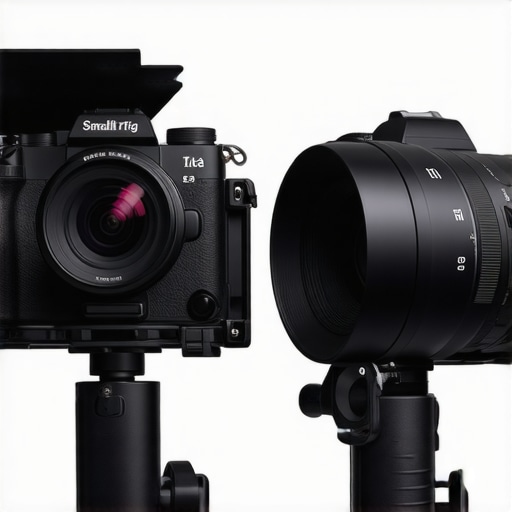
Is it worth the upgrade to a professional tray system?
The short answer depends on your frequency of use. If you find yourself fumbling with the SmallRig’s plastic latch in the middle of a shoot, you will start to crave the mechanical precision of a more expensive unit. Higher-end gear uses spring-loaded metal pins that allow you to swap a 4×4 filter in seconds. If you are billing clients thousands of dollars per day, that saved time and reduced frustration are worth the $400 investment. For everyone else, the SmallRig 2660 remains the king of value. Unlike some microphone reviews where the cheapest option is unusable, this budget rig actually delivers professional results. You can find current market rates and alternative bundles on B&H Photo Video to see how the pricing fluctuates between these brands.
Final thoughts on choosing your light control
Ultimately, picking between these creator rigs comes down to the scale of your project. If you are just starting to improve your image quality, don’t get distracted by the high-end gear used on Hollywood sets. Focus on the tools that solve your immediate problems like glare and exposure control. The SmallRig 2660 does exactly what it says on the tin without the cinema tax added on. Before you pull the trigger, make sure to check out our deep dive into the Tilta ecosystem to see if their modular approach fits your style better, or check current prices to ensure you’re getting the best deal.
Winning the War on Flare Without Going Broke
After weeks of testing, it’s easy to see why this is one of the most recommended pieces of gear for modern creators. It delivers a professional look and vital light control at a price that almost feels like a mistake. Here is the breakdown of the trade-offs involved.
- The Good: Incredible price-to-performance ratio, lightweight carbon fiber build that doesn’t strain your lens, and it virtually eliminates vignetting on wide-angle glass.
- The Bad: The plastic filter latch feels less durable than the rest of the frame, and you might need to retighten the mounting screws during a long day of handheld shooting.
The Ideal Shooters for This Budget Rig
This matte box is a dream for run-and-gun creators who are currently learning how to get cinematic video with a basic kit lens. It keeps your setup light and mobile, which is essential for vlogging or travel work. If you are a solo YouTuber filming in a home studio, this is one of the most effective cheap tools that make your home studio look pro. However, skip this if you are a professional cinema house where filters are swapped dozens of times an hour; the plastic retention clip might not survive a year of high-volume industrial use.
The Ultimate Verdict on This $40 Light Shaper
For $40, you are getting 90% of the performance of a high-end cinema box for less than 10% of the cost. It is a foundational tool that helps you master why your lens is flaring and how to use it for artistic effect. If you are worried about the weight on your lens mount, I recommend pairing this unit with this 22-dollar rail system for a rock-solid configuration that prevents sag. #IMAGE_PLACEHOLDER_E#
My final recommendation? Buy it immediately. It is the single best upgrade you can make to your kit to ensure your contrast stays high and your colors stay rich. It solves the glare problem more effectively than any standard lens hood ever could. Check the latest price and add it to your rig before your next outdoor shoot.