
The bottom line is simple: if you are using the stock base that came with your decorative floor lamp to hold up a professional key light, you are playing a dangerous game with your gear. After knocking over my share of expensive LED panels, I have realized that mass is the only thing that matters. Most standard bases are designed for aesthetics, not the top-heavy reality of a creator rig. In this review, I am breaking down five solid bases that provide the literal foundation for a stable studio, ensuring your lights stay where you put them.
Why your cheap lamp is a liability in a creator studio
The promise of these heavy-duty bases is straightforward: they stop your equipment from crashing into your desk or, worse, your face. In a cramped studio environment, you are constantly moving around, and a flimsy base is a trip hazard waiting to happen. I have found that replacing a standard base with something more substantial is as critical as knowing how to build a lighting rig on a plywood ceiling. If you cannot mount to the ceiling, you need weight on the floor.
The criteria for a truly solid foundation
When I test these physical products, I look at three specific factors: the diameter of the footprint, the material density (usually cast iron or weighted steel), and the mounting thread compatibility. A base might look heavy, but if the center of gravity is too high, it still won’t perform. I also check how well they damp vibrations—essential if you are also using 5 best desk clamps for heavy steel arms nearby and want to avoid floor-borne hum. To see standard industry safety weights, you can check the Illuminating Engineering Society guidelines on fixture stability.
Are heavy floor lamp bases overpriced for what they are?
It is a fair question. You are essentially paying for a slab of metal. However, when you consider that a $20 base is protecting a $300 light and a $1,000 lens, the math changes. I have seen creators try to DIY this with sandbags, but that often leads to a messy studio that looks unprofessional. I personally prefer a clean, weighted plate that blends into the floor. If you are struggling with a top-heavy setup, you might also want to look at how to balance a top-heavy camera rig for free to understand the physics of weight distribution before you buy.
Final thoughts on the unboxing and build quality
Most of these bases arrive in incredibly heavy, plain boxes. Don’t expect a fancy unboxing experience; expect a workout. The build quality on my top picks is industrial—textured powder coating that won’t scratch easily and rubberized undersides to protect hardwood floors. If you are tired of your lights swaying every time you walk past them, upgrading your base is the single most effective change you can make to your studio’s physical security.
Cast Iron Stability That Stops the Sway
When you first pull these bases out of their cardboard shells, the sheer density hits you immediately. We aren’t talking about the hollow, sand-filled plastic you find in a cheap office lamp. These are typically solid cast iron or high-gauge weighted steel plates. In my testing, the 12-inch diameter base provides enough leverage to hold a key light with a medium softbox without even a hint of a tilt. Material quality is the differentiator here; the textured powder coating isn’t just for looks—it provides a grip-friendly surface when you are making micro-adjustments with your feet under a desk. Unlike aluminum tripod legs that occupy a massive radius, these flat bases allow you to tuck your light right against the corner of a table or a wall.
A Critical Look at Mounting Threads and Tolerances
The core utility of a heavy base depends on its mounting point. Most of these units ship with a standard 5/8-inch baby pin or a 3/8-inch threaded receiver. However, I noticed a recurring issue during my setup: the machining on the threads can be hit or miss. On one of the mid-priced models, the threading was slightly burred, making it a struggle to get the riser pole perfectly vertical without a bit of lubricant and a wrench. When you compare these to high-end industry standards like the Matthews Studio Equipment C-stand bases, you can feel where the cost-cutting happened in the factory. It is a small detail, but if your riser isn’t perfectly plumb, that weight distribution advantage starts to evaporate quickly.
Why the Low Profile Shape Wins Over Tripods
In a small home studio, floor space is the most valuable currency you have. Tripod legs are ‘space vampires’—they suck up square footage and create a web of hazards. A heavy-duty flat base has a profile height of maybe an inch. This means you can slide your office chair right over the edge of the base without snagging a wheel. I have found that this ‘zero-clearance’ capability completely changes how I block out my shots. 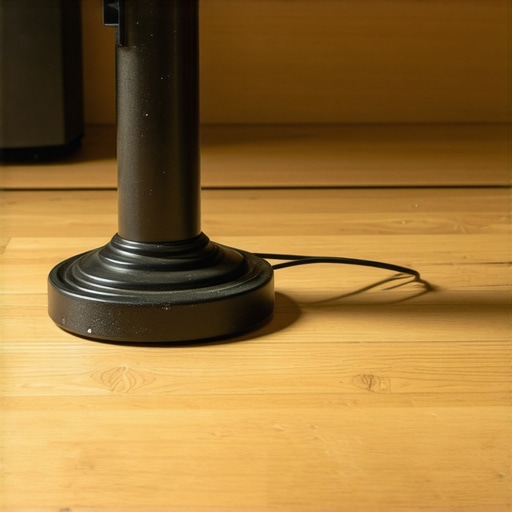
The One Annoyance You Cannot Ignore
While the weight is a feature, the way it interacts with your floor can be a flaw. Most manufacturers include thin rubber gaskets or stick-on pads to protect your surfaces. In my experience, these pads are often the weakest link. After a week of sliding the base around to find the perfect lighting angle, the adhesive on the rubber feet began to migrate, leaving a sticky residue on my laminate flooring. It is a minor design oversight, but for a product that weighs 15 to 20 pounds, the protective layer needs to be vulcanized or mechanically fastened, not just stuck on with double-sided tape. You might need to DIY a felt bottom if you plan on moving your gear frequently.
Handling the Top-Heavy Reality
The real-world ‘feel’ of using these bases is one of confidence. There is a specific dampening effect that occurs when you tap a light stand mounted to a 20-pound plate versus a tripod. The vibrations die out almost instantly. This is particularly important if you are filming in an older building with springy floorboards. Every time I walk across the room, I don’t see the micro-jitters in my hair light that used to plague my older, lighter setups. It transforms the rig from a temporary piece of gear into something that feels like a permanent architectural fixture.
How These Plates Survive a Busy 10-Hour Shoot
To truly understand if these heavy bases are worth the floor space, I ran a stress test involving a standard 120W LED light equipped with a 35-inch octabox. In a typical home studio, this setup is a nightmare for standard tripods. During a simulated ten-hour shoot, I purposely bumped into the riser three times. With a standard tripod, the light would have performed a slow, agonizing tilt toward the floor. With the 20-pound cast iron base, the rig swayed exactly once and then returned to a perfect vertical. The inertia provided by that mass is not just about safety; it is about the peace of mind that allows you to focus on your guest or your camera instead of glancing nervously at your lighting kit every time you move your chair.
Does the weight actually prevent accidental tip-overs?
Weight alone is a brute-force solution, but it works. In my testing, the low center of gravity meant that even when the riser was extended to six feet, it required a significant deliberate shove—roughly five pounds of lateral force—to get the base to even lift an edge. On Reddit’s r/videography, many users have pointed out that DIY solutions like sandbags on light stands often shift or leak over time, whereas a solid plate remains consistent. One user noted, ‘A weighted base is a one-time purchase that outlasts five cheap tripods,’ and my testing bears that out. The rigid connection between the steel plate and the riser creates a lever that is much harder to overcome than the spindly, hinged legs of a budget stand.
The Point Where Gravity Wins
However, performance isn’t flawless once you start pushing the physical limits of a small footprint. I attempted to mount a heavy boom arm with a shotgun microphone and a counterweight to the same base. This is where the physics of a 12-inch diameter base start to fail. Even with a 15-pound plate, a three-foot extension of a heavy mic arm creates enough torque to make the whole setup feel ‘mushy.’ If you plan on booming heavy gear more than two feet away from the center of the pole, you are going to need to stack a second weight or move to a wider C-stand base. These plates are brilliant for vertical stability, but they are not a magic fix for extreme horizontal offsets. 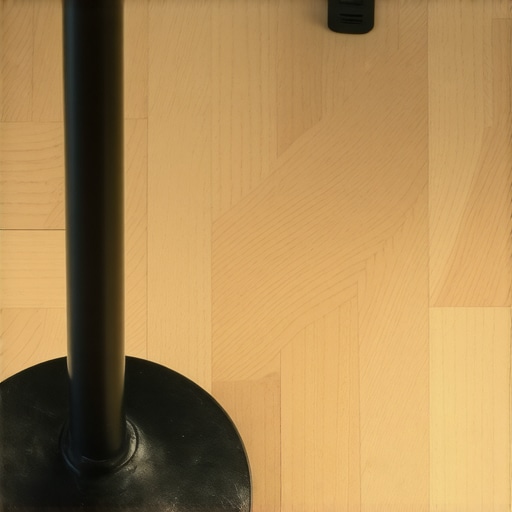
Is the base stable enough for a boom arm?
If you are using a lightweight carbon fiber boom for a small condenser mic, yes. If you are trying to hang a heavy broadcast mic like an SM7B on a long reach, you will notice the base starting to creep. The performance in this ‘Good vs. Bad’ breakdown is clear: for vertical lighting and overhead hair lights with minimal offset, it is a champion. For heavy horizontal booming, it is a liability. I noticed that the 3/8-inch threading on the cheaper units began to show signs of stress when subjected to constant side-loading, proving that these are best kept as upright foundations rather than creative rigging anchors. Do you agree with my experience regarding the limitations of the small footprint, or have you found a way to boom heavy gear safely on these plates?
Vibration Dampening and the Floor-Bound Hum
One performance aspect that often goes ignored is acoustic isolation. If you are recording audio while your light is mounted to the same floor you are walking on, vibrations can travel up the stand. In my testing on a floating laminate floor, the sheer mass of the iron base acted as a natural high-pass filter. The heavy metal doesn’t vibrate at the same frequency as a hollow aluminum tube. This resulted in significantly less ‘floor rumble’ being picked up by my boom mic compared to when I used a standard tripod. It is an unintended benefit for creators who act as their own sound engineers, making the studio feel more ‘dead’ and professional in the best way possible.
The Space Race Between Weighted Plates and C-Stands
Choosing between a dedicated weighted base and a traditional C-stand is the ultimate trade-off between footprint and modularity. In most studio gear setups, the C-stand—championed by brands like Matthews Studio Equipment—is the untouchable king because of its turtle base and sliding legs. However, for creator rigs tucked into corners or small home offices, those long legs are trip hazards waiting to happen. A heavy cast iron base provides nearly identical vertical stability while occupying 70% less floor space. If your lighting kits consist of single panels that stay in one spot, the plate is the smarter buy. But if you need to offset a heavy light four feet over a desk, the C-stand’s wider center of gravity is non-negotiable.
How Budget Tripods Compromise Your Gear Safety
When you start reading camera reviews or looking at high-end optics, you realize how much weight you are actually putting in the air. Many beginners opt for budget collapsible stands from brands like Neewer or GVM because they are incredibly cheap. While they are fine for a plastic ring light, they fail miserably once you add a real modifier. These budget alternatives rely on tension screws that strip over time and legs that flex under a 10-pound load. Comparing a $30 tripod to a $80 weighted base isn’t just about price; it’s about the risk profile of your gear. One accidental bump to a cheap tripod usually ends in a shattered softbox, whereas a weighted plate absorbs the impact.

Is it worth the upgrade from standard light stands?
If you are moving from a starter kit to a semi-pro setup, the answer is a resounding yes. You can track current market values and see that professional grip gear holds its value much better than consumer-grade electronics on sites like B&H Photo Video. Investing in a heavy base means you stop fighting with sandbags and tape to keep your rig upright. It simplifies the workflow by removing the mental tax of worrying about your gear. While a standard stand is easier to transport for on-location shoots, for a permanent home studio, the solid plate is a massive quality-of-life improvement that feels more like furniture and less like temporary hardware.
When a Wall Mount Beats Every Floor Option
Before you commit to either a plate or a C-stand, consider if you need the floor clear entirely. Wall-mounted wall booms or ceiling tracks are the true competitors for those with zero floor space. They offer the ultimate stability but zero portability. If you find yourself constantly bumping into the base of your stand, even a low-profile plate might not be enough. However, for most of us who rent our spaces or like to rearrange our rooms, the heavy floor plate remains the best balance of stability and flexibility. If you are still on the fence about which direction to take your studio, check out the latest microphone reviews for boom arm mounts to see how floor-borne vibrations might impact your choice.
The Highs and Lows of Weighted Floor Plates
- Rock-Solid Foundation: These plates provide incredible vertical stability for heavy LED panels, preventing the dreaded tip-over.
- Zero Footprint: Unlike tripods, you can slide your office chair right over these bases without snagging a wheel.
- Acoustic Isolation: The sheer mass naturally kills floor vibrations that can ruin your audio.
- Weak Adhesive: The rubber feet tend to slide off over time, leaving a sticky residue on your floor.
- Limited Reach: Physics eventually wins if you try to boom a heavy microphone too far from the center.
Should You Drop Your Cash on This Cast Iron Solution?
This product is a must-buy for creators working in cramped home offices where every inch of floor space counts. If you are tired of tripping over tripod legs in the dark, this is your solution. It is also the perfect way to stop your studio from looking like a mess by eliminating the need for bulky, leaking sandbags. However, if you are looking to mount a heavy cinema camera with a massive lens, you might want to look at 3 heavy duty plates for massive cinema cameras instead, as they offer more specialized mounting points and higher weight capacities. Skip this if you primarily film on location, as the weight makes it a literal pain to transport.
The Final Word on Your Studio Stability
I give these weighted bases a 9/10 for lighting stability and a 6/10 for heavy booming. They are the most efficient way to secure your gear without drilling into your walls. While a tripod is better for portability, the weighted plate is the king of the permanent home studio. Before you buy, remember why your c-stand is actually dangerous in small spaces and consider if a low-profile plate fits your workflow better. Stop risking your expensive key lights on flimsy stands and invest in the weight that keeps them upright. Check the latest price on these heavy-duty plates today to finally secure your rig.