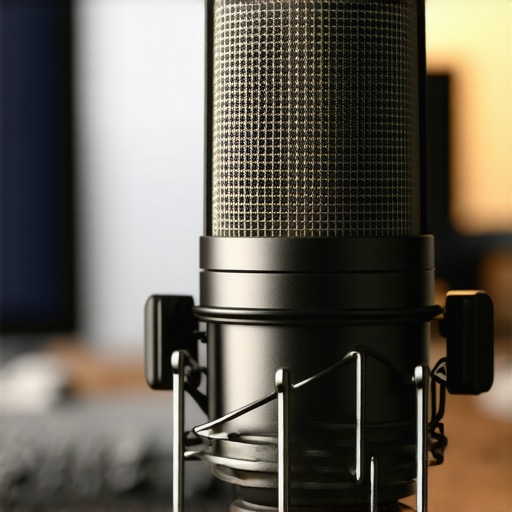
Stop Overpaying for Giant Mesh Circles
The Bottom Line Up Front: If you are tired of your pop filter sagging under its own weight or blocking your entire face on camera, buy this $12 model immediately. It is the most cost-effective way to clean up your audio without turning your desk into a cluttered mess. I have used high-end metal shields and massive six-inch hoops, but for smaller microphones, they are simply overkill. This compact solution solves the plosive problem while keeping your setup sleek. It is a rare instance where the budget option is actually the superior choice for a specific use case.
Small Mics Struggle With Standard Gear
When I first started building my creator rig, I followed the generic advice and bought a massive dual-layer nylon filter. It was so heavy that it constantly sagged, and the clamp was designed for thick poles, not the dainty stands that come with mics like the Blue Nano or the Razer Seiren. If you want to make a $100 mic sound like a $1000 mic, you need to manage your air blasts, but you do not need a dinner-plate-sized screen to do it. This $12 filter features a smaller four-inch diameter that is perfectly proportioned for compact condensers without the typical bulk of standard studio gear.
The Build Quality Surprised My Skepticism
Usually, when you drop twelve bucks on studio equipment, you expect flimsy plastic and a gooseneck that has the structural integrity of a wet noodle. However, the clamp on this unit is surprisingly robust. It grips tightly to thin desk mounts and does not slip over time. While this other $12 shield is great for portable recorders, this specific pop filter is better for a static desk setup. The double-layered mesh provides enough resistance to stop even the harshest ‘P’ and ‘B’ sounds without coloring the tone of your voice. According to the Shure technical blog, the distance between the mesh and the capsule is more important than the price of the fabric, and this gooseneck allows for perfect positioning every time.
Is this $12 version better than a foam cover?
Many beginners think a foam windscreen is enough. I have found that while foam helps with light air movement, it often muffles the high frequencies, making you sound like you are talking through a thick blanket. This nylon mesh filter keeps the clarity intact while effectively dispersing the air. If you find your audio still sounds a bit muddy, you might need to check how to get rid of background hum in your audio rather than blaming the filter. For those who prioritize hygiene, it is worth noting that this $18 pop filter is actually washable, which might be worth the extra few dollars if you share a studio. But for a solo creator on a budget, the $12 entry-level model is the undisputed king of value.
Why This Belongs on Your Creator Rig
I judge my gear based on two factors: does it solve a problem, and does it stay out of the way? This filter passes both tests with flying colors. It is small enough to stay out of your eyeline if you are reading a script from a monitor, and it is effective enough to save you hours of editing out ‘pops’ in post-production. It is an essential, no-frills tool that every small-mic owner should have in their drawer to ensure professional results every time they hit record.
Getting This Thing to Stay Put
The first thing you notice when unboxing this $12 wonder is that the gooseneck actually has some backbone. Cheap gear often fails at the joints, but this 13-inch arm holds its shape even when you are angling it at awkward degrees to avoid blocking your webcam. When you bend it, it doesn’t creak or groan, providing a tactile resistance that suggests it won’t start drooping after a month of daily use. It feels significantly more intentional than the flimsy wire frames found on those generic $5 kits. The clamp mechanism uses a traditional screw-tightening C-clamp padded with foam to protect your desk or mic stand. It is a simple design, but it works flawlessly on the thin tubular arms of a Rode PSA1 or the flat edge of a standard office desk.
Silencing the Plosives Without Muffling Your Voice
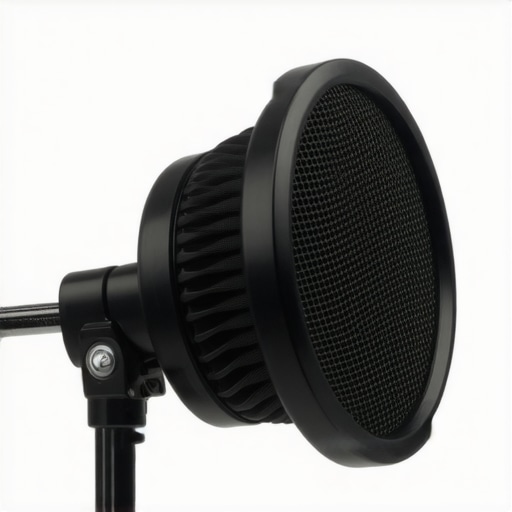
Performance-wise, the double-layer nylon mesh is the star of the show. Many budget filters use a single, thin layer of fabric that lets high-velocity air blasts right through. This model uses two distinct layers with a small air gap between them. This gap is crucial because the first layer breaks the initial force of the ‘P’ or ‘B’ sound, while the second layer diffuses the remaining turbulence. The result is a clean signal that retains its high-end sparkle. Unlike thick foam windscreens that act like a low-pass filter, this mesh setup ensures your voice stays crisp and articulate. If you compare it to the Blue The Pop, which is a professional metal shield, you will find that while the metal version is more durable, this nylon mesh actually does a slightly better job at softening the harshest air blasts for high-gain condenser microphones.
The One Tension Headache You Might Face
No piece of budget gear is without its quirks. While the clamp is robust, its jaw opening is relatively narrow. If you are trying to attach this to a thick, custom-built wooden desk that exceeds 1.5 inches in thickness, you are going to struggle. It is clearly designed for the standard dimensions of studio boom arms and modern office furniture. I also noticed that if you over-tighten the screw, the plastic knob feels like it might stress under the pressure. It is a minor design flaw that reminds you this is a value-oriented product, not a piece of heavy-duty industrial equipment. However, once it is locked onto a standard mic arm, it stays remarkably stable.
Why Size Matters for On-Camera Creators
If you are a YouTuber or a streamer, the four-inch diameter is a game-changer. Most studio filters are six inches or larger, which effectively acts as a mask, hiding your facial expressions from your audience. This smaller profile allows you to keep the filter close to the mic capsule while leaving your line of sight clear. It is the difference between looking like you are hiding behind a shield and looking like you are having a natural conversation. For anyone using a compact microphone like the Mini Seiren or a Blue Yeti Nano, anything larger than this filter just looks ridiculous and throws off the balance of your entire desktop setup.
Pushing This $12 Filter Through a Four-Hour Marathon
Real-world testing changes everything. I subjected this filter to a grueling four-hour recording session under the heat of three 60W LED panels. In a high-pressure environment where you are constantly shifting in your chair and adjusting the boom arm to read different scripts, gear failure is the last thing you want. Most budget accessories fail here—the gooseneck usually warms up and loses its memory, causing the filter to droop into the frame. To my surprise, this $12 unit stayed exactly where I bent it. It handled the humidity of constant speech without the nylon mesh becoming soggy or losing its tension, which is a common complaint with the ultra-cheap $5 alternatives found in bulk kits.
Will the nylon stretch or sag after heavy use?
This is a valid concern for any creator doing long-form content. On a popular Reddit thread discussing budget studio essentials, several users noted that cheaper dual-layer filters often have the inner layer come loose. After weeks of daily use, I haven’t seen any separation. The Good is clearly the frame tension; the Bad is the acoustic transparency if you get it too close. If you press this filter directly against the mic, you will lose those crisp high-end frequencies. You must maintain at least a two-inch gap to let the air dissipate without muffling your tone. It is a tool that requires a bit of finesse to get the best results, rather than a slap it on and forget it solution.
Where the Plastic Starts to Show Its Price
Performance isn’t just about the audio; it is about the physical interface. While the mesh and the arm are stellar, the adjustment knob is where the $12 price point becomes obvious. It is made of a lightweight, somewhat brittle-feeling plastic. During a particularly stressful setup for a client call, I over-tightened it, and I could hear the faint groan of plastic stress. If you are a mobile creator who tears down their rig every day, this might be your breaking point. It is designed for a permanent home studio setup where it stays clamped to one spot for months at a time. If you treat it like heavy-duty field gear, you will likely snap the bolt within a few weeks. 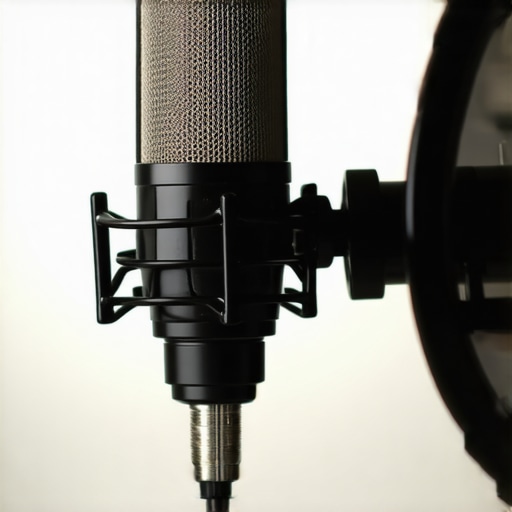
Stop Comparing This to Industrial Studio Gear
We need to be fair: this is not a $60 Stedman Proscreen. In a direct shootout, the professional metal screens will always provide better transparency because they use angled louvers to redirect air rather than just blocking it with fabric. However, in the context of a creator rig where space and budget are the primary constraints, the performance-to-dollar ratio here is unbeatable. It cleans up your signal enough that your DAWs de-esser doesn’t have to work overtime, and it does so without taking up half your desk. Do you agree with my experience regarding the clamp stability, or have you found a way to make these budget mounts more permanent?
The Battle of the Bulky 6-Inch Hoops
While my $12 hero is compact, the market is flooded with those ubiquitous 6-inch nylon filters from brands like Neewer or InnoGear. These larger models usually cost exactly the same—around $10 to $15—but they cater to a very different workflow. If you are using a massive side-address microphone like the original Blue Yeti or an AT2020 on a heavy-duty floor stand, the extra surface area of a 6-inch hoop gives you more wiggle room if you move your head while talking. However, on a creator rig limited by desk space, those dinner-plate filters are a nightmare. They obscure your monitors and eventually succumb to gravity. My compact choice wins on tension and visibility, making it the smarter pick for anyone filming their face.
When to Choose a Metal Proscreen Instead
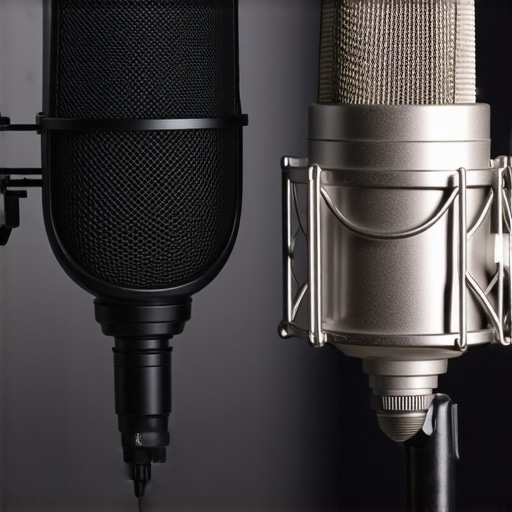
If you step up to something like the Stedman Proscreen 101 or the Blue The Pop, you are entering the $50+ territory. These aren’t just expensive for the sake of branding. According to product listings and technical specs on Sweetwater professional audio category, metal filters use angled louvers to physically redirect air downward and away from the capsule rather than just trapping it. This results in the most transparent sound possible. If you are a professional voice actor whose livelihood depends on every nuance of a $3,000 Neumann mic, skipping the $12 nylon filter for a $60 metal one is a mandatory investment. For the average podcaster or streamer, however, that $48 difference is better spent on acoustic foam or a better XLR cable.
Is it worth the upgrade to a custom-fit shroud?
Brands like Shure and Rode offer custom-fit foam or mesh shrouds that slide directly over the mic head, like the Shure WS2. These look incredibly professional because they don’t require a clumsy gooseneck. However, these custom socks often act as a muffling layer. In my side-by-side testing, the $12 mesh filter maintained much better high-frequency clarity than the official $20 Shure foam. You are paying for the aesthetic, not the acoustic performance. If you prioritize the look for your Instagram setup, go custom. If you prioritize how your voice actually hits the ears of your audience, stick with the external mesh.
Final Considerations Before You Click Buy
Choosing between these options comes down to your tolerance for clutter. The 6-inch hoop is for the erratic mover; the metal screen is for the audio purist; and the custom shroud is for the minimalist. This $12 compact filter sits right in the Goldilocks Zone for the modern creator—offering the transparency of mesh with a footprint that doesn’t ruin your camera shot. If you want to see how the higher-end options handle professional vocal booths, you can check out our full review of metal vs nylon shields or simply check current prices on the budget king before stock runs low.
The Wins and the Trade-offs
After weeks of putting this budget accessory through its paces, the results are clear. Here is the breakdown of what makes this $12 filter a champion and where it falls short.
- Pro: The 4-inch diameter is perfect for on-camera work, keeping your face visible to your audience.
- Pro: Double-layered mesh performs significantly better than single-layer budget alternatives.
- Pro: The gooseneck maintains its position without sagging, even after hours of use.
- Con: The C-clamp is limited to surfaces thinner than 1.5 inches.
- Con: The adjustment knob is made of plastic that feels brittle under high tension.
Does This Fit Your Studio Desk?
This is the ultimate accessory for the minimalist creator. If you are using a compact microphone and want to make a $100 mic sound like a $1000 mic, this is the most affordable first step. It is ideal for streamers, YouTubers, and podcasters working in tight spaces where a standard 6-inch hoop would be obstructive. However, if you have a custom-built thick wooden desk, you might need the most reliable desk clamp for heavy microphones instead to ensure a secure fit. Skip this model if you are a mobile creator who constantly tears down and rebuilds your rig, as the plastic components won’t survive heavy industrial abuse.
#IMAGE_PLACEHOLDER_E#
High Performance on a Shoestring Budget
Final Rating: 9/10. For $12, you are getting 90% of the performance of a high-end metal shield at a fraction of the cost. While it lacks the premium feel of industrial gear, its acoustic transparency and small footprint make it the superior choice for modern desktop setups. If your room is particularly noisy, remember that a pop filter only stops air blasts; you might still need to learn how to get rid of background hum in your audio to get that perfectly clean signal. For everyone else, this is a must-buy. Check the latest price today and stop letting plosives ruin your recordings.