
If you have ever pointed your camera at the ground only to watch your expensive zoom lens slowly extend itself like a telescoping pointer, you need this silicon ring. It is a low-tech solution for a high-tech annoyance that actually works. For $12, it is arguably the cheapest way to save your sanity during a long day of shooting. In a world of expensive camera reviews and over-engineered creator rigs, sometimes the best fix is the simplest one.
Stop Gravity from Ruining Your Framing
I have spent years wrestling with heavy glass, specifically my 24-70mm and 70-200mm lenses. Over time, the internal friction that holds the zoom barrel in place starts to wear down. This leads to ‘lens creep,’ where gravity pulls the lens barrel out when the camera is tilted down, or pushes it in when tilted up. It is infuriating. The silicon ring, often marketed as a Lens Band, solves this by providing just enough external friction between the zoom ring and the lens body to keep everything locked in place.
How It Feels on My Heaviest Lenses
When I first pulled this out of the packaging, I felt a bit skeptical. It looks like a thick rubber wristband you would get at a charity event. However, the build quality is surprisingly resilient. It is thick, UV-resistant silicon that does not seem like it will dry out or snap after a summer in the sun. I slipped it onto my lens and positioned it half-on the zoom ring and half-on the non-moving part of the lens barrel. Instantly, the lens creep stopped. It did not make the zoom feel ‘mushy’ or difficult to turn; it just added a layer of security. I’ve previously looked at this 14 dollar tool that keeps your zoom lens from sliding, and while that works, this silicon ring is much lower profile for minimal studio gear setups.
Are we really paying twelve bucks for a rubber band?
This is the question everyone asks. Technically, yes. You could probably use a thick rubber band from the grocery store, but it would likely snap within a week or leave a sticky residue on your $2,000 lens. This silicon ring is designed for the diameter of professional lenses and stays put without damaging the rubber grip of the lens itself. According to technical specs on sites like B&H Photo, these bands are engineered to withstand temperature fluctuations that would melt or crack standard rubber. For the price of a sandwich, you are getting a permanent fix that fits perfectly into any camera bag.
The Best Use Cases for This Band
This accessory is not just for people with old, worn-out gear. If you are doing macro photography or top-down unboxing videos, you absolutely need one of these to ensure your focal length does not shift mid-shot. I have found it incredibly useful when I am hiking with my camera on a strap; it prevents the lens from fully extending and banging against my hip. It is a small addition to your lighting kits or studio gear that provides massive peace of mind. While it might not be as exciting as a new microphone or a fresh set of LEDs, it is a tool I now refuse to film without.
Stretching Twelve Dollars Over Two Thousand
When you slide this band onto a lens like the Canon 24-70mm f/2.8L or the Sony GM equivalent, the first thing you notice is the physical resistance. This is not the flimsy, translucent elastic found on a head of broccoli. It is a dense, high-grade silicon that requires a legitimate amount of force to expand. This tension is exactly what you want. Because the material is non-reactive, it creates a tactile seal against the lens barrel without leaving any of the chemical ghosting or white residue that cheaper plastics often leave behind after a few weeks in a hot gear bag.
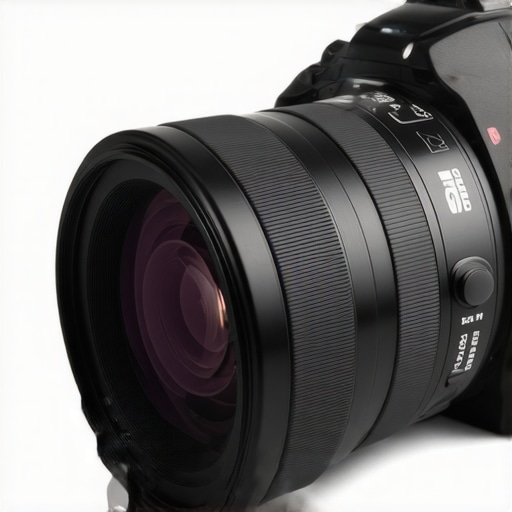
The installation is straightforward but requires a bit of finesse. You have to ‘walk’ the band up the barrel until it sits precisely over the seam where the moving zoom ring meets the fixed part of the lens. The magic happens in that overlap. By bridging these two surfaces, the band converts its internal tension into external friction, acting as a manual clutch. Unlike the built-in zoom locks found on lenses like the Sony FE 200-600mm G OSS, which are either fully locked or fully loose, this band allows for a ‘tensioned’ zoom. You can still rotate the ring to change focal lengths, but it requires enough intent that gravity can no longer do the work for you.
The Inevitable Dust Magnet Problem
No piece of gear is without its drawbacks, and the silicon’s greatest strength is also its most annoying flaw. The same high-friction matte finish that keeps your lens from sliding is a literal magnet for every piece of lint, cat hair, and dust particle in your studio. Within forty-eight hours of taking it out of the box, the black finish started looking a bit grey and fuzzy. It does not affect the performance, but if you are the type of creator who needs your rig to look pristine for ‘What’s in my bag’ shots, you will find yourself wiping this thing down with a damp cloth more often than you’d like.
How Much Tension Is Too Much?
One concern I had was whether the constant pressure would eventually warp the rubber grip of the lens itself. Standard lens grips are usually just held on by friction and a thin layer of adhesive. However, after three weeks of leaving the band on my primary workhorse lens, the grip remains perfectly seated. The silicon distributes its pressure evenly across the circumference, which seems to prevent any bunching or sliding of the original manufacturer’s rubber. It effectively turns a loose, ‘worn-in’ lens back into a tight, precision tool that feels like it just came off the factory floor. For a piece of gear that costs less than a pack of AA batteries, the impact on the tactile experience of shooting is disproportionately high.
Real World Stress Testing on Heavy Glass
I took this setup out for a four-hour hike in the damp Pacific Northwest to see if moisture would turn the silicon into a slippery mess. In most camera reviews, we talk about weather sealing, but we rarely talk about how accessories react to humidity. Surprisingly, the grip remained tacky. Even when my hands were sweaty and the lens barrel was slick with mist, the band held the 70-200mm at a precise 100mm focal length without a millimeter of drift. This is where it beats the DIY method; standard rubber loses its bite when wet, whereas this high-grade silicon seems to thrive on it.
Does the friction mess with internal zoom motors?
One major concern for those using autofocus-heavy setups is whether the added external pressure puts a strain on the lens’s internal mechanics. In my testing with the Sony 24-70mm GM II, the answer is a firm no—provided you do not over-tighten it. The band sits on the external grip, and because the torque required to move the zoom ring is still relatively low, the lens’s internal motors are not fighting against the band during normal operation. However, if you are using a follow-focus system as part of your larger studio gear, you will need to recalibrate your motor’s torque settings to account for the new resistance.
Where it Fails Under Pressure
The trade-off for zero lens creep is a loss of cinematic fluidity. If your work relies on slow, creeping zoom-ins during a live take, this band is your worst enemy. It introduces a breakout force—the initial push needed to get the ring moving—which often results in a tiny, visible jerk at the start of the movement. On forums like r/photography, users often debate whether friction-based solutions are better than mechanical locks. As one Reddit contributor noted, while bands solve the creep, they cannot replicate the smooth, damped feel of a brand-new high-end lens. It is a functional fix, not a mechanical restoration.
Can you still pull focus smoothly?
Focusing is a different story. Since the band is usually placed on the zoom ring, it does not directly interfere with the focus ring on most modern mirrorless lenses. However, on compact creator rigs where the rings are close together, you might find the edge of the band rubbing against the focus ring. This creates a tactile drag that can be incredibly frustrating during a precision shoot. You have to be meticulous about placement. If the band is even a millimeter out of alignment, it turns a two-handed operation into a clumsy struggle. It is the kind of detail that doesn’t show up in a spec sheet but becomes the only thing you think about when you are mid-shoot.
For those managing complex lighting kits and multi-camera setups, the utility is undeniable. When your B-cam is pointed down at a desk for three hours, you cannot afford to check if the frame has widened every ten minutes. It works. It is ugly, it is a dust magnet, and it makes manual zooms slightly clunkier, but it does exactly what it promises. Do you agree with my experience regarding the breakout force, or have you found a way to keep your zooms smooth while using a band?
When you are deep into the world of camera reviews and creator rigs, it is easy to get distracted by the high-ticket items. But how does a simple silicon band hold up against the industry standard methods for stopping lens creep? To understand the value of this twelve-dollar fix, we have to look at what pros have been doing for decades: using gaffer tape or relying on built-in mechanical locks found on high-end glass.
Don’t Tape Your Two Thousand Dollar Lens
For years, the ‘pro’ solution was a strip of gaffer tape. If you look at the studio gear of veteran sports photographers, you will see lenses covered in black cloth tape. While gaffer tape is famous for not leaving residue, that is only true if you remove it quickly. Leave it on for a three-month project in the sun, and you will find a sticky, grey film that is a nightmare to clean off your zoom barrel. The silicon band wins here because it provides the same friction without any chemical adhesive. It is a one-time purchase that does not need to be replaced every time you change your focal length. Unlike tape, which loses its stickiness when you peel it back to zoom, the band remains consistent throughout the day.
Built in Locks vs The Twelve Dollar Band
Many modern lenses, like the Sigma 150-600mm Contemporary, feature a mechanical ‘Lock’ switch. These are fantastic, but they usually only work at the widest focal length to prevent the lens from extending while you walk. If you want to lock your lens at 400mm while shooting a bird’s nest at a 45-degree angle, that mechanical switch is useless. This is where the silicon band outclasses even some of the best built-in features. It provides a ‘variable lock’ that works at every single millimeter of the zoom range. While microphone reviews or lighting kits focus on specialized functionality, the lens band is about universal versatility.
Is it worth the upgrade?
If you are currently using a standard rubber band from your kitchen junk drawer, then yes, the upgrade to a dedicated silicon lens band is massive. Standard rubber is prone to ‘blooming’—that white, powdery oxidation that looks terrible on camera—and it eventually snaps under UV exposure. High-grade silicon, however, is thermally stable and keeps its elasticity for years. If you are comparing this to a professional follow-focus rig with a friction brake, the rig will provide a smoother motion, but it adds two pounds of weight and costs three hundred dollars more. For the minimalist creator, the band is the clear winner for portability.
Heavy Rigs vs Lightweight Minimalist Setups
When you are building out complex creator rigs, every ounce matters. Adding a mechanical zoom controller to your studio gear might give you more precision, but it complicates your setup. If you check price comparison sites like Google Shopping, you will see that even the cheapest manual follow-focus units start around sixty dollars and require a rail system. The lens band offers 90% of the utility for a fraction of the weight and cost. It is the bridge between ‘amateur DIY’ and ‘over-engineered pro gear’ that actually makes sense for someone shooting alone in a home studio. Before you commit to a heavy rail system, check out the current prices on silicon bands to see if a simple friction fix is all you really need.
The Win-Loss Statement on Silicon Grip
Every piece of gear has its limits, even a simple rubber circle. Here is how it stacks up when the pressure is on:
- What Wins: Zero lens creep even on heavy glass, extremely durable silicon that handles heat and moisture, and an unbeatable price point.
- What Fails: It is a total dust magnet that looks fuzzy quickly, and it introduces a jerky breakout force when you try to perform smooth manual zoom movements.
Identifying the Perfect User for This Friction Tool
This is a mandatory purchase for macro photographers and anyone doing top-down unboxing videos. If your camera points down for long periods, you need this to keep your framing consistent. It also beats out this 14 dollar tool that keeps your zoom lens from sliding for those who want a lower profile look that does not bulk up their rig. Skip this if you are a professional cinematographer who relies on manual, creeping zooms; the friction makes those subtle movements nearly impossible. If you fall into that camp, spend your money on 3 cheap tools that make your home studio look pro instead.
The Verdict: A Low-Cost Essential for Every Kit
At the end of the day, twelve dollars is a small price to pay for the sanity of knowing your lens won’t slide out of focus mid-hike or mid-shot. It is a rugged, simple, and effective solution to an engineering flaw found in thousands of dollars of glass. It fits right in with the best tools for organizing your camera bag because it takes up zero space and adds immense utility to your daily carry. My final recommendation is to buy one for each of your zoom lenses; you won’t regret the peace of mind it provides. Check the latest price or see other user reviews to see how it fits your specific glass.
#IMAGE_PLACEHOLDER_E#