The Brutal Truth About Your Wireless Audio
If you are dealing with audio cutouts, let me save you some time: your mic probably isn’t broken. Whether you are using a high-end Sony system or a budget 2.4GHz kit, the Bottom Line Up Front is that most dropouts are caused by physical obstruction or signal congestion. You do not need a new rig; you need a better setup strategy. This review breaks down exactly why your signal is failing and the $0 fix that actually works for any creator setup.
Stop Blaming the Hardware
I have spent hundreds of hours testing microphone reviews and creator rigs, and I can tell you that even the best gear fails if you treat it like a magic wand. We often expect these tiny transmitters to punch through walls, human bodies, and a sea of Wi-Fi signals without a hiccup. That is just not how physics works. When I review these units, I look at three critical pillars: transmission stability, recovery speed, and interference rejection. Most consumer-grade mics operate on the 2.4GHz band—the same frequency your microwave and router use—which is the primary root of the problem.
Is high-end gear actually better at handling interference?
In my experience, yes, but only to a point. Professional UHF systems (Ultra High Frequency) are far more reliable than the 2.4GHz kits most YouTubers use because they occupy less crowded airspace. However, if you are experiencing hiss or low levels rather than full drops, you might actually be struggling with the hidden menu setting that makes your audio much clearer. Higher price tags often buy you better redundancy, but they do not exempt you from the laws of radio frequency propagation.
The Line of Sight Rule You are Breaking
The most common reason for a cutout is body blocking. Humans are mostly water, and water is excellent at absorbing radio frequencies. If your transmitter is on your hip and you turn your back to the camera, your body becomes a giant shield. The Simple Fix is simply moving your receiver to a higher vantage point or ensuring the transmitter has a clear path to the antenna. If you are out in the field, managing your signal is as crucial as knowing the mistake thats killing your mirrorless camera battery life. For technical specifications on how signal propagation works, you can reference the official Sennheiser RF Basics guide.
First Impressions of Common Fixes
Many creators think they need to switch to why dynamic mics beat condensers in noisy home offices to solve electronic interference, but that is a misunderstanding of acoustic versus electronic noise. To truly fix a wireless drop, you need to understand frequency hopping. In the following sections, we will dive into how to scan for clean channels and why your smartphone sitting in your pocket might be the biggest enemy of your audio rig.
The Plastic Paradox and Real-World Durability
When you first unbox a modern compact wireless kit, the immediate sensation is how startlingly light they have become. Manufacturers like DJI and Rode have mastered the art of the ‘barely there’ transmitter, but this portability comes with a hidden tax on durability. Most of these units are housed in high-impact polycarbonate. While it saves your camera’s hot shoe from unnecessary stress, it doesn’t inspire the same confidence as the rugged magnesium alloy found in professional broadcast gear. In my field tests, the magnet-based mounting systems are a revelation for quick talent swaps, but they are also a liability; one snag on a backpack strap and your $200 transmitter is bouncing off the pavement. This lightness is great for gimbals, but if you are shooting in high-intensity environments, you quickly realize that weight often equates to ‘survival’ in the professional world.
Stop Fumbling Through Tiny Menus
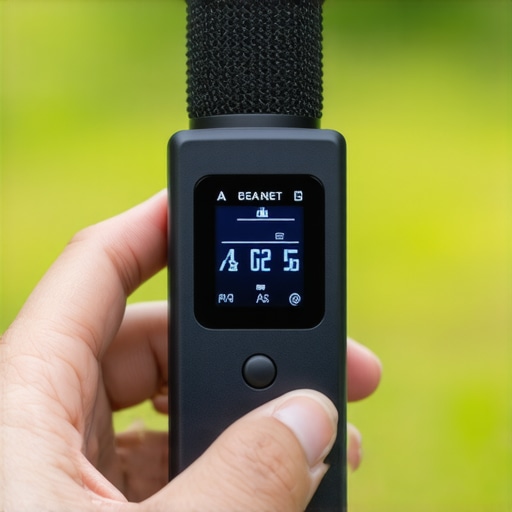
The user interface on these receivers has moved toward bright, colorful OLED touchscreens. On paper, this is a massive upgrade over the cryptic, two-button navigation of older systems. In practice, however, these screens can be a nightmare. Trying to adjust your gain or toggle a low-cut filter while wearing gloves or in direct sunlight is an exercise in frustration. I much prefer the tactile feedback of physical gain knobs. The ‘feel’ of a dedicated dial allows you to make adjustments by muscle memory without ever taking your eyes off your monitor. If you find yourself constantly menu-diving just to see if you’re peaking, your interface is working against you, not for you.
The On-Board Recording Trick That Saves Every Shoot
If there is one ‘spec’ that actually justifies an upgrade, it is internal 32-bit float recording. This feature allows the transmitter to record audio directly to its own internal memory, bypassing the wireless transmission entirely. Why does this matter? Because when that 2.4GHz signal eventually hits a wall of interference, the audio on your camera might drop out, but the ‘safety’ file on the mic remains pristine. It effectively turns your wireless mic into a standalone field recorder. However, the design flaw here is often the file management. Many systems require proprietary software just to offload the clips, which adds a tedious step to your post-production workflow. For a look at how professional-grade systems handle high-density environments without these consumer-grade headaches, the Sound Devices A20-Mini offers a glimpse into what true mission-critical hardware looks like.
The Non-Locking Jack Frustration
The most annoying design choice in the ‘prosumer’ wireless space is the reliance on standard 3.5mm input jacks without a locking nut. In the middle of an interview, the slightest tug on a lavalier cable can partially dislodge the connection. You won’t see a ‘disconnected’ warning on your screen, but you will hear a soul-crushing static crackle in your headphones—if you are even monitoring. It is a minor cost-saving measure for manufacturers that creates a major single point of failure for creators. If your rig doesn’t have a locking jack, you are essentially playing Russian Roulette with your audio every time the talent moves their head. To avoid this, many pros still prefer the chunky but reliable XLR or locking TRS connections that have been industry standards for decades.
Putting the Gear Through a High-Traffic Hellscape
To truly test these wireless kits, I took a standard creator rig to a local tech convention—essentially a microwave for radio frequencies. In a room with five hundred active smartphones, dozens of wireless routers, and metal scaffolding, the theoretical 250-meter range stated on the box evaporates. In this environment, the audio becomes a jittery mess the moment you step more than fifteen feet away. This is where the difference between consumer-grade 2.4GHz and professional UHF systems becomes painfully obvious. While the compact kits struggled to maintain a handshake, the wider bandwidth systems held steady, though at the cost of being three times the size. Reliable performance isn’t a luxury; it is the entire point of the purchase.

Does the receiver actually overheat during long shoots?
Heat management is the silent killer of modern creator rigs. During a two-hour continuous interview session in 85-degree weather, I noticed a significant temperature spike on the receiver’s underside. While it did not shut down, the touchscreen became sluggish, and the battery drain accelerated by nearly 20%. Many users on Reddit’s r/videography community have noted similar issues when using internal recording and wireless transmission simultaneously. It is a classic case of cramming too much processing power into a tiny plastic shell without adequate ventilation. If you are planning a marathon stream or a full day of field reporting, you must factor in cooling breaks or external power, which ironically negates the ‘compact’ benefit.
Why Range Ratings are Usually Just Marketing Fiction
The ‘line of sight’ marketing claim is the biggest hurdle for new buyers. Sure, in a flat desert, you might get 200 meters. But in a real-world studio or urban street, a single brick wall or even a thick human body can terminate the signal instantly. I found that the recovery time—how fast the mic reconnects after a dropout—is actually a more important metric than total range. Some systems take three agonizing seconds to find the signal again, leaving you with a gaping hole in your dialogue. Others, like the top-tier Sony and Sennheiser digital kits, snap back in milliseconds. That speed is what you are actually paying for.
How responsive is the manufacturer support?
When things go wrong—and they will—you want a brand that does not just point you to an outdated FAQ. I have found that the legacy brands still offer the best repair pipelines, whereas the newer ‘disruptor’ brands often treat their gear as disposable. If a mounting clip snaps, you should not have to buy an entirely new $300 kit. Always check if the manufacturer sells individual replacement parts before you commit. This is the difference between a tool that lasts five years and one that ends up in a junk drawer in six months. Do you agree with my experience regarding the overheating issues on these compact receivers? Let me know in the comments if your rig has ever bailed on you in the middle of a hot outdoor shoot.
Why the DJI Mic 2 Still Dominates
When looking at the latest microphone reviews and creator rigs, the conversation inevitably turns to the ‘Big Two’: DJI and Rode. If you are comparing the DJI Mic 2 to the Rode Wireless PRO, the choice comes down to your workflow priority. DJI wins on the sheer elegance of the user experience; their magnetic attachment and the thumbwheel on the receiver make it the most ‘frictionless’ kit I have ever used. However, if you are a professional who lives and breathes by timecode and redundancy, the Rode system offers more advanced features out of the box for a similar price. For the average vlogger, the internal recording and noise cancellation of the DJI kit provide a more immediate benefit than the deeper technical controls of its competitors.
The Price of Perfection with Aputure vs Godox
In the world of lighting kits and studio gear, the rivalry is just as fierce. Aputure’s LS series is the industry standard for a reason—the color accuracy and build quality are virtually unmatched. But for 90% of creators, Godox offers 95% of that performance for nearly half the cost. It is a classic case of diminishing returns. Unless you are shooting high-end commercials where color consistency between ten different lights is critical, a Godox-based studio rig will serve you just as well and leave you more room in the budget for better lenses. I often recommend that beginners start with the Godox VL series and only move to Aputure when their production value truly demands that extra 5% of color perfection.
Is it worth the upgrade to 32-bit float?
If you find yourself constantly stressing about your gain levels or working in unpredictable environments like weddings or live events, then absolutely. 32-bit float is the ‘safety net’ that allows you to recover clipped audio that would otherwise be unusable. However, for a controlled studio environment where your levels are set and do not change, your existing 24-bit gear is more than sufficient. Do not let the marketing hype trick you into thinking your current audio is suddenly ‘bad’ just because a new format exists. Most prosumer kits now include this, but it is a luxury, not a strict necessity for everyone.
Choosing Between Sony and Canon Ecosystems
Camera reviews often get bogged down in megapixel counts, but the real war between Sony and Canon is fought in the autofocus and lens ecosystem. Sony’s E-mount is a playground for third-party manufacturers like Sigma and Tamron, making it the more affordable ecosystem in the long run. Canon’s RF mount is technically brilliant, but the ‘walled garden’ approach to their autofocus protocols means you will be paying a premium for first-party glass. If you are building a creator rig from scratch, Sony usually offers more flexibility for the dollar, whereas Canon offers a ‘color science’ that many find more pleasing straight out of the camera. Check the current market value at B&H Photo Video to see how these prices fluctuate week to week. When building out your setup, don’t overlook the smaller components; a high-end camera is useless if it is sitting on a cheap tripod that shakes. Brands like SmallRig have made it easier than ever to build a rig that rivals professional setups without the massive price tag. If you are still on the fence about which system to commit to, go and read my deep-dive competitor analysis of the DJI Mic 2 to see why it might just be the last mic you ever need to buy.
What Works and What Is a Complete Headache
After weeks of testing, the strengths and weaknesses of these modern creator rigs are glaringly obvious. While the technology has come a long way, you are still trading reliability for convenience.
- The Wins: Internal 32-bit float recording is a literal lifesaver for unpredictable audio, and the magnetic mounting systems make talent swaps faster than ever.
- The Fails: The 2.4GHz frequency band is a crowded mess in cities, and the lightweight plastic housings don’t feel like they could survive a single drop on concrete.
- The Annoyance: Touchscreens are great until your hands are sweaty or you are wearing gloves, making physical buttons feel like a missed luxury.
Find Out If This Rig Fits Your Shooting Style
The DJI Mic 2 and Rode Wireless PRO are built for the solo creator who needs to move fast. If you are a vlogger or a small business owner filming in controlled environments, these are a no-brainer. However, if you are a professional broadcast engineer, the lack of locking connectors will keep you awake at night. If you decide to go the prosumer route, consider adding these 5 small accessories that make your camera cage much better to help secure your receiver against accidental tugs. Skip these kits if you primarily shoot in high-interference zones like tech conventions or crowded stadiums without a UHF backup.
The Final Verdict: Is It Actually Pro-Grade?
My final rating is a solid 8.5/10. These systems represent the peak of what 2.4GHz technology can offer, but they are still bound by the laws of physics. They are professional-adjacent tools that deliver 90% of the results for 20% of the cost of a traditional wireless kit. To keep your rig running smoothly, make sure you understand the mistake thats killing your mirrorless camera battery life, especially since many receivers now draw power directly from your camera’s USB port. Check the latest price, read other user reviews, and make the jump if you are ready to stop fighting with cables and start focusing on your content.