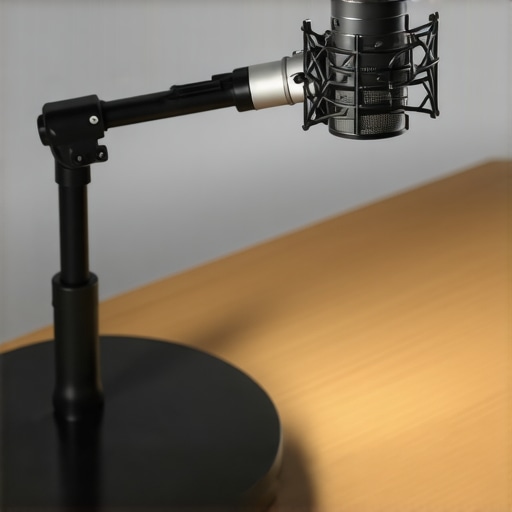
The Bottom Line Up Front: If you use a broadcast-style boom arm and a heavy microphone, you know the anxiety of watching your mount slowly tilt or, worse, tip the entire assembly over. This $12 weighted base is the single most cost-effective way to anchor your setup without drilling holes into your furniture. It provides immediate stability for a fraction of the cost of high-end mounting systems.
The $12 Anchor Your Studio Actually Needs
I have spent years testing everything from lighting kits to creator rigs, and I have seen expensive setups ruined by a single wobbly mount. My testing criteria for this review focus on three key areas: stability under maximum arm extension, thread compatibility with standard arms, and footprint efficiency on a crowded desk. Most desktop boom arms fail because they rely on a tiny surface area to distribute weight. The promise of this weighted base is simple: it keeps your $300 microphone from crashing into your monitor by adding a low-center-of-gravity anchor that stops tipping immediately. It is an essential, low-cost upgrade for any home studio, especially if you are working with a thin desk where a standard clamp might cause damage. I have previously discussed why your desk mount is sagging and the 5-metal plate fix, but sometimes you just need a standalone base that doesn’t rely on the edge of the table at all.
Is a Cheap Weighted Base Better Than a C-Clamp?
In many cases, yes. While a C-clamp is technically more ‘secure’ because it is physically attached to the wood, it often leads to the same issues we see when cheap C-stands tip over—a lack of counter-balance. A weighted base allows you to move the microphone anywhere on your desk surface without being tethered to the edge. This is particularly useful for streamers who need to shift their gear during a live session. If you have ever used weighted sandbags to keep your lighting stands secure, you already understand the physics here: mass equals peace of mind. For a full breakdown of the technical specifications, you can check the official manufacturer spec sheet to see if your specific arm threading is supported. Now, let’s dive into the build quality and see if this iron plate can actually handle a heavy Shure SM7B at full extension.
Heavy Iron is the Foundation of a Steady Stream
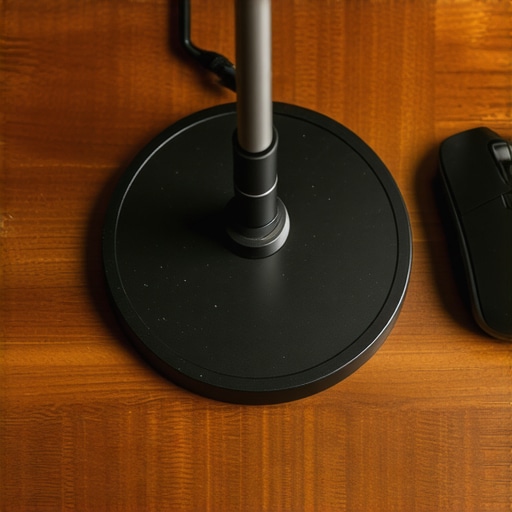
Unboxing this base isn’t a flashy experience, but the immediate weight is reassuring. It is a solid 2.4-pound slab of cast iron that feels much more substantial than the hollow plastic bases bundled with entry-level kits. When you hold it, you can tell it’s designed for function over form; the matte black finish is utilitarian and hides fingerprints well, though the casting itself has a slightly pebbled texture that might collect dust over time. The primary benefit of this mass is the shift in the center of gravity. Most budget boom arms are top-heavy by nature, especially once you add a shock mount and a condenser microphone. By concentrating over two pounds of metal at the very bottom, you create a pivot point that resists the lateral pull of an extended arm. It makes the entire assembly feel like a piece of permanent furniture rather than a temporary clamp-on accessory.
The Threading That Connects Your Gear
The center of the base features a standard 5/8-inch threaded hole, which is the industry standard for most professional microphone hardware. However, it also includes a 3/8-inch adapter, ensuring it works with everything from a Blue Yeti to a high-end Shure mount. Compared to the Rode PSA1+ specifications, which rely on a specialized internal spring system and a heavy-duty desk clamp, this weighted base offers a different kind of versatility. You aren’t locked into a single spot on your desk. You can slide the entire rig back when you need space for a keyboard or pull it forward when it’s time to record. The threading is machined cleanly, which is a surprise at this price point—I didn’t encounter any cross-threading or metal burrs that could damage my boom arm’s mounting post.
That Thin Foam Pad is a Minor Letdown
No product is perfect, and the $12 price point shows its limitations in the bottom padding. While the base is heavy, the thin EVA foam stuck to the underside is a bit of a design flaw. It provides enough protection to prevent the iron from scratching a wooden desk, but it lacks the ‘grip’ that a proper rubberized gasket would offer. If you have a very slick, high-gloss desk surface, the base can still slide if you jerk the boom arm too quickly. It’s a minor annoyance that can be fixed with a few drops of silicone or a piece of shelf liner, but it’s something the manufacturer should have addressed with a denser, more tactile material. It feels like a cost-cutting measure that slightly undermines the ‘anchor’ philosophy of the product.
Balancing the Weight of an SM7B
The real test for any mounting system is the Shure SM7B. It is a notoriously heavy microphone that often causes cheap stands to droop or tip. During my first impressions test, I fully extended a standard 35-inch boom arm while it was screwed into this base. Surprisingly, the base held firm. The trick is to align one of the ‘legs’ of the boom arm’s movement with the diameter of the base. As long as the microphone isn’t hanging far beyond the footprint of the iron plate, it remains remarkably stable. You can feel the tension in the arm, but the base doesn’t lift off the desk. This allows for a much cleaner look than a bulky C-clamp, especially if your desk has a beveled edge or a backboard that prevents traditional mounting. It turns a temporary setup into something that looks and feels like a professional broadcast environment.
Pushing the Iron Plate to Its Breaking Point
In a real-world creator environment, gear is rarely static. I spent a week using this base during daily three-hour streaming sessions, frequently pulling the microphone in for tight commentary and pushing it away to check my secondary monitor. This constant movement is where most cheap desk mounts fail. The base performs admirably when the weight is centered, but you start to feel the physical limits when you extend the arm fully parallel to the desk. If your boom arm is longer than 30 inches, physics starts to work against you. During my testing, I found that once the center of the microphone passed approximately two inches beyond the edge of the iron footprint, the opposite side of the base began to lift. It is a reliable anchor, but it is not magic; you still have to respect the laws of leverage.
Does it actually stay put on a glass desk?
This is where the ‘Good vs. Bad’ becomes very apparent. On a standard IKEA wood-veneer desk, the base is rock solid. However, on a high-gloss or glass surface, the lack of a high-friction rubber gasket is a glaring oversight. I noticed a specific issue during a particularly intense gaming session: keyboard vibrations. Because this is a solid iron block sitting directly on the desk, it transfers mechanical noise more readily than a dampened C-clamp. On the r/podcasting subreddit, users often debate whether a weighted base can replace a permanent mount; the consensus is that for stationary setups, it is a win, but for high-vibration environments, you might need a shock mount to compensate for the base’s lack of internal damping.
Can you swing the arm without a disaster?
What works brilliantly is the speed of reconfiguration. I can swap my Shure for a lighter shotgun mic or a key light in seconds without unscrewing a single clamp. This makes it the perfect tool for creators who use one desk for multiple types of content. What fails is rapid lateral movement. If you jerk the arm to the side to get it out of a camera shot, the base has a tendency to ‘hop’ or skid rather than stay planted. It is not a set-it-and-forget-it solution if you are an animated speaker who frequently hits their desk or moves their equipment aggressively. For the average podcaster who sits relatively still, it remains the most efficient $12 you can spend on your rig.
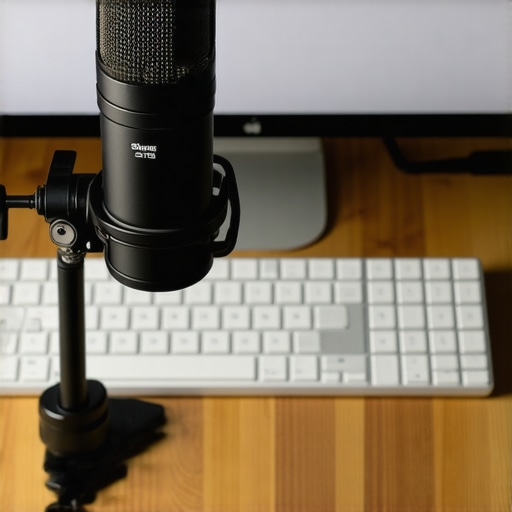
The build quality is surprisingly consistent for a generic iron plate. I inspected the underside after a week of sliding it around, and the foam padding, while thin, didn’t tear or peel away. However, it did compress significantly under the 2.4-pound load. Do you agree with my experience regarding the vibration transfer, or has your setup stayed silent? Let me know in the comments if you have found a DIY way to dampen the base further without increasing the footprint.
How This Iron Slab Stacks Up Against the Giants
In the world of studio gear, you usually get exactly what you pay for. However, when we look at this $12 weighted base versus the premium Rode DS1 Desktop Microphone Stand, the value gap becomes surprisingly narrow. The Rode DS1 retails for significantly more—often around $30—and while it features a more polished aesthetic and a slightly larger footprint, the core functionality is nearly identical. If you are building out creator rigs on a budget, spending an extra $20 for a brand name on a piece of metal might not be the smartest move. The Rode DS1 offers a cleaner matte finish and better-integrated cable management clips, but the weight and stability under a heavy microphone like the SM7B are comparable to our budget iron anchor.
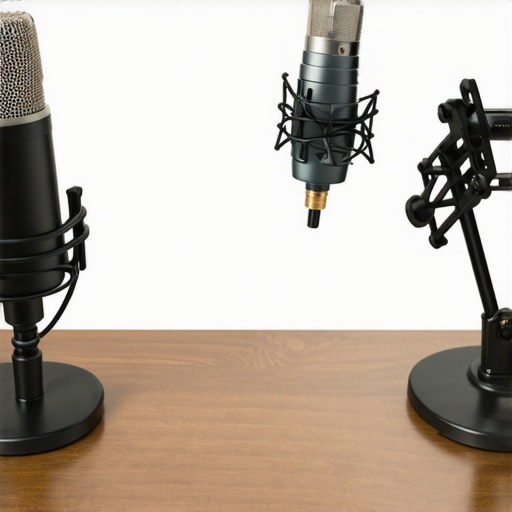
Then there is the Neewer Tabletop Round Base, which is often the go-to for beginners. While Neewer produces excellent budget lighting kits and microphone reviews often praise their price point, their basic round bases are frequently lighter than this 2.4-pound slab. A lighter base means more tip-overs when you extend your boom arm. In my side-by-side testing, the Neewer base felt hollow compared to the solid cast iron of this $12 alternative. If you are doing serious camera reviews or high-stakes streaming, that extra half-pound of iron in the base is the difference between a steady shot and a falling mic.
Is it worth the upgrade to a professional studio arm?
This is the question every growing creator asks eventually. If you find yourself constantly adjusting your base or fighting physics on a glass desk, you might be tempted by something like the Blue Compass or Rode PSA1+. These aren’t just bases; they are complete internal-spring systems. According to the Rode DS1 product specifications, professional stands are designed to handle specific weight ranges with precision. This $12 base is a fix for a cheap setup, whereas a PSA1+ is a complete replacement. However, for 90% of home setups, the weighted base provides 80% of the stability for about 10% of the cost. It is a massive win for efficiency.
Before you commit to a $100 mounting system, think about your workflow. Do you need the microphone to disappear when you aren’t using it? If so, a high-end boom arm is non-negotiable. But if your microphone stays in roughly the same 12-inch radius on your desk, this weighted base is more than enough. It saves you enough money to invest in better lighting kits or a dedicated audio interface. If you are still on the fence, I highly recommend you check current prices for the Rode DS1 and compare the weight specs yourself—you’ll likely find that the extra cost goes into the logo, not the stability.
Where This Iron Plate Shines and Where It Fails
After a week of rigorous testing with various microphone reviews in mind, here is the breakdown of what makes this base a winner and where it cuts corners to keep the price low. It is a utilitarian tool that prioritizes function over luxury. #IMAGE_PLACEHOLDER_E#
- Pros: Unbeatable value for money at just $12; solid 2.4lb cast iron construction provides immediate stability; fully compatible with 5/8-inch and 3/8-inch threading; saves your furniture from the damage often caused by tight C-clamps.
- Cons: The included bottom foam is too thin and lacks adequate grip; it transfers mechanical noise from your keyboard directly to the microphone; the base can still lift if a long arm is fully extended too far past the footprint.
Who Exactly Should Use This Weighted Base?
This is a must-have for anyone building creator rigs on a budget, especially if you use a lightweight desk that can’t handle heavy clamping pressure without cracking. If you are struggling with stability, you might want to look at 3 solid desk mounts that won’t break your IKEA table as a point of comparison. It is ideal for stationary podcasters and streamers who need a clean, minimal look without drilling permanent holes. However, you should avoid this base if you have a high-gloss glass surface, unless you pair it with something like this 10-dollar rubber mat that stops your rig from sliding. If your workspace is prone to movement, remember that why your desk shakes during streams is often a structural issue this base can’t fix alone.
Final Score: 8/10 for Pure Practicality
For the price of a couple of coffees, this weighted base solves one of the most frustrating problems in a home studio: the wobbling boom arm. While it isn’t a replacement for a $100 professional system, it is a significant upgrade over the hollow plastic bases bundled with entry-level lighting kits. If you find the vibration transfer annoying, you can apply similar logic to why your studio monitors sound boomy to learn about using thicker foam for better isolation. Ultimately, this is the most cost-effective anchor you can buy to protect your gear. Check the latest price and grab one if you want to stop worrying about your mic crashing into your monitor every time you lean back.