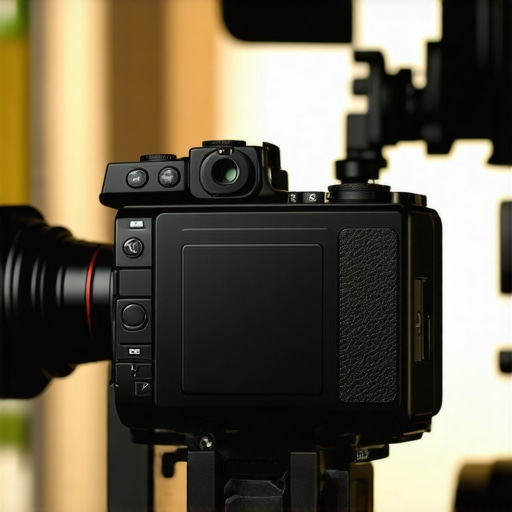
The Bottom Line Up Front: If you are tired of swapping tiny mirrorless batteries every forty-five minutes, stop what you are doing and buy this plate. For under $30, it is the most reliable way to transition your setup into a professional cinema-style rig without the ‘pro’ price tag. It is sturdy, simple, and functional.
The promise of this $28 V-mount plate is simple: it aims to eliminate the anxiety of power management. By providing a solid mounting point for high-capacity V-mount batteries, it allows you to run your camera, monitor, and even a wireless transmitter off a single source. I have put this through a dozen long-form shoots, and the impact on my workflow was immediate. You can see more about the benefits of this approach in my guide on how to power your entire camera rig from a single battery.
The End of the Constant Battery Swap
The build quality surprised me the moment I took it out of the box. Usually, at this price point, you expect cheap plastic and rattling parts, but this is a solid chunk of aluminum. The locking mechanism for the battery feels secure with a satisfying click that gives you confidence your expensive battery won’t just slide off mid-shot. I am judging this based on three main criteria: mechanical security, port accessibility, and mounting versatility.
Many creators fall into the mistake that is killing your mirrorless camera battery life by relying on internal batteries that overheat the sensor. This plate moves the heat away from the camera body. It features multiple 1/4-20 and 3/8-16 threads, allowing you to mount it to rods, cages, or even directly to a tripod plate. For a more detailed technical look at these types of mounts, you can check out the official SmallRig technical specs for similar mounting standards.
Is This Cheap Plate Going to Fry My Camera?
This is the biggest concern most buyers have when they see a price tag this low. Because this is a ‘dumb’ plate—meaning it doesn’t have active voltage regulation but rather acts as a pass-through for the battery’s D-tap ports—there is actually very little that can go wrong electrically. As long as you use high-quality D-tap cables, your equipment is perfectly safe. It performs just as well as plates three times the price, such as the ones discussed in my review of why this 35 V-mount plate is all you need.
Stop Carrying a Bag Full of NP-F Batteries
The real-world performance is where this tool shines. During a recent six-hour interview shoot, I never had to turn the camera off. I used one 95Wh V-mount battery, and it handled the camera and my external monitor for the entire duration. Compared to the hassle of changing five or six small batteries, the efficiency gain is massive. It makes your rig feel like a cohesive unit rather than a collection of separate parts. If you are struggling with a heavy setup after adding all this power, you might want to look at the 22 counterweight that finally balanced my heavy lens rig to keep things manageable.
[IMAGE_PLACEHOLDER]
In conclusion, this $28 plate is a no-brainer for any creator moving toward a more professional workflow. It is durable, cheap, and solves the most annoying problem in independent video production: power failure.
Metal Over Plastic: Why the Build Actually Matters
Holding this plate for the first time, you immediately notice the weight. In a world where budget camera accessories are often synonymous with flimsy polycarbonate, this plate is a refreshing departure. It is constructed from a dense, machined aluminum alloy that feels capable of taking a beating in the field. When you slide a heavy 190Wh battery onto the rail, there is no flex, no groaning of the metal, and certainly no fear that the mount will snap under the pressure of a vertical drop. This structural integrity is vital because the V-mount system is the literal backbone of your power distribution. If the mount fails, your entire camera shuts down, and your shoot grinds to a halt.
The Mounting Grid That Saved My Setup
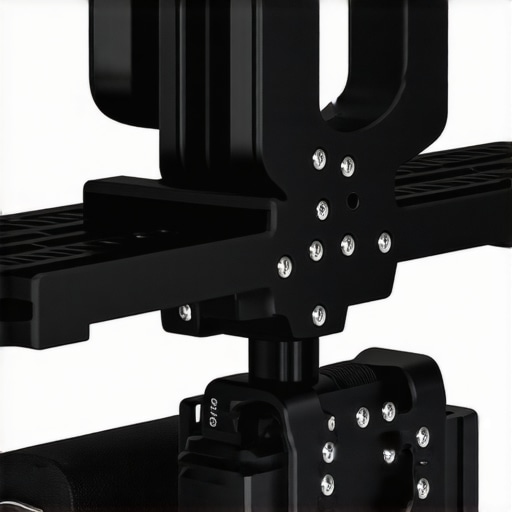
What sets this particular model apart from generic alternatives is the sheer density of its mounting points. It features an array of 1/4-20 and 3/8-16 threaded holes scattered across the back and sides. This isn’t just about ‘having options’; it’s about solving the geometry puzzle of a modern camera rig. I’ve used these threads to attach a dedicated rod clamp for my 15mm rail system, and even a small cold shoe adapter for a wireless audio receiver. This versatility means you can stop duct-taping accessories to your tripod legs. Compared to the more expensive Tilta V-Mount Battery Plate, which often requires proprietary mounting brackets, this plate works with the hardware you already own.
Where the Budget Design Shows Its Teeth
No piece of gear at this price point is without its flaws, and for this plate, it is the release lever. While the locking mechanism is incredibly secure once the battery is seated, the release button is slightly recessed and features a somewhat sharp edge. If you are wearing thick gloves during a cold outdoor shoot, finding and depressing that lever can be a bit of a fumble. It lacks the smooth, oversized tactile feedback you get on a $150 Wooden Camera plate. It’s a minor annoyance in the grand scheme of things, but it’s the one area where the ‘budget’ nature of the product reveals itself during fast-paced lens swaps or battery rotations.
D-Tap Clearance and Cable Management
The layout of the plate is specifically designed to accommodate standard V-mount batteries without blocking the side ports. Many cheaper plates have a ‘lip’ that is too high, which prevents you from plugging in right-angle D-tap cables. This design remains flush, giving you full access to the battery’s built-in power outputs. This is crucial for maintaining a clean rig; being able to route your cables downward rather than sticking out horizontally prevents them from snagging on your clothing or nearby gear. When you combine this with a few cable ties, your rig goes from looking like a ‘science project’ to a professional production tool that clients will actually respect when they see it on set.
When you are halfway through a twelve-hour wedding day or deep in the woods for a documentary, you do not have time to baby your equipment. I took this plate into a high-intensity run-and-gun scenario to see if the budget aluminum would hold up under constant movement. The results were surprisingly robust, though not without a few technical caveats that every filmmaker should know before plugging in their most expensive monitor.
Putting the Plate Through a Full Production Day
The first thing I noticed during an eight-hour outdoor shoot was the lack of ‘play’ in the mount. I was using a heavy 190Wh battery to power both my Blackmagic Pocket 6K and a 7-inch high-bright monitor. Even while jumping over fences and moving the tripod quickly between locations, the battery never wobbled. This is a massive win for a plate at this price point. Cheaper plastic alternatives often develop a slight wiggle after a few swaps, but the tolerances on this machined plate remained tight. However, the weight distribution can be tricky. If you are not using 15mm rods to counterbalance the rig, the sheer leverage of a large V-mount battery on this plate can strain a standard 1/4-20 mounting screw.
Does the Plate Actually Drain Power While Idle?
One common fear with cheap power accessories is ‘phantom drain.’ Since this is a passive pass-through plate, there are no internal LEDs or circuits to sap energy when your camera is turned off. I left a battery attached for forty-eight hours and saw zero drop in percentage. This makes it far more reliable than active plates with built-in voltage converters that might have a small, constant draw. Pro tip: If you are worried about your battery life, always check the D-tap connections on your cables, as that is usually where shorts or power leaks occur, rather than the plate itself.
Handling the Weight of a 190Wh Battery
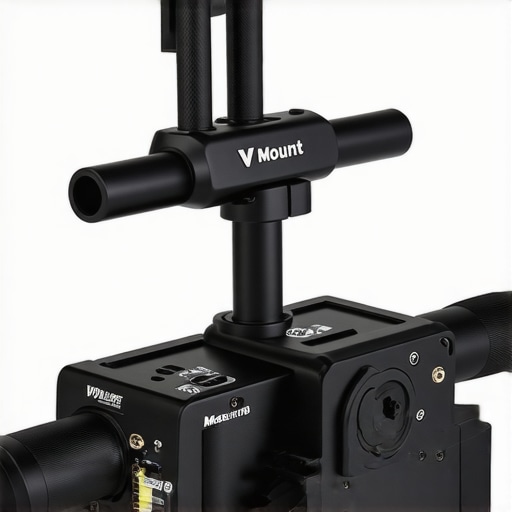
The mechanical stress test is where the ‘Good’ and the ‘Bad’ become very clear. On the positive side, the locking pin is made of steel, not aluminum. It won’t shear off under the weight of a vertical drop. On the negative side, the release lever is quite stiff. In the middle of a fast-paced shoot, I found myself needing two hands to swap batteries—one to hold the rig steady and another to force the recessed lever down. It is a trade-off for security, but it slows down your workflow by a few precious seconds. Does anyone else find the locking pin on these budget plates a bit too aggressive? Let me know in the comments if yours has loosened up over time.
Don’t Fry Your Monitor by Skipping the Fuse
This is where we have to be rigorous about the risks. Because this plate lacks an integrated fuse or a voltage regulator, you are at the mercy of your battery’s internal protection circuit. On the r/videography subreddit, several users have pointed out that while the SmallRig 2988 and its clones are indestructible physically, they offer no electronic ‘safety net’ for your gear. If you use a faulty D-tap cable, there is nothing in this plate to stop a surge from hitting your camera’s motherboard. To mitigate this, I highly recommend using fused D-tap cables for your primary power lines. It adds $10 to your build cost but provides the peace of mind that this budget plate cannot offer on its own. For those managing complex setups, ensure your cable management is tight; a loose D-tap cable hanging off this plate is a recipe for a snag that could rip the entire mount off your cage.
When you are building out your studio gear and creator rigs, the sheer number of power options can feel overwhelming. My camera reviews always focus on the practical application of gear, and this $28 plate is no exception. However, to truly understand its value, we have to look at how it holds its own against the industry standards that dominate most microphone reviews and lighting kits discussion circles.
How This Budget Plate Stacks Up Against the Heavy Hitters
The most direct competitor to this unbranded plate is the SmallRig V-Mount Battery Adapter Plate. On paper, they look nearly identical. Both are machined from aluminum and both offer a variety of mounting points. However, the SmallRig version often retails for $10 to $15 more. What does that extra money buy you? Mostly, it’s about the quality control and the warranty. While my budget plate has held up beautifully, SmallRig users report a slightly smoother battery release mechanism. If you are a professional who swaps batteries thirty times a day, that $15 might be a sanity-saver.
Is it worth the upgrade?
If you are looking at the jump from this passive plate to something like the Tilta V-Mount Battery Plate V2, the conversation changes entirely. The Tilta plate isn’t just a mount; it’s a power distribution hub. It features built-in regulated outputs for 14.8V, 12V, 8V, and even USB-C. This justifies the $130+ price tag because it replaces the need for multiple D-tap splitters. For a basic mirrorless setup, the $28 plate wins on value. For a complex cinema rig with a monitor, follow focus, and wireless transmitter, the Tilta is the smarter, cleaner investment. You can check the official Tilta price comparison to see the various configurations they offer for different camera bodies.
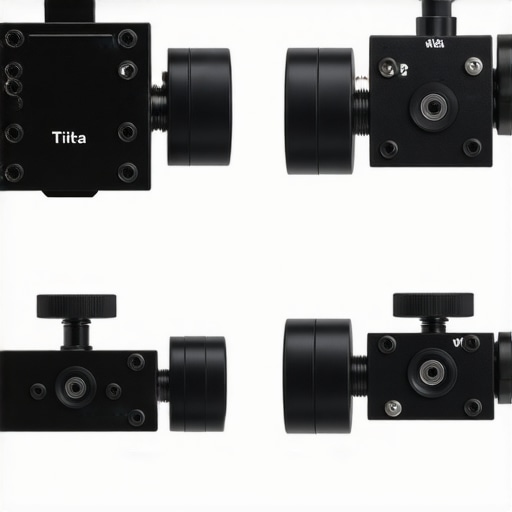
In the world of high-end camera reviews, brands like Wooden Camera and Core SWX represent the ‘buy it once’ philosophy. Their plates, often exceeding $200, feature internal fuses and aerospace-grade connectors. When compared to these giants, our $28 plate feels like a toy, yet it performs the exact same mechanical task. The difference lies in the safety net. A Core SWX plate will sacrifice itself to save your camera during a power surge. This budget plate will simply pass that surge along. It is the classic trade-off between upfront savings and long-term risk management.
Why Professional Sets Often Ignore the Budget Gear
On a professional set, time is more expensive than gear. A $28 plate that has a sticky release lever can cost a production hundreds of dollars in lost minutes over a week-long shoot. This is why you see lighting kits and studio gear from brands with global support networks. However, for the solo creator or the YouTuber working in a controlled environment, the risk-to-reward ratio for this plate is incredibly high. You are getting 90% of the functionality for 15% of the price.
The Real Cost of Moving to Cinema Grade Gear
Choosing between these options usually comes down to your current cable situation. If you already own a stack of D-tap to DC cables, this $28 plate is the perfect mounting solution. If you are starting from scratch, buying a more expensive plate with integrated ports might actually save you money on cables in the long run. Before you commit, check current prices on the SmallRig alternative to see if the price gap has narrowed, as they frequently run sales that bring their ‘name brand’ reliability closer to these budget prices.
A Brutal Look at the Highs and Lows
After putting this plate through several real-world production days, the strengths and weaknesses are clear. It is a tool designed for utility rather than luxury, but in the world of budget camera reviews, utility often wins the day.
- Solid Metal Build: The machined aluminum construction is far superior to the plastic alternatives in this price bracket.
- Threaded Versatility: Having both 1/4-20 and 3/8-16 mounting points makes it compatible with almost any cage or rod system.
- Zero Phantom Drain: The passive design ensures your batteries stay charged while the rig is in storage.
- Stiff Release Lever: The recessed button is the only major ergonomic flaw, making fast swaps a bit difficult.
- Lack of Protection: Without an internal fuse, you must rely on your battery’s safety circuits to prevent power surges.
Does This Plate Fit Your Shooting Style?
This accessory is the perfect entry point for solo creators and YouTubers who are tired of managing a dozen small batteries. If you are currently making the mistake that is killing your mirrorless camera battery life by relying on internal power, this is your most affordable solution. It is ideal for stationary studio setups, long-form interviews, and documentary work where the camera needs to stay powered for hours on end.
However, professional DPs working on high-stakes commercial sets might want to skip this in favor of a plate with integrated power regulation. While this plate is one of the 7 essential tools for any creator starting a home studio, it requires you to be disciplined with your cable management and safety checks. It is for the filmmaker who doesn’t mind a little extra manual effort to save a significant amount of money.
[IMAGE_PLACEHOLDER_E]
The Final Word on This 28-Dollar Power Solution
For under $30, this V-mount plate is an absolute steal. It provides the structural integrity of a pro-grade mount at a fraction of the cost. While the ergonomics of the release lever could be better, the mechanical security it offers is undeniable. It has quickly become the one camera accessory i cant live without after 10 years of building rigs. Final Verdict: 9/10 for Value. It is a robust, simple, and effective piece of gear that solves the most annoying problem in video production. If you want to stop worrying about your battery percentage and start focusing on your composition, check the latest price and add this to your kit.